Rotate for symmetry
Turn the pot 90° every 1–2 weeks so new leaves develop evenly and the plant does not lean or twist toward a single light source.

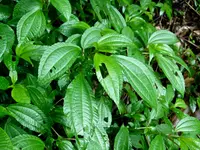
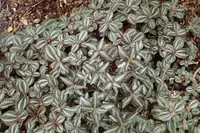
Pilea melastomoides is a small tropical perennial from Southeast Asia, grown mainly as an indoor foliage plant. It forms low, bushy clumps with textured, patterned leaves that resemble some Melastoma species. The leaves are usually dark green with raised, blistered surfaces that give the plant a distinctive, almost quilted look.
In cultivation it stays compact, making it suitable for shelves, desks, or terrariums. It prefers stable warmth, moderate humidity, and evenly moist but well-drained soil. Once suitable conditions are provided, it adapts well and is considered moderately easy to grow, especially for those who already know how to care for Pilea melastomoides.

Care Difficulty
Moderate Care

Light Preference
Bright Indirect Light

Water Requirements
Moderate Water

Temperature Preference
Tropical / Frost Sensitive

Hardiness Zone
11–12

Soil Texture
Loamy, Peaty, Organic-rich

Soil pH
Acidic (5.5–6.5), Slightly acidic (6.5–7.0)

Soil Drainage
Moist but well-drained

Fertilization
Light (every 4–6 weeks)
Scan your plant to receive care tips personalized for your specific plant
Available on iOS and Android
This species prefers soft, filtered light that mimics a forest understory.
Watering should aim for lightly moist, never saturated, soil.
Stable, mild temperatures support compact growth and healthy foliage.
This species prefers moderately moist air and reacts to very dry conditions.
This plant performs best in a loose, airy, organic-rich potting medium.
This species is well suited to container growing.
Nutrient inputs support compact, steady growth for Pilea melastomoides in containers.
Light pruning helps maintain a dense, attractive form and removes weak growth on Pilea melastomoides.
Container-grown plants benefit from periodic repotting to refresh soil and manage root crowding.
New plants of Pilea melastomoides are most reliably produced from stem cuttings.
This species is frost-sensitive and needs mild indoor conditions during winter in most climates.

Plant Health Check
Not sure what's wrong with your plant? Check your plant's health inside the app.
The foliage shows a striking pattern of raised, netted veins that resemble leaves of the Melastomataceae family, which is the reason for the species name melastomoides, meaning melastome-like.
Older stems often develop a rough, scaly surface with small tubercles, giving the plant an unusually textured appearance compared with many other Pilea species.
In its native habitat in southern China, this species grows as a small, low understory herb on shaded forest floors and rocky slopes, adapted to diffuse light and high ambient humidity.
Brown, crispy edges usually come from low humidity, underwatering, or fertilizer salts building up in the pot. Increase humidity, water more evenly, and occasionally flush the soil with plain water to remove excess minerals.
Keep your plants happy and healthy with plant identification, disease detection, and easy care guidance.