Warty Brassia Care (Brassia verrucosa)

Warty Brassia

About Warty Brassia

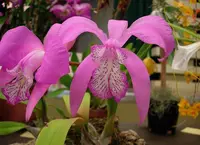
Warty brassia, Brassia verrucosa, is an epiphytic orchid that typically grows on trees in warm, humid forests of Mexico and Central America. It forms slender, upright pseudobulbs with narrow, straplike leaves and long, arching flower spikes.

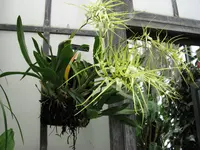
The distinctive star-shaped flowers have narrow, elongated petals and sepals marked with warty spots, which give the plant its common name. Blooms are showy yet delicate in texture.

This species prefers bright, filtered light, good air movement, and evenly moist but free-draining growing media. Its needs are moderate, so learning how to care for Warty Brassia mainly involves providing stable warmth, humidity, and avoiding waterlogged roots.

Main Plant Requirements

Care Difficulty

Moderate Care

Light Preference

Bright Indirect Light

Water Requirements

Keep Soil Moist

Temperature Preference

Tropical / Frost Sensitive

Hardiness Zone

Unknown

Soil Texture

Peaty, Organic-rich

Soil pH

Acidic (5.5–6.5)

Soil Drainage

Moist but well-drained

Fertilization

Moderate (every 2–4 weeks)

Get Personalized Care Plan

Scan your plant to receive care tips personalized for your specific plant

Available on iOS and Android

How to Care for the Warty Brassia

This orchid prefers bright, filtered light that mimics high, dappled forest canopies.

  • Provide 6–8 hours of bright, indirect light, such as near an east or lightly shaded south window, with only gentle morning sun hitting the leaves.
  • Allow light shade at midday; Warty Brassia foliage should appear medium green, not dark (too little light) or yellowed and scorched (too much light).
  • In summer, increase shading during intense afternoon sun; in winter, move slightly closer to the light source or supplement with grow lights to maintain bloom potential.

This orchid needs consistently moist but fast-draining conditions around its roots.

  • Water when the top 2–3 cm of the medium feels just barely dry, letting water run freely through and drain completely to avoid stagnant moisture.
  • In active growth and warm weather, watering frequency often increases; in cooler months or reduced light, extend intervals slightly but do not let pseudobulbs shrivel.
  • Watch for soft, blackened roots or a sour smell as signs of overwatering, and wrinkled pseudobulbs or limp leaves as indicators that Brassia verrucosa is staying too dry.

This species thrives in intermediate to warm temperatures with gentle, stable conditions.

  • Aim for daytime temperatures of 70–80°F (21–27°C) and night temperatures of 60–65°F (16–18°C) to support steady growth and flowering.
  • Avoid allowing temperatures below 55°F (13°C); it is not frost tolerant and should be protected from cold drafts, open windows in winter, and unheated spaces.
  • The plant tolerates short heat spikes up to about 85–90°F (29–32°C) if humidity and air movement are high, but prolonged heat stress reduces flowering and can cause leaf tip burn.

This orchid prefers consistently moist air and reacts quickly to dry indoor conditions.

  • Aim for 50–70% humidity, as Warty Brassia grows best in moderately to very humid air.
  • Watch for wrinkled pseudobulbs, limp leaves, and stalled buds as signs of humidity stress.
  • Increase humidity with a pebble tray, grouping plants, or a room humidifier, and keep gentle air movement to prevent fungal problems.

Brassia verrucosa grows best in a loose, airy, bark-based orchid medium rather than standard potting soil.

  • Use a mix of medium orchid bark, perlite, and a small amount of sphagnum moss to keep roots aerated yet evenly moist.
  • Ensure very fast drainage; water must run freely through the pot and never leave roots standing in water.
  • Keep pH slightly acidic to neutral, around 5.5–6.5, which supports nutrient uptake for orchids grown in bark.
  • Avoid dense, peat-heavy, or garden soils that stay wet and compact, as these quickly suffocate and rot the roots.

This species is well suited to container growing when the pot supports its arching growth and fast drainage.

  • Choose a pot just 2–3 cm wider than the root mass so the mix dries evenly and roots stay stable.
  • Use a heavy base or weighted cachepot if flower spikes make the container top-heavy and prone to tipping.
  • Select a slotted orchid pot or side-vented container to increase air flow around the roots and speed drying after watering.

Brassia verrucosa benefits from light, consistent feeding during active growth but is sensitive to excess salts.

  • Use a balanced orchid fertilizer (for example 20-20-20) diluted to 1/4–1/2 strength.
  • Feed every 2–3 weeks in spring and summer when new pseudobulbs and leaves are forming.
  • In fall and winter, reduce feeding to monthly or pause if growth slows markedly.
  • Flush the pot with plain water about once a month to wash out accumulated fertilizer salts; this supports healthy roots when caring for Warty Brassia.

Pruning Brassia verrucosa focuses on hygiene and managing old flower spikes rather than shaping the plant.

  • After flowering, cut spent flower spikes back to their base with clean, sharp scissors or pruners.
  • Remove only dead, yellowed, or damaged leaves, trimming close to the pseudobulb without cutting into healthy tissue.
  • Thin out any clearly desiccated pseudobulbs to improve air circulation around the plant base.
  • Always disinfect cutting tools before and after use to reduce the risk of spreading fungal or bacterial problems.

Repotting this orchid is occasional but important to maintain fresh, airy medium and a healthy root system.

  • Look for crowded pseudobulbs, roots circling the pot, or medium that has broken down and stays soggy as signs it needs repotting.
  • Plan to repot every 2–3 years, ideally in spring just after flowering when new root tips begin to appear.
  • Use a snug pot with fresh, coarse orchid mix, positioning pseudobulbs slightly above the medium for good air flow.
  • Handle roots gently, remove only clearly dead, mushy tissue, then keep the plant slightly drier for 7–10 days to limit transplant stress.

Propagation of Brassia verrucosa is most reliable by division rather than from seed in home conditions.

  • Divide mature clumps in spring when repotting, once there are several healthy pseudobulbs.
  • Use a sterile knife or shears to separate sections with at least 3–4 pseudobulbs and an active growth eye.
  • Pot each division into fresh orchid mix, keeping pseudobulbs just above the surface for good aeration.
  • Provide bright, filtered light, 65–80°F, and moderate humidity to support root regrowth and establishment.

Winter care for Brassia verrucosa centers on frost avoidance and slightly cooler, drier conditions than summer.

  • Keep plants above 55°F; this orchid is not frost tolerant and belongs indoors in cold climates.
  • In containers, move plants indoors to a bright, draft-free spot before night temperatures drop near 50°F.
  • Reduce watering in winter, allowing the medium to dry a bit more between waterings while avoiding complete desiccation.
  • Maintain good air movement but avoid cold drafts or direct exposure to heating vents that cause rapid drying.

Care Tips

Optimize air movement

Provide gentle, constant air circulation with a small fan set on low and not aimed directly at the plant to reduce fungal issues on the narrow pseudobulbs and roots while still allowing humidity to remain high.

Use basket mounting

Grow the plant in a slatted basket or mounted on cork bark with a thin layer of sphagnum so roots dry faster between waterings, which helps prevent rot while supporting the long, arching flower spikes.

Support flower spikes

As spikes extend, stake them loosely with soft ties to a thin bamboo or wire support placed at the pot edge so the long spider-like flowers are displayed cleanly and do not kink or snap under their own weight.

Cool-night scheduling

Place the plant in the coolest suitable spot at night, such as near a screened window in mild weather, to provide a 10–15°F drop that supports reliable bud initiation and better flowering.

Targeted pest checks

Inspect leaf undersides, pseudobulb bases, and the inner basket or mount every 1–2 weeks for scale and spider mites, and rinse or wipe these areas before using any insecticidal soap so pests are removed mechanically first, which is a core part of caring for Warty Brassia.

Common Pests and Diseases

Spider mites

This pest thrives on Brassia leaves in warm, dry, still air, causing pale stippling, dulling of foliage, and fine webbing between pseudobulbs and leaf bases.

Solution

Rinse foliage and leaf bases thoroughly with lukewarm water, then increase humidity and airflow around the plant while avoiding direct blasts on the leaves. For persistent infestations, use repeated applications of a horticultural soap or neem oil spray, paying special attention to the undersides of leaves and tight leaf joints typical of Brassia verrucosa care.

Scale insects

These insects lodge along pseudobulbs, under leaf sheaths, and on flower spikes, appearing as small brown or tan bumps that cause yellowing and sticky honeydew on nearby surfaces.

Solution

Manually remove visible scale with a cotton swab dipped in isopropyl alcohol, then wash the plant with mild soapy water, especially around pseudobulb bases and old sheaths. Repeat alcohol spot-treatments weekly and isolate the plant until new growth appears clean and free of honeydew or ants.

Soft rot (Erwinia)

This disease causes rapidly spreading, foul-smelling, water-soaked lesions on pseudobulbs and leaf bases, often starting in cramped, poorly ventilated conditions after splashing water or injury.

Solution

Immediately cut away all affected tissue well into healthy, firm tissue using sterile tools, then dust cuts with ground cinnamon or a commercial bactericide. Improve air movement, reduce crowding, and keep water off the pseudobulbs and crown, especially during cooler night temperatures.

Leaf spot fungi

This disease shows as small yellow or brown spots on Brassia leaves that can enlarge, coalesce, and cause premature leaf drop under cool, humid conditions with poor air circulation.

Solution

Remove and discard affected leaves or sections and avoid overhead watering that keeps foliage wet for long periods. Provide stronger air movement around the plant, space pots to reduce contact, and, if spotting continues, apply a labeled orchid-safe fungicide as a preventive treatment on new and lightly affected leaves.

Mealybugs

These insects gather in the tight crevices between pseudobulbs and leaf bases, forming white cottony masses that sap plant vigor and may stunt new spikes and roots.

Solution

Inspect and unroll old leaf sheaths, then wipe or pick off mealybugs using cotton swabs with isopropyl alcohol and rinse the plant thoroughly afterward. Repeat inspections weekly, isolate the plant from other orchids, and use a systemic or contact insecticide labeled for orchids if infestations reappear on new growth.

Interesting Facts

Spider mimic flowers

The long, narrow, spotted petals and sepals of this orchid resemble a spider, a visual mimicry that helps it attract specific pollinating wasps that attack spider-like prey.

Specialist wasp pollination

In its native range from Mexico to Central America, this species is pollinated by predatory wasps that are lured in by the flower’s spider-like shape and fragrance and then accidentally pick up or deposit pollen masses called pollinia.

Epidendric growth habit

Brassia verrucosa typically grows as an epiphyte on tree branches in humid forests, anchoring to bark with its roots while obtaining moisture and nutrients from rain, leaf litter, and organic debris, not by parasitizing the host tree.

Botan icon

Did you know?

This species played a key role in early Brassia breeding programs and has been widely used to create modern spider orchid hybrids because of its distinctive long floral segments and relatively reliable flowering under cultivation.

FAQs about Warty Brassia

Lack of flowering usually comes from insufficient light intensity, inadequate temperature drop between day and night, or depleted nutrients. Provide bright filtered light, a slight nighttime cool-down, and balanced orchid fertilizer to support spike initiation and bud development.

Grow Healthy Plants with Botan Care

Keep your plants happy and healthy with plant identification, disease detection, and easy care guidance.

Botan plant care app — identify plants on mobile

Explore More Plants