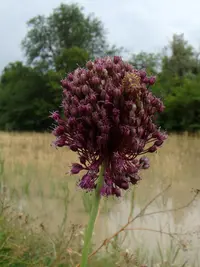
Fringed Loosestrife Care (Lysimachia ciliata 'Firecracker')

Also known as: Firecracker Loosestrife

About Fringed Loosestrife

Lysimachia ciliata 'Firecracker', commonly called fringed loosestrife, is a hardy herbaceous perennial grown mainly for its dark, coppery-purple foliage. It forms loose clumps with upright stems and spreads over time by short rhizomes, creating a naturalized, informal look in beds or along water edges.

In summer it produces nodding, starry yellow flowers that contrast with the foliage, attracting bees and other pollinators. This selection is native in origin to moist meadows and stream banks across eastern North America, so it prefers consistently damp soil and can handle cooler climates well.

It is generally easy to grow if given moisture and at least partial sun, making it suitable for low-maintenance borders and naturalistic plantings. Understanding how to care for Fringed Loosestrife mainly involves managing its spread and providing enough water.

Main Plant Requirements

Care Difficulty

Easy Care

Light Preference

Full Sun

Water Requirements

Keep Soil Moist

Temperature Preference

Cold Hardy

Hardiness Zone

3–8

Soil Texture

Loamy, Clay, Organic-rich

Soil pH

Acidic (5.5–6.5), Slightly acidic (6.5–7.0)

Soil Drainage

Moist but well-drained

Fertilization

Minimal (feed rarely)

Get Personalized Care Plan

Scan your plant to receive care tips personalized for your specific plant

Available on iOS and Android

How to Care for the Fringed Loosestrife

This hardy perennial prefers bright outdoor conditions with moderate direct sun for best foliage color.

  • Provide 4–6 hours of direct sun daily, ideally morning sun with light afternoon shade, to maintain the deep purple leaves of Fringed Loosestrife.
  • Plant in a spot with partial shade, such as east or northeast exposure, since harsh afternoon sun can scorch foliage and dry the soil too quickly.
  • In hotter summers, increase shade from about 1–4 p.m.; in cooler or northern climates, it tolerates near full sun if soil stays consistently moist.

This moisture-loving perennial thrives in consistently damp, not waterlogged, soil.

  • Aim for soil that stays evenly moist; do not let the top 2–3 cm fully dry out, especially during active growth in spring and summer.
  • Use rich, loamy soil with good drainage; standing water or foul smell around the roots signals overwatering and risk of rot.
  • Increase watering during hot, dry spells when leaves start to droop, and reduce frequency in fall and winter as Lysimachia ciliata 'Firecracker' dies back and growth slows.

This cold-hardy perennial tolerates a wide temperature range typical of temperate outdoor climates.

  • Active growth is strongest around 60–80°F (16–27°C), with good vigor in typical spring and early summer conditions.
  • Established plants tolerate winter lows near -20°F (-29°C) in the ground, dying back to the roots and resprouting in spring.
  • Heat above 90°F (32°C) is tolerated if soil moisture is high; mulch the root zone to buffer temperature swings and protect crowns over winter.

This plant handles a wide humidity range but grows best with moderately moist air.

  • Aim for 40–60% humidity, which suits most homes and outdoor conditions in temperate climates.
  • Dry air can slightly crisp leaf edges and reduce vigor, especially during hot, windy weather.
  • Increase humidity by mulching the soil surface, grouping plants together, or placing containers near other moisture-loving Fringed Loosestrife plantings.

Lysimachia ciliata 'Firecracker' prefers consistently moist, fertile soil that does not stay waterlogged.

  • Use a loamy, organic-rich soil with fine texture that holds moisture yet still feels springy and aerated.
  • Ensure drainage is steady by mixing in compost with 20–30% coarse material such as sharp sand or fine grit.
  • Target a slightly acidic to neutral pH of about 6.0–7.0, which supports nutrient uptake and healthy root growth.
  • Avoid compacted clay, dry sandy beds, or containers without drainage, as these cause root stress and weak, patchy growth.

This species adapts well to container growing when moisture and spreading roots are managed carefully.

  • Choose a wide, medium-deep pot to accommodate its spreading root system and prevent crowding at the edges.
  • Use a heavier container material, such as ceramic or clay, to keep the plant stable as top growth becomes dense.
  • Raise the pot on feet or bricks so drainage holes stay clear and runoff moves away quickly after heavy watering or rain.

This vigorous perennial usually needs only light feeding, especially when grown in fertile soil as Fringed Loosestrife in garden beds.

  • Use a balanced, slow-release fertilizer (such as 10-10-10) or a thin layer of garden compost in early spring.
  • Feed established plants once per year during active growth, avoiding mid-summer overfeeding that encourages weak, floppy stems.
  • Apply granular products at the recommended label rate; for liquid feeds, use at 1/2 strength on moist soil to prevent root burn.
  • Stop feeding in late summer to allow growth to harden before winter dormancy.

Pruning supports compact growth and clean appearance for Lysimachia ciliata 'Firecracker' in borders or naturalized areas.

  • Cut back dead or winter-damaged stems in early spring using clean, sharp hand pruners.
  • Shear or trim spent flower stems in mid to late summer to tidy plants and reduce self-seeding.
  • Thin crowded or sprawling shoots at the base to maintain shape and control spread in smaller spaces.
  • Dispose of diseased material in the trash rather than compost to limit disease carryover.

This perennial is more often transplanted in garden beds than grown long term in containers.

  • Transplant clumps in early spring or early fall when temperatures are mild and soil is workable.
  • Move plants if growth declines, centers die out, or stems crowd neighboring plants, usually every 3–5 years.
  • Lift the clump with a spade, keeping as much root mass and surrounding soil intact as possible.
  • Replant at the same depth, water thoroughly, and shade briefly if needed to limit wilting and root stress.

Lysimachia ciliata 'Firecracker' is commonly propagated by division and stem cuttings for consistent foliage color.

  • Divide mature clumps in early spring or early fall, ensuring each section has healthy shoots and roots.
  • Replant divisions promptly in moist, well-drained soil and water thoroughly to settle soil around roots.
  • Take softwood or semi-ripe cuttings in late spring to early summer and root in a moist, free-draining mix.
  • Keep cuttings in bright, indirect light with high humidity (for example, under a loose cover) until rooted.

This hardy perennial tolerates typical winter conditions in much of the US and needs only minimal attention.

  • In cold climates, apply a 5–7 cm layer of mulch after the ground cools to insulate the root zone.
  • Allow top growth to die back naturally, then cut spent stems to ground level in late fall or early spring.
  • For container-grown plants in very cold regions, move pots to a sheltered, unheated but frost-moderated spot.

Care Tips

Divide Aging Clumps

Lift and divide congested clumps every 3–4 years in early spring, replanting vigorous outer sections at the same depth to maintain strong color and prevent the colony from thinning in the center.


Use Root Barriers

Install an 8–10 in deep root barrier or plant in a bottomless buried container to limit spread in mixed borders while still allowing the plant to form full, dramatic patches.

Cut Back After Flowering

Shear stems to 5–8 in tall once flowering finishes to tidy the patch and encourage a flush of fresh, darker foliage instead of leaving leggy, seed-heavy stems.

Monitor Self‑Seeding

Remove spent flower stalks before seed drop in areas where spreading is not desired, and hand-pull unwanted seedlings while young so the original planting design stays under control.

Inspect Lower Foliage

Check the lower, shaded leaves regularly for aphids, caterpillars, and leaf spots, and treat early with targeted insecticidal soap or by removing affected stems to keep overall vigor high when caring for Fringed Loosestrife.

Common Pests and Diseases

Leaf miners

This pest tunnels inside the leaves, creating pale winding trails and blotches that can make foliage look scorched or distorted.

Solution

Remove and dispose of affected leaves as soon as damage is seen, then monitor new growth closely; for heavy infestations, use a targeted systemic insecticide labeled for leaf miners in ornamental perennials and avoid over-fertilizing, which can encourage lush, vulnerable foliage.

Aphids

These insects cluster on tender shoots and undersides of leaves, sucking sap and causing curling, distortion, and sticky honeydew that can attract sooty mold.

Solution

Spray stems and foliage with a firm stream of water to dislodge colonies, then use insecticidal soap or a light horticultural oil on all leaf surfaces, repeating every 5–7 days until populations drop; promoting ladybirds and lacewings in the garden also helps long-term control when caring for Fringed Loosestrife.

Slugs and snails

This pest feeds on tender shoots and leaves, leaving irregular holes, shredded leaf edges, and slime trails, especially in damp, shaded sites.

Solution

Hand-pick at dusk or early morning, use iron phosphate bait around plant clumps, and reduce hiding spots by clearing dense debris and mulch directly against stems; copper barriers or rough grit can also create a physical deterrent around prized groups of plants.

Powdery mildew

This disease appears as a white to gray powdery coating on upper leaf surfaces, which can lead to yellowing, leaf distortion, and early leaf drop in crowded, humid plantings.

Solution

Thin or divide dense clumps to improve air movement, water at soil level rather than overhead, and remove the most heavily affected leaves; in persistent cases, apply a sulfur or potassium bicarbonate fungicide labeled for powdery mildew on ornamentals, following all label directions.

Leaf spot

Symptoms include small brown, tan, or purplish spots on leaves that may coalesce into larger blotches, leading to premature yellowing and defoliation in wet seasons.

Solution

Remove and discard spotted leaves, avoid overhead watering, and keep foliage as dry as possible; if outbreaks recur, apply a copper- or chlorothalonil-based fungicide preventively in spring during extended wet weather, and clean up fallen debris in autumn to reduce overwintering spores.

Interesting Facts

Naturally bronze foliage

The leaves emerge a deep bronze to purple-brown due to high levels of anthocyanin pigments, which help protect the plant from intense light and UV radiation. This pigment load is higher and more stable through the season than in the typical green form of Lysimachia ciliata.

Color-shifting through season

In full sun the foliage often stays dark and strongly colored, while in partial shade it softens to green-bronze tones. This shift reflects the plant’s ability to adjust pigment production to different light levels.

Clump-forming, not invasive

Unlike some other Lysimachia species that spread aggressively by stolons, this cultivar tends to form more contained clumps. It does spread by short rhizomes, but usually in a controlled way under typical garden conditions.

FAQs about Fringed Loosestrife

This species spreads by rhizomes and self-seeding, forming broad clumps over time. In rich, moist soil it can become vigorous, so edging, root barriers, or periodic division help keep it within its intended area.

Grow Healthy Plants with Botan Care

Keep your plants happy and healthy with plant identification, disease detection, and easy care guidance.

Botan plant care app — identify plants on mobile

Explore More Plants