


Safe handling routine
Always wear gloves and long sleeves when cutting or repotting, keep paper towels ready to immediately blot any exposed cuts, and rinse tools afterward to avoid prolonged contact with the irritating latex sap.

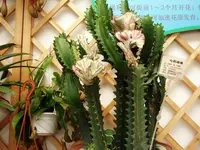
Indian spurgetree (Euphorbia neriifolia) is a succulent shrub or small tree with thick, fleshy, often angular stems and sparse, narrow leaves near the stem tips. It develops a strong, upright framework and can be long-lived in warm conditions.
This species is native to dry, rocky regions of the Indian subcontinent, where it is adapted to intense sun and limited rainfall. Its drought tolerance and slow to moderate growth make it relatively easy to maintain if overwatering is avoided.
Those who care for Indian spurgetree should note that it prefers bright light, sharp drainage, and infrequent but deep watering, similar to many other succulent Euphorbia species.

Care Difficulty
Easy Care

Light Preference
Full Sun

Water Requirements
Low Water

Temperature Preference
Tropical / Frost Sensitive

Hardiness Zone
10–12

Soil Texture
Sandy, Loamy, Rocky

Soil pH
Slightly acidic (6.5–7.0), Neutral (7.0)

Soil Drainage
Well-drained

Fertilization
Minimal (feed rarely)
Scan your plant to receive care tips personalized for your specific plant
Available on iOS and Android
Euphorbia neriifolia prefers bright, direct sun but can adapt to slightly lower light if needed.
This drought-tolerant succulent stores water in its stems and needs infrequent but careful watering.
This species prefers warm, dry conditions and is sensitive to prolonged cold or frost.
This species handles typical indoor humidity well and rarely needs special humidity management.
Soil for Euphorbia neriifolia must be very free-draining and airy to protect the roots from rot.
This species is well suited to container growing due to its slow to moderate growth and drought tolerance.
This drought-tolerant succulent tree needs only light feeding to support steady growth in containers or poor soils, so avoid heavy fertilization.
Pruning Euphorbia neriifolia is mainly done to remove damaged tissue and control size, not as a frequent grooming task.
This succulent tree grows slowly in containers and is usually repotted or transplanted infrequently to avoid disturbing its sensitive roots.
Propagation of this species is commonly done from stem cuttings rather than seeds, which are less predictable.
This warmth-loving succulent tree is frost-sensitive and needs protection in climates with cold winters.

Plant Health Check
Not sure what's wrong with your plant? Check your plant's health inside the app.
This species naturally develops thick, 3–5-angled succulent stems that branch in a candelabra pattern, which helps maximize light capture while limiting water loss in hot, dry habitats.
Its white, milky sap contains irritant diterpenes that can cause strong skin and eye irritation, a typical feature of Euphorbia, but particularly noted in this species due to its copious latex flow when stems are cut.
Although it can reach small-tree size in its native range, it functions physiologically as a succulent, storing water in its photosynthetic stems and shedding leaves in dry periods to reduce transpiration, which is central to Euphorbia neriifolia plant care in arid climates.

In parts of its native range in India, this species is traditionally planted as a living fence around fields and homesteads, since its spiny, branching stems and irritating sap create an effective physical and chemical barrier against grazing animals.
Yellowing leaves usually result from overwatering, poor drainage, or sudden temperature drops. Check that the pot drains freely, allow the soil to dry between waterings, and avoid cold drafts or drastic light changes that stress this succulent shrub.
Keep your plants happy and healthy with plant identification, disease detection, and easy care guidance.

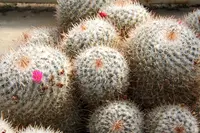
twin spined cactus
Mammillaria geminispina
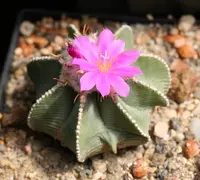
Aztekium hintonii
Aztekium hintonii
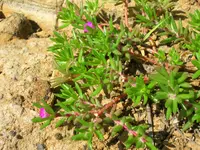
kiss me quick
Portulaca pilosa
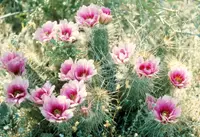
pinkflower hedgehog cactus
Echinocereus fasciculatus
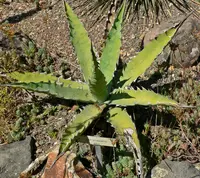
century plant
Agave xylonacantha
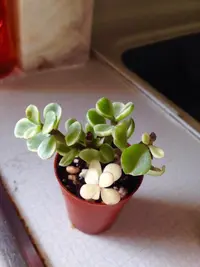
Elephant Bush
Portulacaria afra 'Variegata'
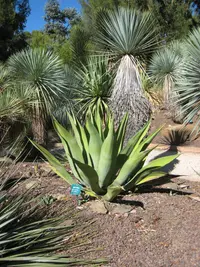
Weber's century plant
Agave weberi
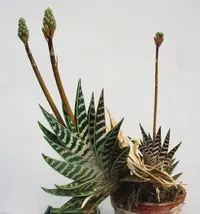
Partridge-breast Aloe
Gonialoe variegata