Aylostera albopectinata Care

Aylostera albopectinata

About Aylostera albopectinata

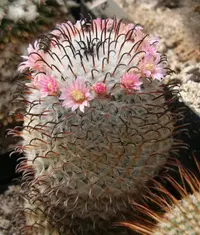
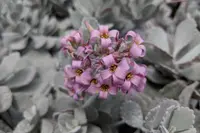
Aylostera albopectinata is a small clustering cactus from high-altitude regions of Bolivia and Argentina, where it grows in rocky, well-drained habitats. It forms low mounds of rounded stems covered with neat white spines that create a soft, bristled look. In season, it produces bright funnel-shaped flowers that contrast strongly with the pale spines, giving the plant strong ornamental value on a sunny windowsill or in a cactus collection. Its compact size, slow growth, and tolerance of dry conditions make it relatively straightforward to care for Aylostera albopectinata, provided it receives strong light, very free-draining soil, and protection from prolonged cold and excess moisture.

Main Plant Requirements

Care Difficulty

Easy Care

Light Preference

Full Sun

Water Requirements

Low Water

Temperature Preference

Warm Climate

Hardiness Zone

9–11

Soil Texture

Sandy, Loamy, Rocky

Soil pH

Slightly acidic (6.5–7.0), Neutral (7.0)

Soil Drainage

Well-drained

Fertilization

Minimal (feed rarely)

Get Personalized Care Plan

Scan your plant to receive care tips personalized for your specific plant

Available on iOS and Android

How to Care for the Aylostera albopectinata

This small cactus prefers bright, indirect light with some direct morning sun.

  • Provide 4–6 hours of direct early morning sun, then bright, filtered light for the rest of the day to prevent scorching of Aylostera albopectinata.
  • Allow light, movable shade or sheer fabric during intense midday and afternoon sun, especially in summer, to avoid yellowing or bleached patches.
  • In winter, move plants to the brightest spot available and, in short-day climates, supplement with a grow light for 8–10 hours if growth weakens.

This species needs infrequent, deep watering and fast-draining soil.

  • Water only when the top 3–5 cm of soil are completely dry, then soak thoroughly until excess drains away, avoiding water sitting in the crown.
  • Reduce watering sharply in winter, giving just enough every 4–6 weeks to prevent shriveling stems, especially in cool, bright conditions.
  • Watch for soft, blackened roots or a mushy base as signs of overwatering, and wrinkled, puckered stems as indicators of underwatering.

This cactus prefers warm days, cool nights, and cannot tolerate hard frost.

  • Aim for active growth temperatures around 65–80°F (18–27°C), with slightly cooler nights to mimic its native highland conditions.
  • Protect from frost; sustained exposure below 32°F (0°C) can cause tissue damage, though brief drops to about 28°F (-2°C) may be survived if kept dry.
  • In hot spells above 90°F (32°C), give light shade, strong airflow, and avoid overhead watering on sun-heated tissue to limit heat stress.

This cactus handles typical indoor humidity well without special measures.

  • Target 30–50% humidity, as very humid air increases the risk of stem rot.
  • Dry household air is usually tolerated, but prolonged exposure near heating vents can cause shriveling ribs.
  • If stems wrinkle despite proper watering, increase humidity slightly by grouping cacti or placing the pot above, not in, a pebble tray.

This species needs a very fast-draining, mineral-rich mix to prevent root and stem rot.

  • Use a gritty, sandy cactus mix with about 60–70% mineral content such as pumice, coarse sand, or fine gravel.
  • Keep pH slightly acidic to neutral, around 6.0–7.0, avoiding strongly alkaline or salty substrates.
  • Improve aeration by adding extra pumice or perlite so water drains through in seconds, not minutes.
  • Avoid fine peat-heavy or compacted mixes that stay wet, especially in deeper pots, to protect Aylostera albopectinata from rot.

This small cactus is very suitable for container growing.

  • Choose a shallow, wide pot so the offsetting clump can spread without keeping a large volume of soil wet around the roots.
  • Select unglazed terracotta if extra evaporation is needed in cooler or low-light locations to reduce moisture retention.
  • Place the pot where it cannot be knocked over, as the clustering growth can make the container top-heavy over time.

This small cactus benefits from light feeding but grows well in lean, gritty soil.

  • Use a balanced, low-nitrogen cactus fertilizer at 1/4–1/2 strength during active growth in spring–summer.
  • Apply liquid feed every 4–6 weeks; avoid fertilizing in midwinter dormancy.
  • Choose products formulated for cacti and succulents rather than rich composts.
  • Flush the pot with plain water occasionally to prevent salt buildup around Aylostera albopectinata roots.

Pruning needs are minimal and focus on hygiene and maintaining a compact clump.

  • Best time is late spring or after flowering, when growth is active.
  • Remove dead, shriveled, or rotting stems using clean, sharp scissors or small pruners.
  • Gently twist off weak or crowded offsets to improve light and airflow within the cluster.
  • Discard diseased tissue promptly to reduce fungal problems and keep Aylostera albopectinata healthy.

This cactus prefers to be slightly root-bound and only needs infrequent repotting.

  • Repot every 2–3 years or when roots circle the pot base or emerge from drainage holes.
  • Choose late spring as the ideal time, when growth restarts after winter.
  • Use a shallow pot with very free-draining cactus mix to limit root rot risk.
  • Unpot gently, let any damaged roots callus 1–2 days, then replant and keep soil barely moist to reduce stress for Aylostera albopectinata.

Propagation is commonly done from offsets, with seeds used mainly by collectors.

  • In late spring–summer, detach firm offsets from the parent clump with sterile scissors or by twisting.
  • Allow cut surfaces to dry and callus for 2–3 days in shade before planting.
  • Set offsets on barely moist, gritty cactus mix in bright, indirect light and warm conditions.
  • For seeds, sow on the surface of sterile, fine mix, keep lightly moist, and provide 70–75°F temperatures.

This cactus prefers cool, dry winter rest and is not tolerant of prolonged hard frost.

  • Keep indoor or greenhouse temperatures around 40–50°F and soil almost dry in winter.
  • Move containers indoors before frost if outdoor lows drop below freezing.
  • Provide as much light as possible behind glass to maintain plant health.
  • Avoid overhead watering in cold conditions to limit rot and support Aylostera albopectinata care instructions.

Care Tips

Rotate for symmetry

Turn the pot 90° every 2–3 weeks during active growth so the clumps develop evenly and do not lean toward the light source, which keeps the plant compact and visually balanced.

Encourage offsets

After flowering, lightly top-dress with a thin layer of fresh gritty mix rather than repotting immediately, which stabilizes existing offsets and encourages new pups to root and cluster more densely.

Safe offset removal

When removing offsets for propagation, let separated pups dry in a shaded, airy spot for 2–4 days until the cut end calluses, then place them on barely moist substrate to reduce rot risk and improve establishment.

Winter rest management

From late fall, keep the plant very dry and in a bright, cool spot around 45–55°F to promote a proper dormancy, which significantly improves flowering performance in spring.

Inspect woolly areoles

Check the white wool at the areoles every few weeks with a hand lens, since mealybugs often hide there, and remove any pests early using a cotton swab dipped in isopropyl alcohol to prevent colony buildup when caring for Aylostera albopectinata.

Common Pests and Diseases

Mealybugs

This pest often hides in the woolly areoles and between clustered stems, feeding on plant sap and causing stunted growth and yellowing. Symptoms include white cottony deposits and sticky honeydew on the skin and spines.

Solution

Isolate the plant, then dab visible insects with cotton swabs dipped in 70% isopropyl alcohol and repeat weekly until gone. Improve light and air movement, and, if the infestation is larger, use a ready-to-use insecticidal soap or neem oil spray directed carefully at crevices and allowed to dry fully in a bright, shaded spot.

Red spider mites

These insects thrive on stressed cacti in hot, dry indoor air, causing a dull, roughened epidermis, fine webbing, and rust-colored spotting. Damage often appears first on the sunniest side of the stems.

Solution

Rinse the plant gently with a firm stream of lukewarm water, taking care not to damage spines, then allow it to dry in a bright, airy place. For persistent mites, apply insecticidal soap or a miticide labeled for cacti, repeating every 7–10 days, and slightly increase ambient humidity without wetting the soil for long periods.

Scale insects

This pest appears as small, hard, brown or tan bumps on ribs and around areoles, sucking sap and weakening the plant over time. Symptoms include slow growth, yellowing patches, and sticky residue.

Solution

Remove individual scales by hand or with a soft brush dipped in 70% isopropyl alcohol, working carefully around spines. After mechanical removal, use a systemic insecticide labeled for ornamental cacti if infestations recur, and avoid overfertilizing, which can make the plant more attractive to scale.

Corky scab (edema)

This disease-like physiological disorder produces rough, brown, corky patches on the epidermis, often on the lower parts of older stems. Symptoms include firm, dry lesions that do not spread rapidly but permanently mark the skin.

Solution

Adjust watering to a strict soak-and-dry pattern, allowing the soil to dry fully between waterings, and keep the plant in strong light with good airflow. Existing corking will not heal, but new growth can remain smooth and healthy once excess moisture and sudden swings in soil wetness are corrected as part of general Aylostera albopectinata care.

Fungal stem rot

This disease starts from small, soft, discolored spots at the stem base or side, which quickly turn brown or black and mushy. Symptoms include a foul smell and collapse of affected tissue, often after prolonged cool, wet conditions or water sitting in the stem cluster.

Solution

At the first sign, cut away all soft, discolored tissue with a sterile knife until only firm, healthy flesh remains, then dust the wound with sulfur or a fungicidal powder and keep the plant dry and shaded until callused. If rot is extensive, salvage any remaining healthy offsets or stem segments, allow them to dry for several days, and re-root in a fresh, highly draining cactus mix while avoiding overhead watering.

Interesting Facts

White-bristled spines

This species is recognized by its dense, short white radial spines that form a pectinate pattern, creating a comb-like halo around each stem rather than long, protruding spines.

Cluster-forming habit

Mature plants often produce many offsets from the base, forming tight, cushion-like clumps of small spherical stems rather than remaining as solitary plants.

Contrasting flower display

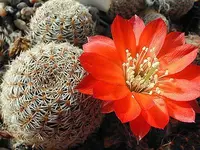
It typically produces bright orange to red funnel-shaped flowers that contrast strongly with the pale spination, making individual blooms visually prominent on the compact body.

FAQs about Aylostera albopectinata

This species usually blooms in spring to early summer, producing bright orange to red funnel-shaped flowers that ring the stem. Individual blooms last several days, with the flush often continuing over a few weeks.

Grow Healthy Plants with Botan Care

Keep your plants happy and healthy with plant identification, disease detection, and easy care guidance.

Botan plant care app — identify plants on mobile

Explore More Plants