Cream Spike Agave Care (Agave applanata)

Cream Spike Agave

About Cream Spike Agave

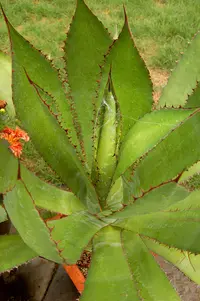
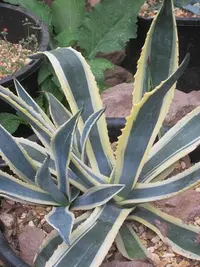
Cream Spike agave (Agave applanata 'Cream Spike') is a compact succulent rosette prized for its striking cream-edged, blue-green leaves and tidy, symmetrical form. It stays relatively small, which makes it suitable for containers, rock gardens, and bright indoor spots.

This species is native to arid regions of Mexico, where it has adapted to intense sun, low rainfall, and fast-draining, gritty soils. Its slow growth and drought tolerance make it low-maintenance once established, though it does not tolerate soggy conditions.

Gardeners who learn how to care for Cream Spike Agave usually find it straightforward, provided it receives plenty of light, infrequent watering, and protection from hard frost.

Main Plant Requirements

Care Difficulty

Easy Care

Light Preference

Full Sun

Water Requirements

Low Water

Temperature Preference

Warm Climate

Hardiness Zone

9–11

Soil Texture

Sandy, Loamy, Rocky

Soil pH

Slightly acidic (6.5–7.0), Slightly alkaline (7.0–7.5)

Soil Drainage

Well-drained

Fertilization

Minimal (feed rarely)

Get Personalized Care Plan

Scan your plant to receive care tips personalized for your specific plant

Available on iOS and Android

How to Care for the Cream Spike Agave

This species prefers bright, direct sun but can adapt to slightly lower light in hot regions.

  • Provide 6–8 hours of direct sun daily; full morning sun with light afternoon shade suits Cream Spike Agave in very hot climates.
  • In cooler or coastal areas, full sun all day is acceptable if soil drains well and heat can dissipate around the plant.
  • Watch for pale, bleached spots or crispy leaf tips as signs of sun scorch, and stretched, leaning rosettes as evidence of insufficient light.

This agave is drought tolerant and prefers deep but infrequent watering.

  • Allow the top 5–8 cm of soil to dry completely before watering, then soak the root zone once and let excess water drain away.
  • In spring and summer, expect to water only when leaves start to soften slightly; in fall and winter, reduce irrigation to very occasional, dry spells only.
  • Yellowing, mushy lower leaves or a collapsing crown indicate overwatering, while shriveling, wrinkled leaves signal that Agave applanata needs a thorough drink.

This agave thrives in warm, dry climates with good air movement.

  • Aim for 70–90°F (21–32°C) during active growth; it remains stable at 60–95°F (16–35°C) if soil stays sharply drained.
  • Short exposures down to about 20–25°F (-6 to -4°C) may be tolerated when soil is dry, but repeated frosts increase risk of tissue damage and rot.
  • In heat waves above 100°F (38°C), provide slight afternoon shade and avoid overhead watering on hot evenings to reduce stress and fungal issues.

This species handles low indoor humidity well and rarely needs special humidity management.

Agave applanata needs a very fast-draining, mineral-rich substrate that never stays wet for long.

  • Use a gritty blend such as 50–70% inorganic material (pumice, coarse sand, crushed lava rock) with 30–50% cactus mix.
  • Aim for slightly acidic to neutral pH around 6.0–7.0, avoiding peat-heavy mixes that stay soggy.
  • Improve aeration by using large, sharp particles (3–10 mm) and avoiding fine compost that clogs air spaces.
  • Avoid compacted, clay-based, or moisture-retentive potting soils, which promote root and crown rot.

This species is well suited to container growing, including small patio specimens.

  • Choose a heavy, wide-based pot that resists tipping, as the rosette becomes dense and top-heavy over time.
  • Select a pot only 2–5 cm wider than the root ball to prevent unused soil from holding excess moisture.
  • Prefer unglazed terracotta or other porous materials to speed evaporation where rainfall or watering is frequent.

Agave applanata needs only light feeding, as it is adapted to poor, mineral soils.

  • Use a balanced, low-nitrogen cactus or succulent fertilizer, or a very thin layer of mature compost on outdoor plants.
  • Feed once in late spring and again in mid-summer during active growth; skip feeding for stressed or newly planted specimens.
  • Apply liquid fertilizer at 1/2–1/4 label strength to avoid soft, weak growth and root burn.
  • Stop feeding in fall and winter, when growth slows and Cream Spike Agave and similar cultivars rest.

Pruning Agave applanata is minimal and focuses on safety and hygiene rather than shaping.

  • Best time is late spring to early summer, once frost risk has passed and damaged foliage is visible.
  • Remove dead, diseased, or badly scarred leaves at the base using clean, sharp pruners or a pruning saw.
  • Cut away dried flower stalks after they brown completely, improving appearance and reducing self-seeding.
  • Limit pruning to necessary removal only, as heavy cutting does not improve vigor and can invite rot.

Container-grown plants and young offsets of Agave applanata benefit from occasional repotting or transplanting.

  • Repot when roots circle the pot, emerge from drainage holes, or growth slows despite good light and care.
  • Aim to repot or shift into a slightly larger, heavy container every 3–5 years in late spring or early summer.
  • Use a gritty, fast-draining cactus mix; handle the root ball gently and keep roots at the same depth as before.
  • After transplanting, water lightly once, then allow the mix to dry well, reducing stress and limiting rot risk.

Agave applanata is most commonly propagated from offsets, with seed used mainly for breeding or large-scale production.

  • Detach offsets in late spring or early summer when they have a visible root system and firm leaves.
  • Use a clean, sharp knife to cut pups from the mother plant, then allow cut surfaces to dry and callus for 3–7 days.
  • Plant pups in small pots filled with dry, gritty cactus mix, then water lightly after 3–5 days to encourage rooting.
  • For seeds, sow on the surface of a well-draining mix kept slightly moist and warm (70–80°F) with bright, indirect light.

Agave applanata has some cold tolerance but benefits from basic winter precautions in cooler climates.

  • In-ground plants in mild regions usually handle light frosts if soil drains quickly and stays relatively dry.
  • Add a 5–8 cm layer of gravel or coarse mulch around the base to insulate roots and keep crowns drier.
  • In colder climates or wet winters, grow in containers and move indoors to a bright, cool, dry spot above 40°F.

Care Tips

Offset management

Remove and replant offsets only once they reach at least 5–7 cm across, using a clean, sharp knife and allowing the cut surface to dry for 3–7 days before potting to reduce rot risk.

Spine safety

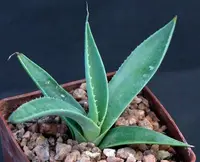
When repotting or inspecting the plant, wrap the rosette loosely in folded newspaper or cardboard to shield hands and arms from the stiff marginal spines and terminal tip.

Winter moisture reduction

In cool, low-light winter conditions, protect the roots by keeping the container in a covered, rain-sheltered spot so the plant does not receive unplanned overhead water that can cause rot.

Container selection

Choose a wide, shallow, heavy pot with drainage holes to accommodate the fibrous but relatively shallow root system and prevent the top-heavy rosette from tipping in strong wind.

Root health checks

Every 2–3 years, unpot during warm, dry weather to inspect roots, trimming any black or mushy sections and replanting into fresh mix only after damaged tissue has dried and callused.

Common Pests and Diseases

Agave snout weevil

This pest bores into the base of the rosette, causing internal tunneling, sudden wilting, and eventual collapse of the plant. Symptoms include yellowing leaves that loosen easily at the base and a fermented or rotten smell.

Solution

Remove and destroy severely affected plants, including as much of the root system as possible, to prevent larvae from completing their life cycle. For nearby healthy plants, avoid wounding the base, keep the crown dry, and use a systemic insecticide labeled for snout weevils as a preventative soil drench in warm seasons when adults are active.

Soft scale

These insects attach to leaves and leaf bases, sucking sap and excreting honeydew that can lead to sooty mold. Symptoms include sticky residue, dull or yellowing leaves, and small, dome-shaped bumps that do not easily brush off.

Solution

Physically remove scales with a soft brush or cotton swab dipped in alcohol, focusing on the inner rosette and leaf bases. For persistent infestations, apply a horticultural oil or insecticidal soap thoroughly to all leaf surfaces, repeating at 7–10 day intervals, and reduce nitrogen-rich fertilization that encourages soft growth.

Agave mite

This pest is microscopic and feeds within young leaf tissue, often introduced on infected offsets, causing distorted new growth, corky or scabby patches, and sometimes reddish or brown streaks near the crown. Symptoms include stunted rosettes and rough, irregular markings where leaves emerge.

Solution

Discard heavily deformed or chronically affected plants to prevent spread, and never use them for propagation. For valuable specimens with early symptoms, remove and destroy the most deformed leaves, isolate the plant, and treat with a miticide specifically labeled for eriophyid or agave mites, repeating as directed; always source new plants and pups from reputable, mite-free stock.

Bacterial soft rot

This disease attacks damaged or waterlogged tissue at the crown or leaf bases, causing rapid tissue breakdown, foul odor, and a mushy, darkened core. Symptoms include sudden leaf collapse and a wet, slimy feel around the central rosette.

Solution

Immediately remove and discard plants with extensive soft rot, including contaminated soil around the crown. For very early, localized infections, cut out all soft tissue back to firm, healthy material, allow the wound to dry in a warm, airy place, keep the crown completely dry afterward, and avoid overhead watering or water sitting in the rosette.

Anthracnose leaf spot

This disease produces tan to brown, sunken spots on leaves, often with darker margins, which can merge into larger lesions along the leaf surface. Symptoms include cosmetic damage that can weaken the plant over time if many leaves are affected, especially in warm, humid conditions.

Solution

Remove and discard affected leaves to reduce inoculum, and improve airflow around the plant by increasing spacing and avoiding overhead irrigation. Keep the rosette dry, water only at the soil level, and in severe or recurring cases use a fungicide labeled for anthracnose on succulents, applied according to label directions during warm, wet periods.

Interesting Facts

Rosette and offset habit

This species forms a solitary, flat rosette to medium size, then produces numerous basal offsets, creating wide clumps in habitat on rocky slopes in central Mexico.

Compact, stiff leaves

Its leaves are short, rigid, and broadly lance-shaped with a distinctly flattened profile and a terminal spine, a morphology that reduces surface area and limits water loss in its semi-arid environment.

Distinctive cream variegation

Horticultural selections such as Agave applanata 'Cream Spike' show stable pale cream to yellow marginal variegation, which is due to reduced chlorophyll along the leaf edges and makes them popular as compact container plants.

Botan icon

Did you know?

Agave applanata, like many agaves, is monocarpic, meaning each rosette flowers only once at the end of its life, sending up a tall branched flowering stalk and then dying while the surrounding offsets continue the colony.

FAQs about Cream Spike Agave

Brown tips or patches usually come from underwatering, intense sun combined with low humidity, or old age of lower leaves. Persistent soft brown areas can indicate rot, often from excess moisture around the roots or crown.

Grow Healthy Plants with Botan Care

Keep your plants happy and healthy with plant identification, disease detection, and easy care guidance.

Botan plant care app — identify plants on mobile

Explore More Plants