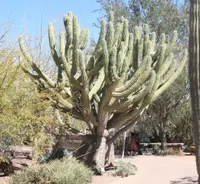
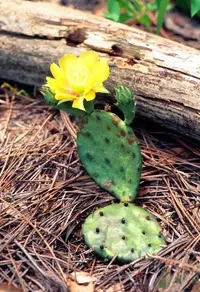
Cactus Care (Ferocactus macrodiscus)

Cactus

About Cactus

Ferocactus macrodiscus is a small to medium desert cactus with a flat, disc-like body and strong, hooked spines arranged along pronounced ribs. It forms a solitary globe that slowly widens with age rather than growing tall.

This species is native to arid regions of central Mexico, where it endures intense sun, rocky soils, and long dry periods. Its thick skin and robust spines reduce water loss and protect the plant, which makes it drought tolerant but sensitive to overwatering.

In cultivation, it prefers bright light, very fast-draining mineral soil, and infrequent watering. These traits make it suitable for growers who understand how to care for Cactus in dry, sunny indoor or outdoor setups.

Main Plant Requirements

Care Difficulty

Moderate Care

Light Preference

Full Sun

Water Requirements

Low Water

Temperature Preference

Warm Climate

Hardiness Zone

9–11

Soil Texture

Sandy, Loamy, Rocky

Soil pH

Slightly acidic (6.5–7.0), Neutral (7.0)

Soil Drainage

Well-drained

Fertilization

Minimal (feed rarely)

Get Personalized Care Plan

Scan your plant to receive care tips personalized for your specific plant

Available on iOS and Android

How to Care for the Cactus

Ferocactus macrodiscus thrives in bright, open sites with strong sun and low humidity.

  • Provide 6–8 hours of direct sun daily, ideally with morning to early afternoon sun and light late-day shade in very hot regions.
  • Young or recently moved plants benefit from 2–3 weeks of filtered light to prevent sunburn, then can be shifted gradually into stronger sun.
  • In summer, monitor for bleaching or brown patches from intense midday sun; in cooler seasons, maximize direct light to avoid weak, elongated growth.

This species prefers infrequent, deep watering with fast drying between soakings.

  • Water only when the top 3–5 cm of soil are completely dry; in hot, active growth this may be every 10–21 days depending on climate and soil.
  • In winter or cool periods, reduce watering sharply and keep soil almost dry, giving only a light drink every 4–6 weeks if the body shrivels slightly.
  • Use very free-draining, gritty soil so water runs through quickly; soft, yellowing tissue or a sour smell suggests overwatering and possible root rot.

This cactus favors warm, dry conditions and does poorly in cold, wet weather.

  • Aim for 70–90°F (21–32°C) during active growth; it tolerates short hot spells up to about 100°F (38°C) if soil is dry and air is moving.
  • Protect from frost; it can handle brief dips to around 28–32°F (-2–0°C) only if the soil is dry, but repeated freezes damage tissue and roots.
  • In winter, a cool, bright rest at 45–55°F (7–13°C) with very little water supports flowering, while avoiding prolonged exposure below 40°F (4°C).

Humidity is rarely a concern for this desert cactus and typical indoor levels are acceptable.

Ferocactus macrodiscus needs a very fast-draining, mineral-rich substrate to prevent root rot.

  • Use a gritty mix of 50–70% inorganic material such as pumice, coarse sand, and small gravel, with only a small amount of cactus potting mix or compost.
  • Aim for slightly acidic to neutral pH, roughly 6.0–7.2, which supports root function without encouraging fungal growth.
  • Ensure the mix is loose and non-compacting; add extra pumice or perlite if water does not drain through within 30–60 seconds.
  • Avoid fine peat-heavy, clayey, or water-retentive mixes that stay wet for more than 2–3 days after watering.

This species is well suited to container culture when the pot supports its slow, heavy growth form.

  • Select a low, wide container that keeps the plant stable as the body enlarges and becomes heavier over time.
  • Choose unglazed terracotta if faster moisture loss is needed, or a heavier ceramic pot in windy outdoor locations for added stability.
  • Position the plant slightly above the pot rim using a raised mineral topdressing so water cannot pool around the stem after irrigation.

Ferocactus macrodiscus benefits from light, controlled feeding during the active growing season only.

  • Use a low-nitrogen, balanced cactus fertilizer or diluted balanced NPK at 1/4–1/2 strength to avoid soft, weak growth.
  • Apply every 4–6 weeks in spring–summer when growth is visible, always onto moist soil, never completely dry.
  • Skip compost-heavy products that hold excess moisture; choose liquid or slow-release formulas made for succulents.
  • Stop feeding in fall–winter to maintain firm tissue and reduce risk of rot during dormancy.

Ferocactus macrodiscus needs almost no structural pruning, only careful cleanup when necessary.

  • Carry out any work in late spring–summer when the plant is actively growing and heals faster.
  • Remove only dead, diseased, or badly scarred tissue, cutting minimally into healthy green areas.
  • Use long-handled tongs and a sterile, sharp knife, wiping blades with alcohol between cuts.
  • Avoid reshaping the plant; heavy pruning distorts its natural form and can reduce flowering.

This species grows slowly and prefers infrequent repotting with minimal root disturbance.

  • Repot every 3–5 years, or when roots circle the pot, emerge from drainage holes, or growth slows despite good care.
  • Plan repotting for late spring, using a slightly larger pot and very fast-draining cactus mix.
  • Remove the old soil gently, keeping the root ball mostly intact to reduce stress and setback.
  • Allow roots to dry 2–3 days after repotting before a light watering to limit rot risk.

Ferocactus macrodiscus is usually propagated from seed and is considered slow and somewhat advanced for beginners.

  • Sow fresh seed in late spring–early summer in a sterile, gritty mix with very fine texture.
  • Maintain 70–80°F, bright indirect light, and consistently lightly moist conditions until germination.
  • Cover the tray with a clear lid or bag for high humidity, venting daily to limit fungal issues.
  • Transplant seedlings only when well rooted, handling them by the body with soft tweezers or tongs.

This cactus needs cool, very dry winter conditions and is only moderately tolerant of brief light frost.

  • Aim for 40–50°F in winter with excellent airflow and almost no watering to maintain dormancy.
  • Move container plants indoors or to a cold greenhouse before temperatures drop below freezing.
  • Keep the crown and soil surface dry; avoid overhead watering and prolonged contact with condensation.

Care Tips

Stabilize Heavy Pots

Use a wide, heavy clay or concrete container and top-dress with gravel to keep the plant stable as it becomes top-heavy and to reduce the risk of it tipping or damaging its roots when moved.

Rotate For Even Form

Rotate the pot 90° every 4–6 weeks during active growth so the cactus builds an even, symmetrical body rather than leaning toward the brightest side.

Cool, Dry Winter Rest

Provide a distinct winter rest by keeping the plant cool (45–55°F) and almost completely dry for 8–12 weeks to encourage strong flowering and compact growth in the following season.

Protect From Excess Rain

If grown outdoors, place the pot under a transparent rain shield or move it to a covered area during prolonged wet spells to prevent water collecting around the crown and causing rot.

Inspect Spines And Areoles

Regularly check the spine bases and woolly areoles for scale insects or spider mites, using a soft brush or tweezers to remove early infestations before they spread, which is an important part of caring for Cactus long term.

Everything About Cactus

Common Pests and Diseases

Red spider mites

This pest thrives on stressed, sun-exposed cacti in dry, stagnant air, causing a dull, brownish, sandblasted look to the epidermis between ribs and tubercles.

Solution

Move the plant to a spot with better air movement and slightly higher humidity around the plant (not at the soil), then rinse the body thoroughly with a strong but controlled jet of water and repeat weekly until no new damage appears; for persistent infestations, use a miticide or insecticidal soap labeled for cacti and avoid oil-based products in strong sun.

Scale insects

These insects attach firmly to the ribs and areoles, appearing as small, rounded or oval bumps that cause yellowing patches and weak growth as they suck sap.

Solution

Gently dislodge individual scales with a cotton swab dipped in isopropyl alcohol, then inspect the plant weekly and repeat spot treatment; in heavier infestations, use a systemic insecticide appropriate for succulents and keep the plant isolated from others until no new scales emerge.

Mealybugs

This pest hides in woolly areoles, in the crown, and at the base near roots, leaving white cottony masses and sticky honeydew that can invite sooty mold.

Solution

Flush visible mealybugs from the body and crown with a directed stream of water, then treat remaining insects with cotton swabs dipped in isopropyl alcohol; if root mealybugs are suspected, unpot the cactus, wash the roots, trim the most affected parts, repot into fresh mineral-rich mix, and follow up with a systemic insecticide drench as per label directions.

Fungal stem spots

This disease appears as small, sunken, brown to dark spots on the cactus body, sometimes with a slightly corky edge, often starting on tissue damaged by sunburn or mechanical injury.

Solution

Remove or cut out soft, actively spreading spots with a sterile blade, allow the wound to dry and callus in bright, dry conditions, and improve air movement around the plant; avoid wetting the stem when watering, use a highly mineral substrate, and in recurrent cases apply a low-toxicity fungicide labeled for ornamental cacti.

Bacterial soft rot

Symptoms include rapidly softening, water-soaked areas on the stem that become foul-smelling and collapse, typically after overwatering, cold, or physical damage to the thick ribs.

Solution

At the first sign, isolate the plant, cut away all affected tissue back to firm, healthy flesh with a sterile knife, and allow the plant to dry in a warm, airy place until all cut surfaces have fully callused before very light watering; if the rot has reached the core, discard the plant to protect nearby specimens and review watering, potting mix drainage, and temperature exposure as part of Ferocactus macrodiscus plant care.

Interesting Facts

Naturally flattened body

This species has an unusual, strongly depressed-globose body shape, looking more like a flattened disk than a typical barrel cactus, which inspired its common name acitrón barrel cactus.

Conspicuous central stripe

Mature plants often show a broad, lighter-colored central stripe running across the flattened stem, a visual feature that makes this cactus easy to distinguish from closely related Ferocactus species in the field.

Large magenta flowers

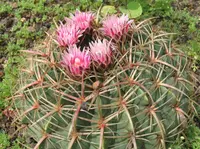
It produces relatively large, bright magenta to pink flowers in a ring near the crown, which are notably showy compared with many other desert cacti of similar size.

Botan icon

Did you know?

The species is naturally restricted to a limited area of central Mexico, mainly in limestone-rich semi-desert habitats, and this narrow distribution has contributed to conservation concerns and monitoring of wild populations.

FAQs about Cactus

Lack of flowers usually comes from insufficient light, a pot that is too large, or warm, even temperatures all year. This species needs strong sun, a slight winter cool-down, and maturity before it sets buds.

Grow Healthy Plants with Botan Care

Keep your plants happy and healthy with plant identification, disease detection, and easy care guidance.

Botan plant care app — identify plants on mobile

Explore More Plants