San Diego barrelcactus Care (Ferocactus viridescens)

Also known as: Coast barrel cactus
San Diego barrelcactus

About San Diego barrelcactus

The San Diego barrelcactus, Ferocactus viridescens, is a small, slow-growing barrel cactus native to coastal southern California and northern Baja California. It often grows in rocky, open habitats with strong sun and good drainage.

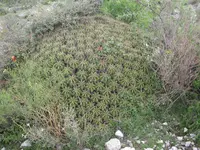
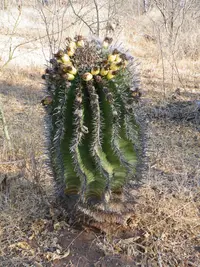
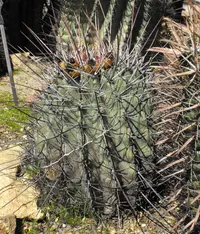
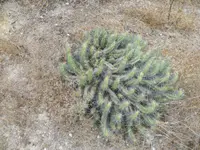
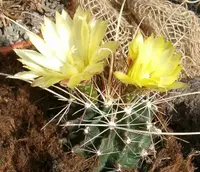
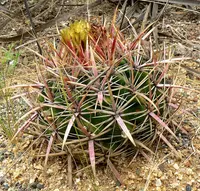
Plants form low, rounded mounds with heavy ribs and prominent yellow to reddish spines that protect the stem and help shade its surface. Showy yellow flowers appear in a ring near the top, followed by small, dry fruits.

This species is generally durable and suited to beginners if given bright light, fast-draining soil, and infrequent watering. Understanding how to care for San Diego barrelcactus mainly involves avoiding excess moisture and frost.

Main Plant Requirements

Care Difficulty

Moderate Care

Light Preference

Full Sun

Water Requirements

Low Water

Temperature Preference

Warm Climate

Hardiness Zone

9–11

Soil Texture

Sandy, Rocky, Loamy

Soil pH

Slightly acidic (6.5–7.0), Neutral (7.0)

Soil Drainage

Well-drained

Fertilization

Minimal (feed rarely)

Get Personalized Care Plan

Scan your plant to receive care tips personalized for your specific plant

Available on iOS and Android

How to Care for the San Diego barrelcactus

This cactus thrives in strong sun but benefits from gradual exposure in hot climates.

  • Provide 6–8 hours of direct sun daily, ideally with morning sun and some light afternoon shade in very hot inland areas.
  • In coastal or mild climates, San Diego barrelcactus tolerates full sun all day; in hotter regions, protect from intense 2–5 p.m. sun to prevent bleaching.
  • In winter, accept slightly lower light, but move plants from deep shade to brighter positions slowly to avoid sunscald.

Water Ferocactus viridescens sparingly, allowing soil to dry well between soakings.

  • During active growth in spring–summer, water only when the top 3–5 cm of soil are completely dry and excess can drain away freely.
  • In autumn, reduce watering sharply; in winter, keep almost dry, watering lightly only if the ribs begin to shrink noticeably.
  • Signs of overwatering include yellowing, soft tissue, or blackened stem bases; hard wrinkling and very narrow ribs indicate prolonged underwatering.

This species prefers warm, arid conditions and is sensitive to prolonged cold and frost.

  • Aim for 70–90°F (21–32°C) in the growing season, with good air movement to handle dry heat without stressing the plant.
  • Protect from frost; brief dips to 28–32°F (-2–0°C) may be survived if soil is dry, but damage increases with moisture and duration.
  • In winter, a cool, dry rest at 50–60°F (10–16°C) helps maintain health, while avoiding sudden swings above 95°F (35°C) in enclosed spaces.

This cactus thrives in dry air and rarely needs humidity adjustment indoors.

  • Keep humidity around 20–40% to mimic its native arid conditions.
  • Dry household air is well tolerated; excess humidity combined with cool temperatures increases rot risk.
  • Watch for pale, soft, or moldy tissue as signs of humidity-related stress and increase airflow rather than misting.

Ferocactus viridescens prefers a very fast-draining, mineral-rich substrate.

  • Use a gritty mix such as 50–70% inorganic material (pumice, coarse sand, small gravel) blended with a cactus potting base.
  • Aim for slightly acidic to neutral pH around 6.0–7.0, avoiding strongly alkaline or salty mixes.
  • Ensure the soil structure is loose and airy so water passes through in seconds and the root zone dries quickly.
  • Avoid peat-heavy, compact, or moisture-retentive mixes that stay wet for more than 2–3 days after watering.

This species is well suited to container growing when drainage and stability are prioritized.

  • Choose a heavy, wide terracotta or clay pot to counterbalance the spiny, top-heavy body and allow faster moisture loss.
  • Select a pot just slightly wider than the root system so the mix dries evenly rather than staying damp in unused spaces.
  • Raise the container slightly on feet or pot risers so drainage holes stay clear and runoff water leaves the saucer quickly.

This slow-growing cactus needs modest feeding to support healthy tissue without forcing weak, elongated growth.

  • Use a low-dose, balanced cactus fertilizer (around 5-5-5 NPK) or diluted general-purpose liquid feed at 1/4–1/2 strength.
  • Apply during the warm growing season only, about every 6–8 weeks if San Diego barrelcactus is in a container.
  • Avoid fertilizing in winter dormancy; stop feeding once temperatures drop and growth pauses.
  • Do not add compost-rich mixes; excess organic matter and salts increase root rot risk in this desert species.

Ferocactus viridescens needs almost no pruning and is best left to keep its natural dome-shaped form.

This cactus grows slowly and dislikes frequent disturbance, so repot or transplant only when clearly necessary.

  • Check for roots circling the pot drainage holes, soil drying extremely fast, or stalled growth as signs a larger container is needed.
  • Plan repotting for late spring to early summer when active growth helps the plant recover from root disturbance.
  • Repot only every 4–6 years, choosing a slightly wider pot with very free-draining cactus or mineral-based mix.
  • Wear thick gloves, gently loosen roots, keep them intact, and avoid watering for 5–7 days afterward to limit rot risk.

Propagation of Ferocactus viridescens is usually done by seed and is a slow, patient process.

  • Sow fresh seeds in late spring using a sterile, fine, free-draining cactus mix in shallow trays or small pots.
  • Maintain gentle bottom warmth around 70–80°F, bright indirect light, and consistently slightly moist (not wet) substrate for germination.
  • Cover containers with a clear lid or plastic to hold humidity, then gradually ventilate once seedlings appear.
  • Transplant seedlings only when they are well-rooted and firm, handling each by the body, not by the fragile roots.

Winter care focuses on keeping this desert cactus dry and above its minimum temperature tolerance.

  • Tolerates brief light frosts but is safest kept above 30°F, especially in containers.
  • Move potted plants indoors or into an unheated bright room or greenhouse before hard freezes.
  • Keep soil almost completely dry in winter; cool and dry conditions reduce rot risk when growth is dormant.
  • In-ground plants in marginal climates benefit from a gritty, raised bed and coarse gravel mulch around the crown.

Care Tips

Deep pot anchoring

Use a heavy, deep terracotta pot with a wide base and a gritty, fast-draining mix so the plant’s taproot can anchor well and the spine-heavy body does not tip over as it matures.

Dry winter rest

From late fall to early spring, keep the plant almost completely dry and slightly cooler to encourage stronger flowering and tighter, more compact spine growth in the following season.

Sun acclimation steps

When moving a plant from indoors or shade to higher light, increase exposure over 10–14 days using shade cloth or brief morning-sun intervals to prevent sunscald on the ribs.

Targeted pest checks

Inspect the woolly crown and spine bases monthly with a hand lens so early mealybug or scale infestations are detected and treated before they reach the growing point.

Rotate for symmetry

Rotate the pot 90° every 2–3 weeks during active growth so light hits all sides evenly, which helps maintain a balanced, symmetrical body when growing San Diego barrelcactus.

Common Pests and Diseases

Cochineal scale

This pest forms white cottony clusters on ribs and in areoles, sucking sap and weakening growth over time. Symptoms include sticky residue and yellowing or dull-looking skin around infested spots.

Solution

Isolate the plant, then dab each cluster with cotton swabs soaked in 70% isopropyl alcohol, taking care not to saturate the soil. After manual removal, improve light and airflow, and if needed use a low-residue insecticidal soap or horticultural oil spray directed only at affected areas and repeat every 7–10 days until no new insects appear.

Root mealybugs

These insects live hidden in the root zone, leaving white, cottony masses on roots and the lower stem and causing slow decline, poor growth, and sudden collapse in stressed plants. This pest often appears when soil stays warm and dry for long periods in containers.

Solution

Unpot the cactus, gently remove all soil, and rinse roots under a gentle stream of water, then manually remove visible insects and cottony clusters. Soak the root system briefly in a diluted systemic insecticide or 70% isopropyl alcohol solution, repot into fresh, coarse, well-drained mix, and discard the old soil; monitor and treat neighboring pots if they shared a bench or tray.

Cactus longhorn beetle

This pest chews into the stem and can tunnel internally, leading to sunken or collapsed areas and sudden plant decline, especially in outdoor or landscape plantings. Symptoms include irregular bore holes, frass (chewed tissue) near the base, and sometimes larvae inside damaged tissue.

Solution

Inspect stems frequently in warm seasons and remove adult beetles by hand when seen, particularly at dusk and dawn. Cut out affected tissue well into healthy green tissue using a sterile knife, allow the wound to dry and callus in bright, dry conditions, and in outdoor landscapes reduce beetle pressure by removing heavily infested plants and limiting nearby weedy cactus hosts.

Bacterial soft rot

This disease causes water-soaked, foul-smelling, dark patches that quickly turn mushy and can spread through the stem. Symptoms include a collapsed, slimy area that may ooze liquid when pressed.

Solution

At the first sign, keep the plant completely dry, cut away all infected tissue with a sterile blade back into firm, healthy tissue, and dust or dab the wound with sulfur powder or a copper-based bactericide. Allow the plant to heal in warm, dry, bright shade with excellent airflow, and discard any plant that is extensively affected to avoid spreading bacteria to nearby cacti.

Anthracnose

This disease produces small tan to brown sunken spots on the stem that may coalesce into larger cankers, often starting on the sun-exposed side. Symptoms include sharply defined lesions that may develop dark spore masses in humid conditions.

Solution

Remove and discard affected tissues with a sterile knife, avoiding contact with healthy plants, and keep the cactus in a dry, well-ventilated, sunny location. Avoid overhead watering, allow the soil surface to dry quickly, and if spotting continues, apply a labeled copper or chlorothalonil fungicide in dry weather, following label directions carefully as part of broader Ferocactus viridescens care.

Interesting Facts

Rare coastal specialist

This species is naturally restricted to a narrow coastal strip of southern California and northern Baja California, often growing on low hills and mesas close to the Pacific Ocean where few other large cacti tolerate the cool, foggy influence.

Shallow, efficient roots

It forms a broad, shallow root system adapted to quickly absorbing brief coastal rains and fog drip, allowing the plant to persist in rocky, nutrient-poor soils with limited deep moisture.

Variable spine colors

Populations show notable variation in spine color and thickness, ranging from yellowish to reddish-brown, which may help protect the stem from intense sun and herbivory in different microhabitats.

Botan icon

Did you know?

This cactus is one of the few barrel cacti native to the United States that naturally experiences a relatively mild, maritime climate, making documented Ferocactus viridescens care particularly important for coastal habitat restoration projects in San Diego County.

FAQs about San Diego barrelcactus

Growth is slow. In the ground under ideal conditions, it may add about 1–2 cm in height per year, sometimes slightly more when young. In containers, growth is usually even slower due to limited root space.

Grow Healthy Plants with Botan Care

Keep your plants happy and healthy with plant identification, disease detection, and easy care guidance.

Botan plant care app — identify plants on mobile

Explore More Plants