


Cactus Care (Ferocactus robustus)

Cactus

About Cactus

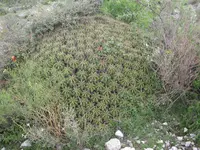
Ferocactus robustus is a clustering barrel cactus forming low, dense mounds of rounded stems armed with strong, stiff spines. It stays relatively compact but can form wide colonies over time. Native to arid regions of central Mexico, it is adapted to high light, intense sun, and rocky, fast-draining soils. This species is slow-growing but long-lived, making it suitable for containers and rock gardens. Its drought tolerance and minimal foliage make it relatively simple to care for Cactus indoors or outdoors, provided excess moisture is avoided.

Main Plant Requirements

Care Difficulty

Easy Care

Light Preference

Full Sun

Water Requirements

Low Water

Temperature Preference

Warm Climate

Hardiness Zone

9–11

Soil Texture

Sandy, Loamy, Rocky

Soil pH

Slightly acidic (6.5–7.0), Neutral (7.0)

Soil Drainage

Well-drained

Fertilization

Minimal (feed rarely)

Get Personalized Care Plan

Scan your plant to receive care tips personalized for your specific plant

Available on iOS and Android

How to Care for the Cactus

Ferocactus robustus thrives in strong light that mimics open desert exposure.

  • Provide 6–8 hours of direct sun daily; full sun is ideal, especially in the morning when rays are less intense.
  • Plant in an open, unshaded spot outdoors; it tolerates light afternoon shade in very hot climates to prevent epidermis scorching.
  • In winter, ensure at least 4–5 hours of sun; too little light causes elongated, weak growth and pale ribs.

This species prefers thorough but infrequent watering that allows the soil to dry between soakings.

  • Water only when the top 3–5 cm of soil are completely dry; in hot growing season this may mean every 10–21 days depending on climate and soil.
  • Use very fast-draining, gritty soil on a slope or raised bed; standing water or compact clay greatly increases root rot risk for Ferocactus robustus.
  • Reduce watering sharply in winter, giving only enough to prevent shriveling; signs of overwatering include yellowing, soft tissue, and blackened root collar.

This desert cactus is heat tolerant but only moderately cold hardy and must be protected from frost.

  • Aim for 70–90°F (21–32°C) during active growth; stable warmth supports firm rib development and healthy spine production.
  • It tolerates brief dips to about 25°F (-4°C) if completely dry, but repeated freezes or wet cold quickly damage tissues and roots.
  • In very hot spells above 100°F (38°C), maintain sharply draining soil and occasional light afternoon shade to limit heat stress and sunscald.

Humidity is rarely a concern for Ferocactus robustus, which prefers dry air and arid conditions.

  • Aim for 20–40% relative humidity, similar to a dry indoor room or desert-like climate.
  • This species tolerates very dry air; problems usually arise only if humidity stays above 60% with poor air movement.
  • Excess humidity shows as soft, discolored tissue and black spotting; improve airflow and keep the plant away from humidifiers or constantly damp areas.

Ferocactus robustus needs a fast-draining, mineral-heavy substrate that prevents water from lingering around the roots.

  • Use a gritty mix such as 50–70% mineral material (pumice, coarse sand, or small gravel) blended with 30–50% cactus potting mix.
  • Target slightly acidic to neutral pH, roughly 6.0–7.0, avoiding very acidic or highly alkaline blends that can limit nutrient uptake.
  • Create strong drainage and aeration by using large, irregular particles (5–10 mm) rather than fine sand that can compact and hold moisture.
  • Avoid moisture-retentive components like peat-heavy mixes, clay soil, or unamended garden soil, which increase rot risk in the root zone.

This species is well suited to container culture when the pot supports its shallow, spreading root system and heavy body.

  • Select a wide, low container to reduce tipping risk as the clumps expand sideways and gain weight.
  • Choose an unglazed clay pot if possible, as its porous walls help water evaporate faster and keep the root zone drier.
  • Position the pot where excess water can drain freely and run off quickly, not in outer saucers that allow water to pool around the base.

Ferocactus robustus benefits from light, controlled feeding during the warm growing season.

  • Use a cactus-specific or balanced low-nitrogen fertilizer (for example 5-10-10) at 1/4–1/2 label strength.
  • Apply liquid feed every 4–6 weeks from late spring to late summer on already-moist soil.
  • Avoid compost or rich organic fertilizers that keep soil wet and promote rot.
  • Stop feeding in fall and winter to respect dormancy and avoid soft, weak growth.

Ferocactus robustus needs almost no pruning, as removal of living tissue can invite rot.

This slow-growing cactus prefers slightly tight containers and infrequent disturbance.

  • Repot only every 4–6 years, when roots circle the pot, drainage slows, or growth noticeably declines.
  • Plan repotting for late spring, using a dry, fast-draining cactus mix and a pot only 2–3 cm wider.
  • Wear thick gloves, wrap the plant in folded newspaper, and gently loosen roots without breaking the main root ball.
  • Keep soil mostly dry for 7–10 days after repotting to let damaged roots callus and reduce rot risk.

Propagation of Ferocactus robustus is possible but slow and usually done from seeds or offsets.

  • Collect ripe seeds from mature fruits and sow in late spring on the surface of sterile, sandy cactus mix.
  • Maintain 70–80°F, bright shade, and lightly moist conditions until germination, then reduce humidity gradually.
  • For offsets, cut with a sterile knife, allow cut surfaces to callus for 1–2 weeks, then place on barely moist mix.
  • Provide bright, indirect light and excellent airflow; expect very gradual growth during the first years.

In most temperate regions this species needs careful winter management, especially in containers.

  • Hardy only to light, brief frosts; aim to keep temperatures above 25°F, especially in wet climates.
  • For in-ground plants in mild regions, use a deep gravel mulch to keep the root zone dry in winter rains.
  • Move container plants under a cold greenhouse, porch roof, or indoors to bright, cool, very dry conditions.
  • Water sparingly or not at all in winter, allowing the soil to stay dry to prevent cold-related root rot.

Care Tips

Heavy pot choice

Use a wide, heavy terracotta or clay pot to stabilize the multi-headed clump and reduce the risk of the plant toppling as it offsets and becomes wider than it is tall.

Offset management

Periodically remove and root a few outer offsets with a sterile knife to control clump size, improve airflow around the mother plant, and create genetically identical backup plants.

Dry winter rest

From late fall to early spring, keep the plant completely dry and in the coolest bright spot available to encourage dense, compact growth and better flowering the following season.

Rock mulch layer

Top-dress the soil with a 1–2 cm layer of coarse gravel or pumice to keep the stem base dry, prevent algal crusts, and protect shallow roots from sudden temperature swings.

Safe handling tools

Use folded newspaper strips, thick leather gloves, or silicone barbecue tongs to handle the plant safely when repotting or dividing offsets, avoiding damage to the ribs and spines while caring for Cactus in confined spaces.

Everything About Cactus

Common Pests and Diseases

Root mealybugs

This pest lives hidden in the soil, feeding on roots and the base of stems, which leads to slow decline and poor growth. Symptoms include weak new spines, dull or yellowing skin near the base, and a cottony residue on roots when the plant is unpotted.

Solution

Remove the plant from its pot, wash the roots under lukewarm running water, and cut off heavily infested or rotten roots. Soak the root zone briefly in an insecticidal soap or systemic insect solution labeled for root mealybugs, then repot in fresh, very free-draining cactus mix and keep the substrate on the dry side for 1–2 weeks.

Scale insects

These insects attach to ribs and areoles as small brown or gray bumps, sucking plant sap and causing yellow spots, shriveled tissue, and reduced vigor. Heavy infestations can deform the rounded clumps typical of this species.

Solution

Manually remove visible scales with a cotton swab dipped in isopropyl alcohol, then wash the plant with a strong stream of water to dislodge remaining insects. For persistent cases, apply a horticultural oil or systemic insecticide suitable for cacti, and keep the plant in a bright, airy position to reduce reinfestation while monitoring ribs and areoles closely.

Spider mites

These insects are tiny and often invisible at first, causing fine speckling, rough or bronzed patches on the ribs, and sometimes very fine webbing in the grooves between them. Damage is more common on plants kept in hot, very dry, and poorly ventilated conditions, especially under glass.

Solution

Rinse the plant thoroughly with a firm but controlled jet of water, focusing on rib grooves and areoles, then increase air movement and slightly raise humidity around the plant without wetting the soil. If activity continues, use a miticide or insecticidal soap labeled for spider mites, repeating applications as directed and avoiding direct strong sun until the plant has fully dried.

Erwinia soft rot

This disease causes sudden soft, watery, foul-smelling areas on the stem, often starting from a wound or water-soaked spot near the base. Symptoms include collapsing ribs and tissue that quickly turns brown and mushy.

Solution

Immediately cut away all affected tissue with a sterile knife, slicing well into firm, healthy flesh, and let cut surfaces dry in warm, bright, indirect light until a hard callus forms. Disinfect tools between cuts, discard all infected material, and repot into fresh, sharply drained mix, then keep irrigation light and avoid water sitting on the plant body, especially in cool weather.

Corky sunburn lesions

Symptoms include tan to brown, dry, corky patches on the sun-exposed side of the ribs, often appearing after a rapid move from shade to intense sun. While mostly cosmetic, severe damage can crack and weaken the outer skin, making infection more likely.

Solution

Move the plant to a position with strong but filtered light and gradually increase direct sun exposure over 1–2 weeks, especially after winter or indoor periods. Severely damaged areas cannot be reversed, but preventing further burn by controlled light acclimation and good Ferocactus robustus plant care will allow new growth to remain healthy and maintain the plant’s overall appearance.

Interesting Facts

Clonal mound growth

This species naturally forms low, sprawling mounds made of many individual heads that are all genetically identical offsets arising from an original stem.

Floodplain specialist

In its native range of central Mexico, it often grows on seasonally flooded plains and alluvial fans, tolerating brief periods of heavy rain and water flow that many other desert cacti cannot endure.

Hooked defensive spines

Its strongly hooked central spines are thought to deter large herbivores and may also help trap windblown debris, which slowly breaks down into organic matter around the plant base.

Botan icon

Did you know?

Ferocactus robustus can form massive, colony-like clumps spanning several meters across in habitat, making it one of the most extensive mound-forming barrel cacti where many heads together function as a long-lived, slowly expanding clone.

FAQs about Cactus

This species usually needs to be several years old, well-established, and kept in a bright, cool, dry rest period before flowering. Insufficient light, excess water in winter, or frequent repotting commonly delay or prevent blooms.

Grow Healthy Plants with Botan Care

Keep your plants happy and healthy with plant identification, disease detection, and easy care guidance.

Botan plant care app — identify plants on mobile









