


Cactus Identification (Ferocactus robustus)

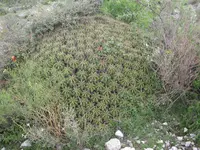
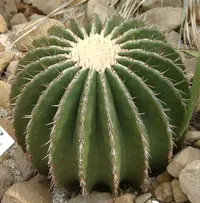
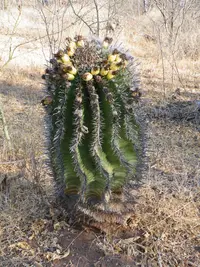
To recognize Ferocactus robustus, look for many barrel-shaped stems packed into a large mound rather than a single plant. Each stem is about 12 inches (30 cm) wide, with strong ribs and stout hooked central spines.

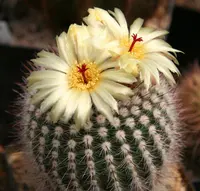
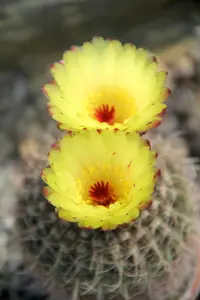
Flowers form in a ring at the stem tips and are yellow.

Ferocactus robustus Identification

Check Your Plant ID

Take or upload a photo to confirm your plant ID with Botan.

Clear images work best. Avoid photos taken too close or too far away

Check the overall form first: Ferocactus robustus usually grows as a dense clump rather than a single stem.

  • Forms many barrel-shaped stems packed tightly together, creating a mound-like cluster.
  • Individual stems are broad and upright, often looking short-cylindrical to barrel-like.
  • Each stem shows strong vertical ribs, typically around 8 to 12, with evenly spaced areoles along them.
  • Areoles carry stout spines that spread outward, with central spines usually thicker than the radial ones.
  • Flowers appear near the stem tops in a ring, usually yellow to yellow-orange and cup-shaped.

The clumping habit is often the fastest visual clue.

Ferocactus robustus shows clear age-related changes in form, clustering, and reproductive structures.

  • Seedling: Seedlings begin as a single small globe with few ribs and short emerging spines, lacking the dense offsets and mound-forming habit seen later.
  • Young plant: Young plants stay solitary or produce only a few basal offsets, with a barrel-shaped stem that is more upright and less crowded than mature clumps.
  • Mature plant: Mature plants form broad colonies as many stems offset from the base, creating rounded mounds often several feet wide instead of one distinct barrel.
  • Flowering stage: At flowering, crowns carry rings of yellow flowers near 2 inches (5 cm) across, concentrated at stem tops rather than scattered along the sides.

The clearest seasonal change in Ferocactus robustus is flowering. Mature plants produce a ring of yellow flowers near the crown, typically in summer, making the top look brighter and more textured than at other times. After bloom, small fruits may remain at the crown for a time. Outside the flowering period, the plant usually keeps the same overall look year-round, with no leaf drop or marked seasonal color shift.

Several barrel cacti can be mistaken for Ferocactus robustus at a glance.

compass barrel cactus(Ferocactus cylindraceus)

Both are ribbed barrel cacti with stout spines. F. cylindraceus is usually solitary or in small groups, not the broad mounding clusters typical of F. robustus. Its stems are more elongated and often noticeably taller than wide.

biznaga barril de acitrón(Echinocactus platyacanthus)

This species shares a heavy barrel shape and strong ribbing. It differs by having a grayer, less crowded spine cover and usually growing as a single massive stem, while F. robustus commonly forms many-headed clumps.

Ferocactus robustus is native to central Mexico, especially the states of Hidalgo and Puebla. It occurs in dry scrub and on rocky volcanic slopes, often in open, sun-exposed sites. That range helps with identification because this species is a Mexican barrel cactus rather than a Sonoran or Chihuahuan Desert species. Seeing it tied to rocky, upland scrub in central Mexico can help narrow similar ferocacti.

  • Sharp spines: Ferocactus robustus has dense, rigid stem spines that can puncture skin on contact. This is a physical injury risk for humans and pets, especially when handling or brushing against the stems.
  • Pet exposure: Ingestion is not a well-established poisoning concern, but pets can injure the mouth or face by biting the spiny stems. The main hazard is mechanical injury from the spines rather than toxic plant tissue.

Confirm It from a Photo

Use Botan to identify or double-check the plant in your photo, which helps reduce mix-ups with similar species.

FAQ

Look for a clumping barrel cactus that forms many crowded stems rather than a single barrel. In Ferocactus robustus identification, the thick ribs and heavy central spines give each stem a strongly armored, rounded look.

Everything About Cactus

More Plant Identification Guides

From Plant ID to Plant Info

Identify a plant from a photo with Botan, then get species-specific care information, safety notes, and common problems.

Botan app identifying a plant from a photo
How to Group Plants in Landscaping: A Practical Layout Guide

8 min read · 31 Aug 2026

How to Group Plants in Landscaping: A Practical Layout Guide

Good plant grouping can mean the difference between a well-planned garden and one that looks sloppy. This guide explores layers, spacing, cluster shapes, and the plants that thrive when you group them.

Plant Care
How to Group Plants in Landscaping: A Practical Layout Guide
How to Mist Plants – Proper Technique and Common Mistakes

7 min read · 30 Jul 2026

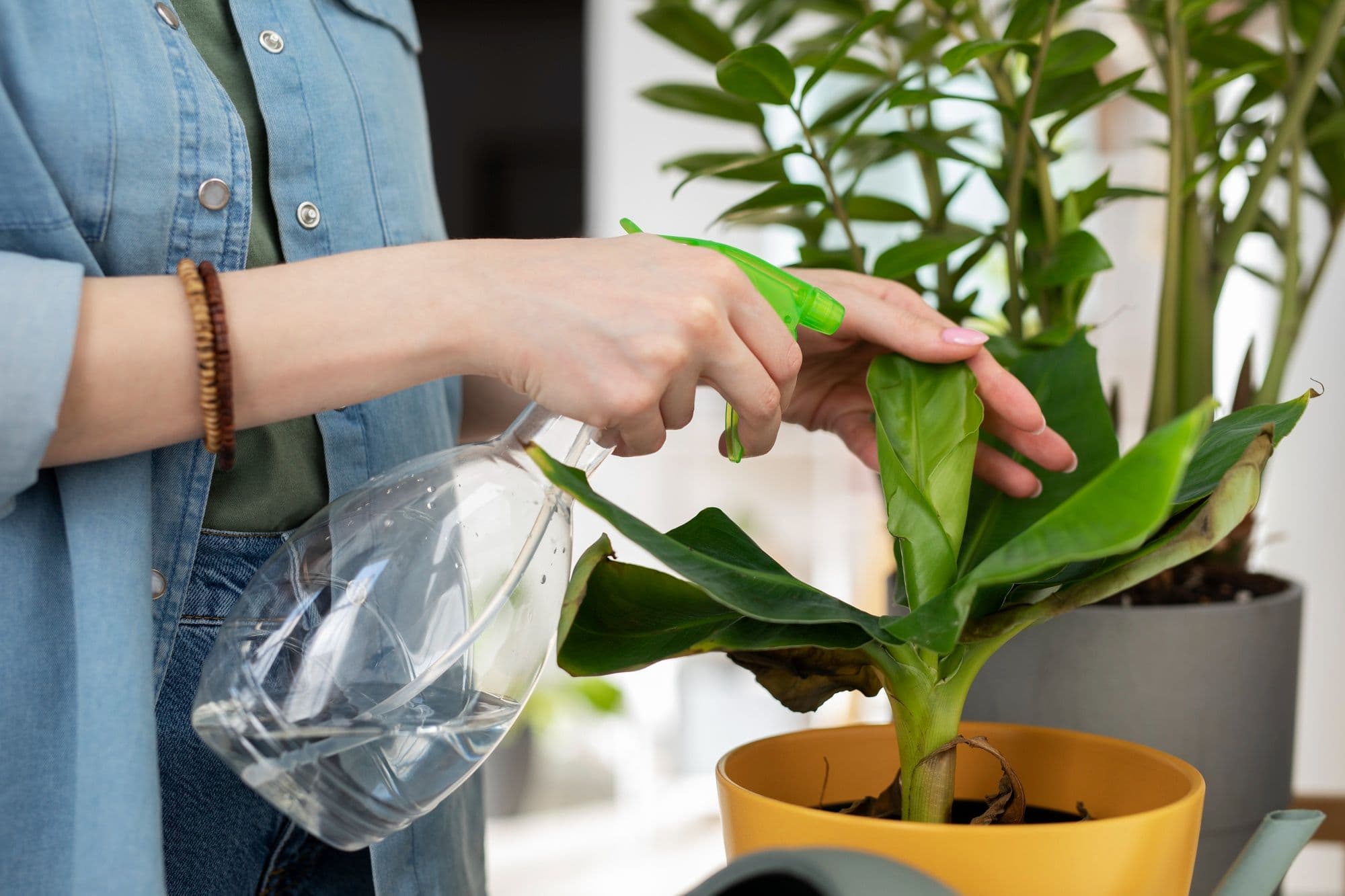
How to Mist Plants – Proper Technique and Common Mistakes

Find out when misting works well and when to avoid it. Here, you’ll find detailed information about compatible and incompatible species, tips on how often to mist plants and do it correctly, and some great alternatives for raising humidity.

Beginner Guides
How to Mist Plants – Proper Technique and Common Mistakes
How to Water Houseplants: Watering Guide

7 min read · 24 Aug 2026

How to Water Houseplants: Watering Guide

Learn how often to water indoor plants, key factors for proper watering, and how to adjust the care routine by plant type, season, pot size, light, and indoor conditions.

Plant Care
How to Water Houseplants: Watering Guide