
prickly pear Identification (Opuntia sulphurea)

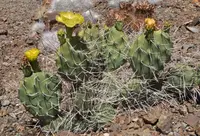
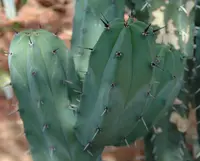
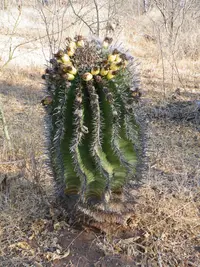
Recognize Opuntia sulphurea by its low, spreading mats of flattened oval pads, usually 4 to 8 inches (10 to 20 cm) long, with pad joints that branch close to the ground.

Check for widely spaced areoles bearing clusters of stiff spines and for broad yellow flowers produced along pad edges.

Opuntia sulphurea Identification

Is This prickly pear?

Upload a plant photo and check the identification in seconds.

Clear images work best. Avoid photos taken too close or too far away

  • 1 free identification
  • No sign-up
  • 30,000+ plants in database

Check the pad shape, spines, flowers, and fruit of Opuntia sulphurea.

  • Forms low, spreading clumps rather than a tall trunked cactus.
  • Stem segments are flattened, oval to round pads joined in chains.
  • Pads carry many areoles, each with clusters of fine glochids and several spines.
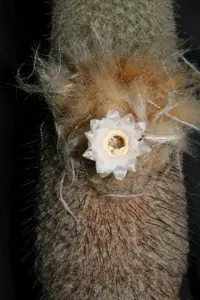
  • Flowers are bright yellow to sulfur-yellow and cup-shaped, about 2-3 inches (5-8 cm) across.
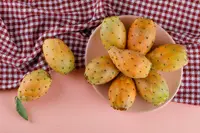
  • Fruits are fleshy, rounded to egg-shaped, and often reddish to purple when visible.

Use several traits together, since pad size and spine count can vary within a plant.

Opuntia sulphurea shows useful visual changes from early pads to flowering, low clumps.

  • Young plant: Starts as a few flattened pads with little branching, usually upright at first rather than forming the broader, spreading clumps seen later.
  • Mature plant: Becomes a low, wide mound about 1 foot (30 cm) tall, with many jointed pads layering and rooting near the base.
  • Flowering stage: Shows larger sulfur-yellow flowers at pad tips, making the clumping outline easier to recognize than in nonflowering plants.
  • Fruiting stage: Develops fleshy, rounded to slightly elongated fruits on the pad edges, remaining visible after flowers fade and adding a distinct reproductive feature.

In spring to early summer, Opuntia sulphurea becomes easier to recognize when its sulfur-yellow flowers open along the pad edges. After flowering, visible fruits may develop and persist for a time, adding small rounded structures above the pads. Outside the bloom period, the plant usually keeps its pad-based form without a strong seasonal shift in outline.

A few flat-padded cacti are regularly mistaken for prickly pear.

wheel cactus(Opuntia robusta)

Confused because both have blue-green pads and yellow flowers. Opuntia robusta has larger, rounder pads, often 8-14 inches (20-35 cm) across, and usually forms a taller shrub.

rabbit ears cactus(Opuntia microdasys)

Similar from a distance because it also makes clusters of rounded pads. It lacks long spines and instead has dense dot-like glochids; pads are smaller and more evenly oval.

Burbank's spineless cactus(Opuntia ficus-indica)

Can resemble it when young because both have broad pads. O. ficus-indica becomes much larger, with pads often over 12 inches (30 cm) long and thicker trunk-like lower growth.

Opuntia sulphurea is native to southern South America, especially Argentina, and also occurs in nearby parts of Bolivia and Paraguay. It is found in dry inland landscapes rather than tropical forest or coastal habitats. Typical sites include arid to semi-arid scrub, open woodland, grassland, and rocky slopes, often on well-drained ground. That setting helps narrow identification because this species is more consistent with dry Chaco and similar thorn-scrub regions than with humid lowland habitats.

  • Spines and glochids: The stems carry long spines and tiny barbed glochids. Skin contact can cause painful punctures and lingering irritation in humans and pets.
  • Pet exposure: Pets that mouth or brush against the pads can get spines or glochids in the mouth, nose, paws, or skin. This is a physical injury risk rather than a known poisoning issue.

Confirm the Species with Botan

Upload a photo to compare key features and help confirm the plant before you label it or buy another one.

FAQ

The flattened stem segments are the clearest clue. They form low mats, often with yellowish spines from the areoles, and the pads are more noticeable than the tiny, short-lived true leaves in prickly pear identification.

Everything About prickly pear

More Plant Identification Guides

Identify the Plant and Get Its Profile

Use Botan to identify a plant from a photo, then review plant details, care information, and common problems for that species.

Botan app identifying a plant from a photo
What Plants Don't Like Epsom Salt?

11 min read · 29 Jul 2026

What Plants Don't Like Epsom Salt?

Learn which plants can be seriously damaged by Epsom salt and which will thrive on it. We’ll explain when and how to use it properly, provide tips for indoor & outdoor plants — read on and enjoy a healthy garden.

Plant Care
What Plants Don't Like Epsom Salt?
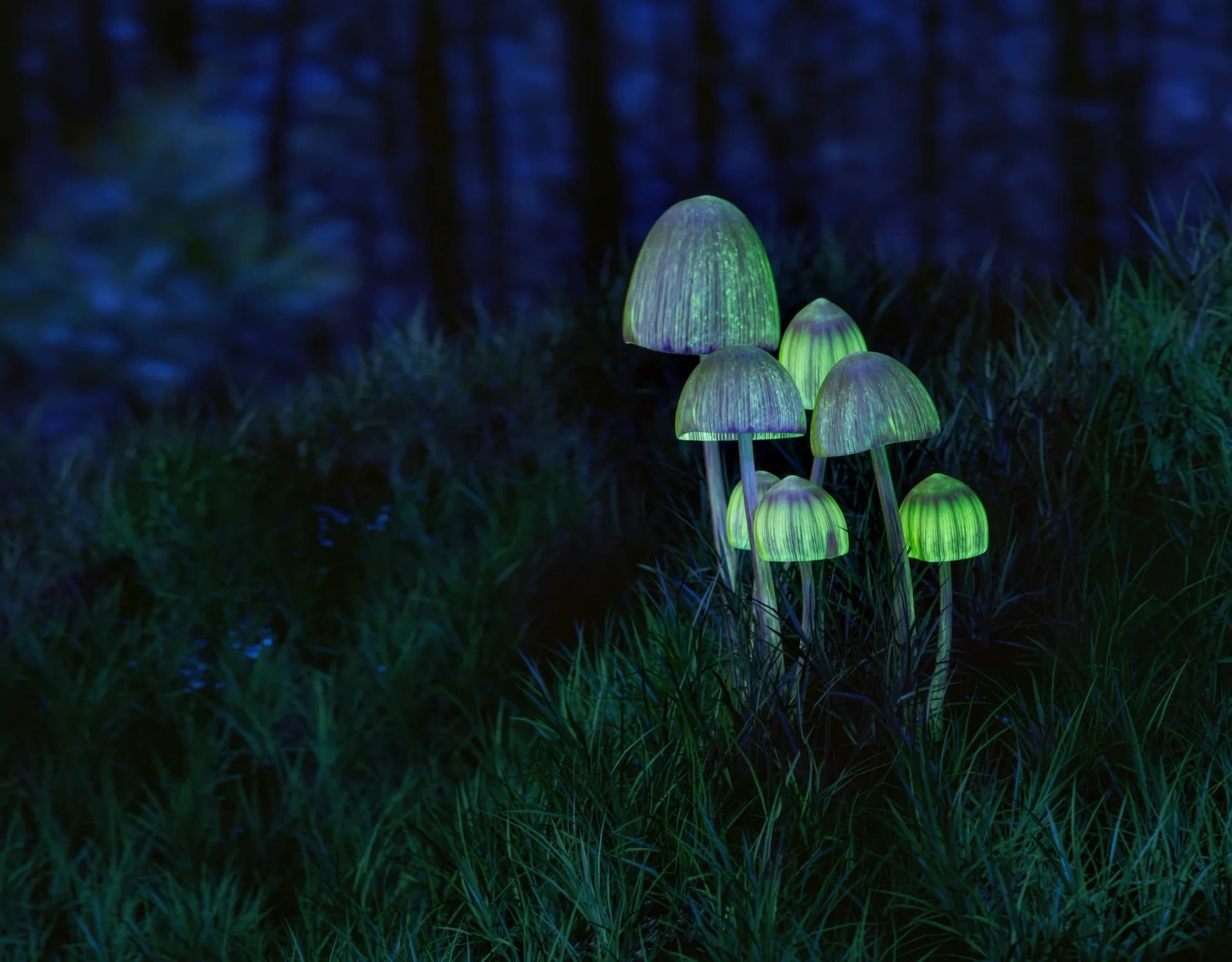
8 Glow-in-the-Dark Plants and Fungi That Really Exist

8 min read · 6 Nov 2026

8 Glow-in-the-Dark Plants and Fungi That Really Exist

Plants that glow in the dusk really exist. Some of them produce their own light, while others need UV exposure or special treatments. Explore eight fascinating examples, including glowing petunias, bioluminescent mushrooms, fluorescent flowers, and experimental succulents.

Plant Recommendations
8 Glow-in-the-Dark Plants and Fungi That Really Exist
10 Easy Garden Flowers to Grow

8 min read · 10 Sept 2026

10 Easy Garden Flowers to Grow

Discover 10 garden flowers that require minimal care. Learn which characteristics make plants easy to grow and follow tips on how to create a beautiful corner from beginner-friendly blooms on your property.

Beginner Guides
10 Easy Garden Flowers to Grow