
Cactus Identification (Ferocactus herrerae)

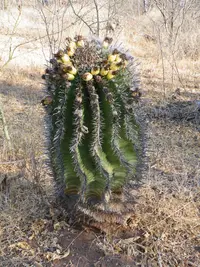
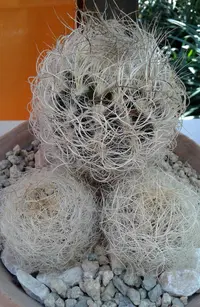
Recognize Ferocactus herrerae by its solitary, nearly spherical stem, usually under 10 inches (25 cm) across, divided into pronounced vertical ribs.

At first glance, check for stout central spines set in neat rows along the ribs and a woolly crown where funnel-shaped flowers emerge near the top.

Ferocactus herrerae Identification

Scan to Confirm Cactus

Upload a clear photo to check your plant identification with Botan.

Clear images work best. Avoid photos taken too close or too far away

Check Ferocactus herrerae for a compact barrel stem with neat, even ribs.

  • Usually solitary, round to short-cylindrical, often wider than tall.
  • Stem shows many narrow vertical ribs, lined with closely spaced areoles.
  • Each areole carries several stout spines; radials spread outward, with stronger central spines.
  • Flowers form a ring near the crown and are funnel-shaped, about 2 inches (5 cm) across.

Crown flowers and a dense, ribbed barrel shape are the quickest visual clues.

Ferocactus herrerae shows clear age-related changes in body shape, spine coverage, flowers, and fruits.

  • Seedling: Seedlings are small and globose, with shallow ribs and short, fine spines; the stout hooked central spines seen later are not yet prominent.
  • Juvenile plant: The body stays rounded but becomes firmer and more deeply ribbed, while spines thicken, lengthen, and spread outward in a denser crown.
  • Mature plant: Mature plants are broader and often slightly barrel-shaped, reaching about 14 inches (35 cm) across, with strong ribs and heavier hooked central spines.
  • Flowering stage: At flowering, a ring of relatively large yellow blooms appears at the crown, making the top look woollier and more visually active than nonflowering plants.

The clearest seasonal clue in Ferocactus herrerae is flowering. Mature plants typically show a ring of yellow flowers at the stem apex in summer, making the crown look brighter and more textured than at other times of year. After flowering, small dry fruits may remain tucked among the wool and spines near the top, adding another visible feature for a time.

A few barrel cacti are regularly mistaken for Ferocactus herrerae.

golden barrel cactus(Echinocactus grusonii)

Both are round, strongly ribbed barrel cacti with yellow spines. Golden barrel usually has many more ribs, often around 20 or more, and a dense woolly crown; F. herrerae typically shows fewer, broader ribs and a cleaner crown.

California barrel cactus(Ferocactus cylindraceus)

Young plants can look similar because both are stout barrel cacti with hooked central spines. F. cylindraceus soon becomes taller and more column-like, while F. herrerae stays more squat and globose; its spines also tend to look finer and less heavy.

Ferocactus herrerae is native to north-central Mexico, especially the Chihuahuan Desert region in Coahuila and nearby areas. That range helps separate it from similar barrel cacti native to Sonora, Baja California, or the southwestern United States. In habitat it is found in dry desert settings, often on rocky or gravelly ground with sparse scrub. For identification, a plant labeled as wild from humid lowland tropics or forested habitat would not fit this species well.

  • Sharp spines: Ferocactus herrerae is not known for toxicity, but its stems carry stout spines that can puncture skin on contact. This is an injury risk for both humans and pets, especially when handling or brushing past the plant.

Does Your Plant Match?

Use Botan to compare a photo and help identify or confirm the plant, which can reduce mix-ups before you label or buy it.

FAQ

Look for a solitary barrel-shaped body with many narrow ribs and strong spines arising from woolly areoles, the small felted pads that produce spines. Flowers form near the crown. These traits support Ferocactus herrerae identification.

Everything About Cactus

More Plant Identification Guides

Find Out What Plant It Is

Identify it from a photo with Botan, then review plant details, care information, and common problems for the matched species.

Botan app identifying a plant from a photo
Thorny Plants: A Comprehensive Guide

10 min read · 25 Aug 2026

Thorny Plants: A Comprehensive Guide

Many plants defend themselves with sharp thorns. This guide explores over 20 examples among flowers, shrubs, trees, and vines. You'll learn what each plant looks like, why it grows thorns, and how to quickly identify them.

Plant Recommendations
Thorny Plants: A Comprehensive Guide
Plants That Repel Bugs – 20 Effective Options

12 min read · 16 Jul 2026

Plants That Repel Bugs – 20 Effective Options

Mosquitoes on the patio? Gnats in the kitchen? Some plants keep them away with the scent of their own leaves. Here are 20 that deal with mosquitoes, flies, aphids, and more, plus where to put them so they help.

Plant Recommendations
Plants That Repel Bugs – 20 Effective Options
Plant Pot Sizes: How to Choose the Right Plant Container

7 min read · 20 Aug 2026

Plant Pot Sizes: How to Choose the Right Plant Container

Plant pot sizes can be confusing because the number on the label only tells you part of the required information. A container may look spacious but actually be too shallow. So, how to choose pot size for plant species?

Beginner Guides
Plant Pot Sizes: How to Choose the Right Plant Container