
Cactus Identification (Strombocactus disciformis)

Recognize Strombocactus disciformis by its small, flattened globe stem, usually under 4 inches (10 cm) wide, with no ribs and tight spirals of triangular, corky tubercles.

The stem stays solitary rather than clustering, and the flowers emerge from the woolly crown at the center, adding a reliable structural cue.

Strombocactus disciformis Identification

Check Your Plant ID

Upload a clear photo to check your plant identification with Botan.

Clear images work best. Avoid photos taken too close or too far away

Check the body shape, tubercle pattern, and flower position on Strombocactus disciformis.

  • Stem is flattened to disc-shaped, usually solitary, wider than tall, about 1 to 3 inches (2.5 to 7.5 cm) across.
  • Surface is divided into broad, triangular tubercles arranged in tight spiral rows, giving a geometric, sculptured look.
  • Each tubercle tip bears a small woolly areole with 3 to 5 short, papery gray to brown spines.
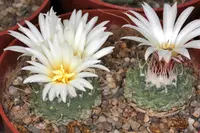
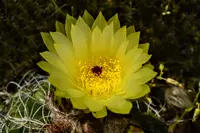
  • Flowers appear from the center, funnel-shaped and relatively large for the stem, usually white to creamy white.

A low, flattened body with spiral triangular tubercles is the quickest visual clue.

Strombocactus disciformis shows useful age-related changes in body shape, tubercles, flowers, and fruits.

  • Seedling: Tiny plants are more rounded than flattened, with simpler surface patterning and small, soft-looking tubercles before the strongly sculptured adult body develops.
  • Young plant: The stem becomes distinctly depressed and disc-like, usually remaining solitary, while the tubercles enlarge and arrange into clearer spirals across the crown.
  • Flowering stage: Flowers appear from wool at the center, adding a clear identification cue: pale, funnel-shaped blooms about 1 inch (2.5 cm) across.
  • Fruiting stage: After flowering, a slender, dry fruit emerges from the crown wool, projecting above the stem instead of staying hidden within it.

The clearest seasonal clue in Strombocactus disciformis is flowering. Small blooms appear from the woolly crown in spring to early summer, making the otherwise low, gray-green body easier to recognize. After flowering, dry fruits may remain tucked among the crown wool for a time. Outside the blooming period, the plant usually keeps the same compact, disc-like look, so seasonal identification relies mostly on flowers and later fruit.

A few tiny, flat-topped Mexican cacti can be mistaken for Strombocactus disciformis.

artichoke cactus(Obregonia denegrii)

Often confused because both are solitary, depressed plants with geometric tubercles. Obregonia has larger, broader, triangular tubercles arranged like an artichoke, not the smaller, tighter spirals of Strombocactus disciformis.

living rock cactus(Ariocarpus fissuratus)

This species can look similar when young because it is low and spineless with a flat body. It differs by having fewer, much broader tubercles with rough, fissured upper surfaces rather than narrow, sharply defined conical tubercles.

Strombocactus disciformis is native to northeastern and central Mexico, especially Hidalgo and nearby areas of Querétaro and San Luis Potosí. It is found on steep limestone hills and canyon walls in arid scrub, often rooted in rock crevices. That narrow range and very specific calcareous, rocky habitat help separate it from superficially similar small cacti from broader desert or grassland settings.

Strombocactus disciformis is not known for toxic sap or poisonous tissues, but its stems carry sharp spines. The main concern is puncture injury from skin contact in humans and pets during handling or if the plant is within reach.

Not Sure About the ID?

Use Botan to identify or confirm your plant from a photo, which can help avoid mix-ups before you label or buy it.

FAQ

Yes. This plant is often identifiable by its flattened, disc-like body and spiraled tubercles that are rhomboid, or diamond-shaped. Its woolly center and very short, few spines also help with Strombocactus disciformis identification.

Everything About Cactus

More Plant Identification Guides

Find the Plant. Get the Details.

Identify it from a photo with Botan, then see plant details, care information, and common problems for that species.

Botan app identifying a plant from a photo
What Plants Don't Like Epsom Salt?

11 min read · 29 Jul 2026

What Plants Don't Like Epsom Salt?

Learn which plants can be seriously damaged by Epsom salt and which will thrive on it. We’ll explain when and how to use it properly, provide tips for indoor & outdoor plants — read on and enjoy a healthy garden.

Plant Care
What Plants Don't Like Epsom Salt?
How Long Can Flowers Go Without Water? Everything You Need to Know

6 min read · 10 Jul 2026

How Long Can Flowers Go Without Water? Everything You Need to Know

Flowers can survive without water anywhere from 1-2 hours to several months, depending on the plant type, species, and growing conditions. Some strong-looking flowers are drought-sensitive, while delicate-looking plants may tolerate long dry periods surprisingly well.

Plant Care
How Long Can Flowers Go Without Water? Everything You Need to Know
Best Fertilizer for Vegetable Gardens – What to Use for Each Plant

11 min read · 20 Jul 2026

Best Fertilizer for Vegetable Gardens – What to Use for Each Plant

Here, you’ll find the right fertilizer formula for vegetables in your garden. Learn how to adjust feeding correctly throughout the growing cycle, spot nutrient deficiencies by their symptoms, and keep your plants healthy and prolific.

Plant Recommendations
Best Fertilizer for Vegetable Gardens – What to Use for Each Plant