


San Pedro cactus Identification (Echinopsis cuzcoensis)

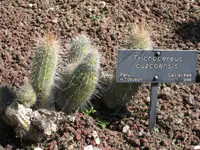
Recognize Echinopsis cuzcoensis by its thick, upright columnar stems with 6 to 8 broad ribs, widely spaced areoles, and stout yellow to brown spines. Stems usually branch from the base and form a candelabra-like clump.

Mature plants become several feet tall, with ribs that stay blunt rather than sharply angled.

Echinopsis cuzcoensis Identification

Identify Your Plant with Botan

Take a photo and use Botan to confirm your plant identification.

Clear images work best. Avoid photos taken too close or too far away

Check the stem form and spine pattern first on Echinopsis cuzcoensis.

  • Usually forms a tall, branching columnar cactus with stout green stems.
  • Stems show about 6-8 broad ribs, with deep grooves between them.
  • Areoles sit along the rib edges at regular intervals and carry dense spines.
  • Each areole often has several radial spines plus 1 longer central spine, usually yellowish to brown.
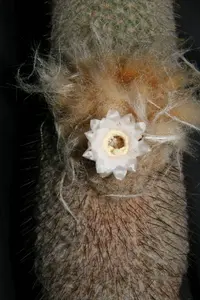
  • Large white funnel-shaped flowers emerge from the stem sides on a noticeably hairy flower tube.

Ribs, areoles, and the longer central spine are the quickest field marks.

Echinopsis cuzcoensis shows useful age-related changes in shape, rib structure, branching, and reproductive features.

  • Seedling: Starts as a small globose cactus with few shallow ribs; the stem is simple, unbranched, and lacks the tall columnar outline seen later.
  • Young plant: Becomes short-columnar, with ribs more distinct and spines stronger; plants under 2 feet (60 cm) usually remain solitary or show very limited branching.
  • Mature plant: Develops a taller columnar body with broader, clearly notched ribs and a stronger trunklike base; older stems commonly branch from the base, forming clumps.
  • Flowering stage: Shows large, white, funnel-shaped flowers carried from the upper stem, around 6-8 inches (15-20 cm) long, making the plant visibly different from nonflowering stems.

The clearest seasonal clue is flowering. Echinopsis cuzcoensis typically shows large, white, night-opening flowers in late spring to summer, projecting from the stem sides on long floral tubes. When present, these blooms change the plant from a purely ribbed column to one with very conspicuous lateral flowers. After flowering, fruits may develop and remain visible for a time, adding another seasonal cue beyond the usual stem form and spines.

Several columnar cacti are mistaken for San Pedro cactus.

Peruvian apple cactus(Cereus repandus)

Confused because both are tall, ribbed, blue-green columns. Cereus repandus usually has 6-9 ribs and a more tree-like, branching habit; Echinopsis cuzcoensis more often shows 6-8 broader ribs and heavier spination.

Bolivian torch cactus(Echinopsis lageniformis)

Often mixed up because both form bluish green columns with similar rib counts. Echinopsis lageniformis is usually more slender, with fewer, shorter spines and a smoother outline; Echinopsis cuzcoensis looks stouter and more heavily armed.

Echinopsis cuzcoensis is native to the Cusco region of Peru, in the Andes. It is reported from dry intermontane valleys and rocky slopes at moderate to high elevations. That range helps with identification because it separates this species from lowland tropical cacti and many North American desert species. An Andean, inland setting with rocky ground is a useful clue when checking records or habitat notes tied to a plant name.

  • Sharp stem spines: The main safety issue is mechanical injury. The stems carry strong spines that can puncture skin on contact in humans and pets.
  • Handling and placement: Risk comes from skin contact, not known poisoning. Place plants away from walkways, children, and curious pets to reduce accidental contact with the spines.

Confirm It from a Photo

Use Botan to identify or confirm your plant from a photo, which helps reduce mix-ups before you label or compare it.

FAQ

Yes. This species has clusters of sharp spines at each areole, usually more numerous and longer than in Trichocereus pachanoi. For San Pedro cactus identification, check the rib margins lined with well-spaced areoles carrying stout spines.

More Plant Identification Guides

Identify It. Learn More About It.

Identify a plant from a photo with Botan, then get species-specific care information, plant details, and common problem guidance.

Botan app identifying a plant from a photo
Rice Water for Plants – Which Plants Love It and How to Make It

8 min read · 14 Jul 2026

Rice Water for Plants – Which Plants Love It and How to Make It

Rice water can be an ideal DIY solution for orchids, roses, or fruiting plants. It supports growth, leaf count, and height. We’ll share how to make and apply it correctly for your plant.

Plant Care
Rice Water for Plants – Which Plants Love It and How to Make It
How Often to Water Fruit Trees

7 min read · 11 Aug 2026

How Often to Water Fruit Trees

Irrigation needs change as roots establish and weather shifts. This guide gives practical starting intervals, explains how soil and tree type change them, and shows how to recognize both excess moisture and drought stress.

Plant Care
How Often to Water Fruit Trees
10 Easy Garden Flowers to Grow

8 min read · 10 Sept 2026

10 Easy Garden Flowers to Grow

Discover 10 garden flowers that require minimal care. Learn which characteristics make plants easy to grow and follow tips on how to create a beautiful corner from beginner-friendly blooms on your property.

Beginner Guides
10 Easy Garden Flowers to Grow