
Cactus Identification (Espostoopsis dybowskii)

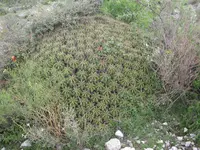
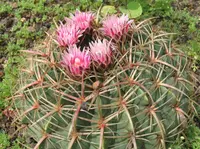
Recognize Espostoopsis dybowskii by its upright, unbranched to sparingly branched columnar stems, usually coated in dense white wool. Each stem has many narrow vertical ribs lined with closely spaced areoles and short spines.

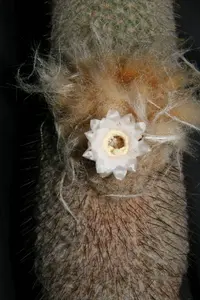
Another strong clue is the side-positioned flowering zone, where longer wool develops along one upper stem section rather than at the tip.

Espostoopsis dybowskii Identification

Is This Cactus?

Use a clear photo to confirm what plant you have.

Clear images work best. Avoid photos taken too close or too far away

Check Espostoopsis dybowskii for a slim, upright, woolly column.

  • Usually grows as a single stem or a few stems, not a broad clump.
  • Columns are narrow and straight, often about 2–4 inches (5–10 cm) thick.
  • The stem surface is hidden by dense white hair, giving a soft, silvery look from a distance.
  • Ribs run vertically from base to tip, with areoles set in orderly lines along them.
  • Near the upper stem, a more woolly flowering zone may form on one side rather than around the whole top.

Flowers are easiest to confirm when present, emerging from that woolly side zone.

Espostoopsis dybowskii shows useful age-related changes in stem form, wool cover, and branching.

  • Juvenile plant: Young stems are solitary and slender, with the white woolly covering already dense enough to hide much of the rib surface and spines.
  • Young plant: As the column elongates, the stem becomes thicker and more upright, usually remaining unbranched while the woolly coat stays even from base upward.
  • Mature plant: Older plants form a taller columnar body, eventually reaching about 10 feet (3 m), and may branch near the base into several parallel stems.
  • Flowering stage: At flowering size, blooms emerge from a more developed lateral flowering zone where the wool appears thicker and more concentrated than on nonflowering stems.

A few woolly columnar cacti can be mistaken for Espostoopsis dybowskii.

Peruvian old man cactus(Espostoa lanata)

Both are slim columns covered in long white hair. Espostoa lanata usually shows stronger ribs and more obvious yellow to brown spines through the wool, while Espostoopsis often looks softer and more evenly white overall.

old man cactus(Cephalocereus senilis)

This species also forms upright columns hidden by shaggy white hairs. It is usually less densely woolly, with longer, looser hair and a greener stem visible beneath; Espostoopsis tends to have tighter, felt-like covering and a more uniformly coated stem.

  • Spines: Espostoopsis dybowskii is a cactus with sharp spines. Contact with the stems can puncture skin in humans and pets, so the main risk is injury from handling or brushing against the plant.
  • Woolly hairs: The dense white hair-like covering can hide the spines, making accidental contact more likely. The concern is skin contact rather than ingestion.

Check Your Plant ID

Use Botan to identify or confirm it from a photo, which helps avoid mix-ups before you label, buy, or compare plants.

FAQ

Look for a slim, upright column covered in dense white wool and fine spines, giving a soft silver look. It usually branches from the base and forms clumps, which helps with Espostoopsis dybowskii identification.

Everything About Cactus

More Plant Identification Guides

Identify Your Plant and Learn More

Snap a photo with Botan to identify it, then get plant details, care information, and common problems for that species.

Botan app identifying a plant from a photo
Dill Companion Plants – What to Grow Next to Dill

9 min read · 17 Jul 2026

Dill Companion Plants – What to Grow Next to Dill

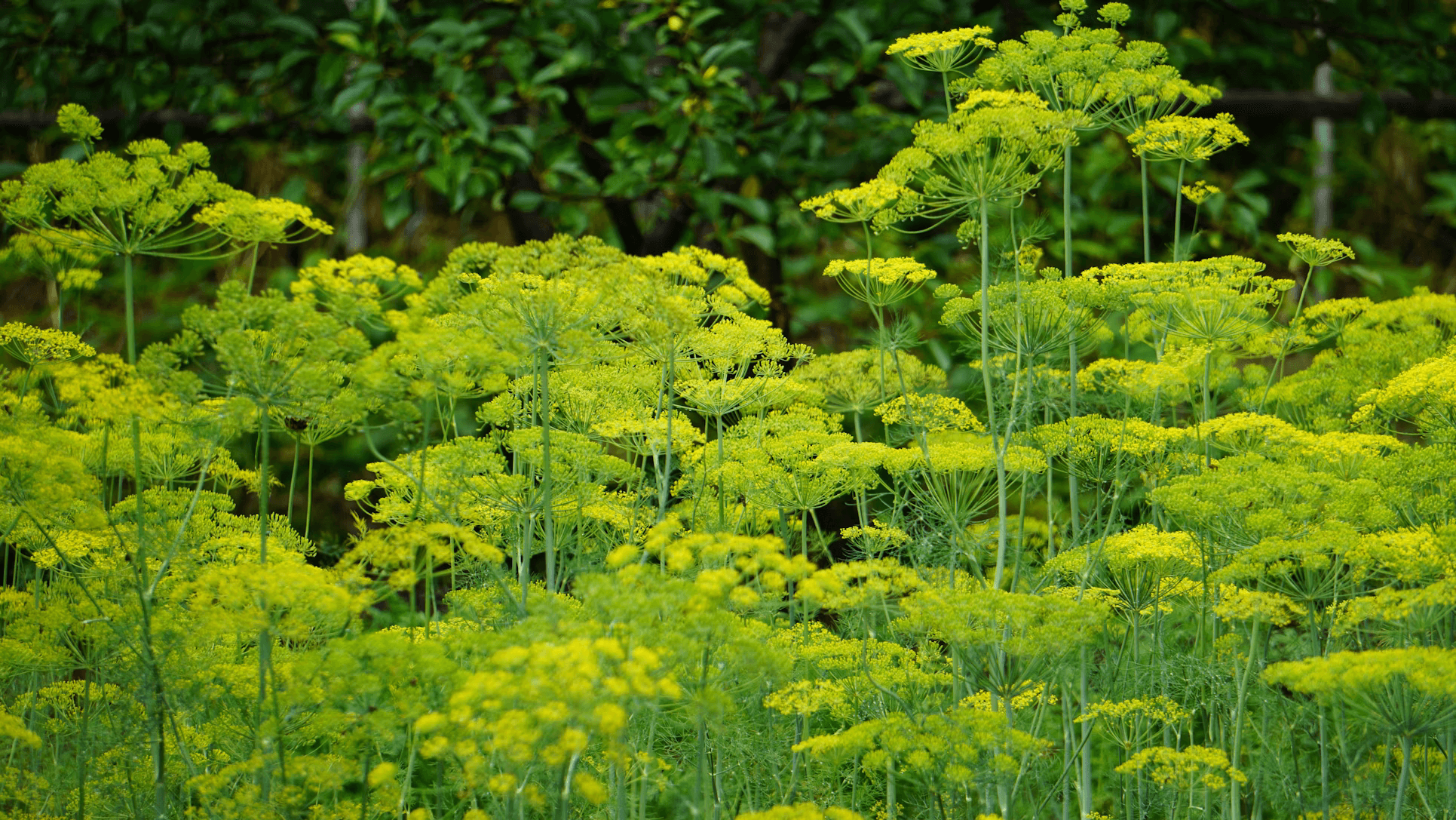
Dill is an easy-to-grow plant that gets along well with many vegetables. This guide describes 15 plants that can be planted alongside it, a few to avoid, and mistakes that can quietly sabotage the entire process.

Plant Recommendations
Dill Companion Plants – What to Grow Next to Dill
Planting Grass Seed in Summer – What Works and What Fails

7 min read · 6 Aug 2026

Planting Grass Seed in Summer – What Works and What Fails

Summer seeding succeeds when the grass type suits the season, and the soil stays moist. Find out how to prepare the seedbed and choose a safe window for planting.

Plant Care
Planting Grass Seed in Summer – What Works and What Fails
20 Most Popular Fruits Around the World

7 min read · 22 Jul 2026

20 Most Popular Fruits Around the World

Curious which fruits the world actually eats the most? Here's the top-20 by production volume, an overview of what people choose in each region, and a few figures that defy common assumptions.

Plant Recommendations
20 Most Popular Fruits Around the World