
Cactus Identification (Parodia ottonis)

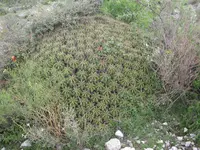
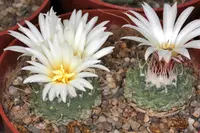
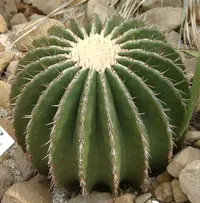
Recognize Parodia ottonis by its solitary to slowly clumping, globe-shaped stem, usually about 4-6 inches (10-15 cm) wide, with clear vertical ribs and dense clusters of short spines from each areole.

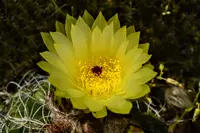
It also shows broad, funnel-shaped yellow flowers that emerge from the crown at the top of the stem.

Parodia ottonis Identification

Identify Your Plant with Botan

Use a clear photo to confirm what plant you have.

Clear images work best. Avoid photos taken too close or too far away

Check the stem, ribs, spines, and flowers on Parodia ottonis.

  • Usually a solitary, round to short-cylindrical stem, often about 4–8 inches (10–20 cm) tall.
  • Stem divided into many clear vertical ribs, with woolly areoles set along the rib edges.
  • Each areole carries several thin radial spines and 1–4 stronger central spines.
  • Flowers sit at the crown and are large for the plant, often yellow and about 2 inches (5 cm) across.

A flattened top with crown flowers is a useful final check.

Parodia ottonis shows clear age-related changes in body shape, offsets, flowers, and fruits.

  • Seedling: Young seedlings are small and globe-shaped, with shallow ribbing and finer spines than older plants, so the body surface looks smoother overall.
  • Young plant: The stem stays solitary and round to short-cylindric, with ribs becoming more distinct and spines stronger, while the top remains densely woolly.
  • Mature plant: Older plants are broader, often 4-8 inches (10-20 cm) across, and commonly form basal offsets, creating clustered mounds rather than a single stem.
  • Flowering stage: Flowers appear from the crown, large and satiny relative to the body, usually yellow, making the woolly apex and ribbed stem easier to recognize.

In late spring to summer, Parodia ottonis is easiest to recognize when its satiny yellow flowers appear at the crown. These are large relative to the stem and stand out clearly against the rounded, ribbed body. After flowering, small reddish to purplish fruits may remain visible for a time near the top. Outside the blooming period, the plant’s overall look changes little in a way useful for identification.

A few small yellow-flowered globular cacti are easy to mix up with Parodia ottonis.

balloon cactus(Parodia magnifica)

Confusion comes from the round body and yellow flowers. Parodia magnifica is usually blue-green with fewer, straighter ribs and often grows taller than wide; P. ottonis is greener and commonly stays more rounded.

golden ball cactus(Parodia leninghausii)

Young plants can look similar when small and globose. This species soon becomes columnar, with many fine golden spines that partly hide the stem; P. ottonis keeps a more open, less shaggy look.

Parodia ottonis is native to southern South America, especially parts of southern Brazil, Uruguay, Paraguay, and northeastern Argentina. It is most often recorded in open grassland and rocky ground rather than forest or true desert. That range helps with identification because this species belongs to a group of small South American cacti from humid pampas-like landscapes and stony slopes. Knowing it comes from grassland habitats can help separate it from similar cacti more typical of very arid desert regions.

Parodia ottonis is not known for toxic sap or poisonous plant parts, but its spines are a practical safety concern. Contact with the stems can puncture skin in humans and pets, and accidental ingestion of spines can injure the mouth.

Not Sure About the ID?

Use Botan to identify or confirm it from a photo, so you can compare results before labeling your plant.

FAQ

Yes. After flowering, it may produce small, dry fruits with tiny black seeds. Fruit can support Parodia ottonis identification, but body shape, rib count, and yellow flowers are usually more useful than fruit alone.

Everything About Cactus

More Plant Identification Guides

Scan Your Plant. Get the Details.

Use Botan to identify it from a photo, then review plant details, care information, and common problems.

Botan app identifying a plant from a photo
12 Best Plants for Bathroom That Thrive in Humid Conditions

9 min read · 29 Sept 2026

12 Best Plants for Bathroom That Thrive in Humid Conditions

Discover the 12 best plants for bathroom spaces. Each pick comes with its own advantages, plus light, humidity, watering, and placement tips. Take a look and match the plant to your specific bathroom.

Plant Recommendations
12 Best Plants for Bathroom That Thrive in Humid Conditions
Top 5 Best Indoor Plants for Air Quality

5 min read · 11 Sept 2026

Top 5 Best Indoor Plants for Air Quality

Indoor plants can make a room feel fresher thanks to their air-purifying qualities. Here are 5 of the most suitable choices for your routine and living space.

Plant Recommendations
Top 5 Best Indoor Plants for Air Quality
How to Tell if a Plant Is Dead

6 min read · 19 Aug 2026

How to Tell if a Plant Is Dead

A plant can lose its leaves, stop growing, or collapse and still remain alive. A closer look at the stems, roots, bulbs, and tubers can show whether the plant still has a chance to recover.

Beginner Guides
How to Tell if a Plant Is Dead