longmamma nipple cactus Care (Mammillaria sphaerica)

Also known as: Pale mammillaria, Longspine Nipple Cactus
longmamma nipple cactus

About longmamma nipple cactus

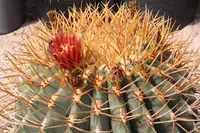
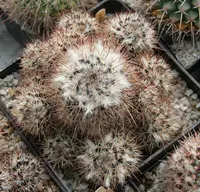
Mammillaria sphaerica, commonly called longmamma nipple cactus, is a small clustering cactus with many rounded stems covered in short, fine spines. It often forms neat, low mounds that can produce small yellow flowers, giving it ornamental value on windowsills and in dish gardens.

This species is native to dry regions of northeastern Mexico, where it grows in rocky, well-drained soils with strong sunlight. Its slow growth, drought tolerance, and modest size make it relatively easy to maintain for indoor growers.

Understanding how to care for longmamma nipple cactus mainly involves providing bright light, very well-draining soil, and careful, infrequent watering to avoid root rot.

Main Plant Requirements

Care Difficulty

Easy Care

Light Preference

Full Sun

Water Requirements

Low Water

Temperature Preference

Warm Climate

Hardiness Zone

9–11

Soil Texture

Sandy, Loamy, Rocky

Soil pH

Slightly acidic (6.5–7.0), Neutral (7.0)

Soil Drainage

Well-drained

Fertilization

Minimal (feed rarely)

Get Personalized Care Plan

Scan your plant to receive care tips personalized for your specific plant

Available on iOS and Android

How to Care for the longmamma nipple cactus

This small cactus prefers bright light with some protection from harsh midday sun.

  • Provide 4–6 hours of direct morning sun plus bright, filtered light for the rest of the day; an east- or southeast-facing spot suits longmamma nipple cactus well.
  • Allow light afternoon sun only where summers are mild; in hot climates give shade cloth or dappled shade from about 1–4 p.m. to prevent bleaching and scorch.
  • Watch spine and stem color: stretching, pale green growth, or leaning toward windows indicates too little light, while yellowing on the sunward side signals excess exposure.

Water needs are low and strongly seasonal for Mammillaria sphaerica.

  • Water only when the top 3–5 cm of soil are completely dry; in active growth this may mean roughly every 10–21 days in warm, dry weather.
  • Use sharply draining, gritty soil and a container or bed that never stays soggy; water thoroughly, then let excess drain away so roots are not left in standing water.
  • Reduce watering sharply in cool seasons, giving only a light drink every 4–6 weeks if stems start to wrinkle slightly, and stop watering if the soil stays cold and damp.

This cactus prefers warm, dry conditions and dislikes prolonged cold or damp.

  • Aim for 70–85°F (21–29°C) during active growth, with good air movement; short spikes up to 95°F (35°C) are tolerated if the soil is free-draining and shade is available.
  • Protect from frost; brief dips to 32°F (0°C) may be survived if perfectly dry, but safer minimums are 40–45°F (4–7°C) with no prolonged chilling.
  • In winter, a cool, dry rest at 45–60°F (7–16°C) helps flower production, while avoiding humid, stagnant air that encourages rot.

This cactus prefers dry air and rarely needs extra humidity attention indoors.

  • Aim for 20–40% relative humidity, similar to most heated indoor environments.
  • Plants tolerate very dry air, but soft, swollen tissue or corking at the base can signal prolonged excess humidity.
  • If air stays above 60%, use a fan for gentle airflow and space plants apart to reduce moisture around stems.

This species needs a very fast-draining, mineral-heavy mix to protect shallow roots from rot.

  • Use a gritty, sandy mix with large mineral content such as pumice, coarse perlite, and 2–3 mm gravel or grit.
  • Combine about 70–80% mineral ingredients with 20–30% low-organic cactus substrate to support Mammillaria sphaerica without trapping water.
  • Keep pH slightly acidic to neutral, around 6.0–7.0, which supports nutrient availability but still limits pathogen growth.
  • Avoid dense peat, clay, or unamended potting compost, and add extra grit or pumice if water does not drain through within a few seconds.

This small cactus is very suitable for container growing, including compact pots on sunny windowsills.

  • Choose a pot only 1–2 in wider than the plant cluster so the sparse roots can dry quickly between waterings.
  • Select a shallow container rather than a deep one to match the fibrous, surface-leaning root system and limit excess wet substrate.
  • Unglazed terracotta is preferable because its porous walls speed evaporation and reduce the risk of prolonged soggy conditions after watering.

This compact cactus benefits from light, controlled feeding to support steady growth without overstimulating soft, weak tissue in longmamma nipple cactus indoor care.

  • Use a balanced cactus fertilizer or low-nitrogen balanced NPK at 1/4–1/2 strength to avoid salt buildup.
  • Feed every 4–6 weeks during spring–summer when active growth is visible.
  • Do not apply fertilizer in fall–winter; the plant rests and excess nutrients can damage roots.
  • Always water lightly before feeding so dissolved fertilizer does not scorch dry roots.

Mammillaria sphaerica needs minimal pruning, mainly for hygiene and to manage clump shape.

  • Best time is late spring–summer, when the plant is actively growing and wounds seal faster.
  • Remove dead, shriveled, or diseased stems and old dried flowers with clean, sharp scissors or small snips.
  • Cut out badly damaged or crowded offsets at the base to open light and air within the clump.
  • Disinfect tools before and after use to reduce the risk of fungal or bacterial infection.

This small cactus prefers occasional repotting in a well-drained mix rather than frequent disturbance.

  • Repot every 3–4 years, or when roots circle the pot, drainage slows, or growth becomes noticeably stunted.
  • Choose late spring as the ideal time, combining repotting with a check for root rot or pests.
  • Use a shallow container with gritty cactus soil, handling the root ball gently to avoid breakage.
  • After repotting, keep the plant dry and shaded for 5–7 days, then reintroduce light waterings gradually.

This species is commonly propagated from offsets and seeds to expand clumps or start new plants.

  • In late spring–summer, detach firm offsets from the parent plant using a sterile knife or snips.
  • Allow cut surfaces to callus in dry shade for 3–7 days before planting to reduce rot risk.
  • Plant offsets in barely moist, gritty cactus mix and provide bright, indirect light and good airflow.
  • For seed propagation, sow on the surface of a sterile, well-drained mix and keep slightly moist and warm at 70–80°F.

This cactus prefers cool, dry winter conditions and is only lightly frost tolerant.

  • Keep winter temperatures ideally around 45–55°F, avoiding prolonged exposure below 32°F.
  • Move container plants indoors or to a cold greenhouse before hard frost, providing bright light and very low humidity.
  • Suspend watering almost completely in winter; only a light sip every 4–6 weeks if stems begin to shrivel.
  • Ensure the potting mix stays dry and roots are not exposed to standing water or freezing drafts.

Care Tips

Offset management

Remove and replant offsets only when they show their own root nubs, then allow cut surfaces to dry 5–7 days before placing on dry, gritty mix to reduce rot risk and maintain neat clumps.

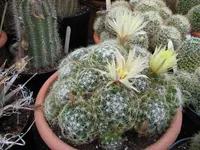
Shallow pot choice

Use a wide, shallow clay pot so the shallow root system can spread laterally, which stabilizes the cluster and improves drying speed after irrigation.

Controlled cluster support

For large, many-headed plants, top-dress with 0.5–1 cm of coarse gravel to support the globes and keep the base dry, preventing stem rot where heads meet the soil.

Seasonal rest handling

During the coolest, lowest-light months, keep the plant completely dry and avoid disturbing or repotting it so it can complete a proper rest period that supports reliable spring flowering.

Targeted pest checks

Inspect the stem bases and between tubercles with a flashlight every few weeks, especially around woolly flower scars, to catch mealybugs early, which is one of the most important habits when caring for longmamma nipple cactus.

Common Pests and Diseases

Mealybugs

This pest feeds on succulent tissue, especially in the axils between tubercles and around the base of the plant, often appearing as white cottony clusters. Symptoms include honeydew, sooty mold on nearby surfaces, and slowed growth.

Solution

Isolate the cactus, then dab visible insects with cotton swabs dipped in 70% isopropyl alcohol, repeating weekly until no new clusters appear. Improve air movement, avoid overfertilizing, and for heavier infestations use a systemic insecticide labeled for cacti, following all directions carefully as part of longmamma nipple cactus indoor care.

Spider mites

These insects are tiny arachnids that thrive on Mammillaria kept very dry in warm, still air, causing dull, roughened skin and fine webbing between tubercles. Symptoms include a grayish or bronzed tone on the stem surface and reduced vigor.

Solution

Increase air circulation and lightly hose the plant with a firm but gentle jet of water to dislodge mites, allowing it to dry quickly in bright light. For persistent problems, apply a miticide or insecticidal soap labeled for succulents, treating all nearby plants and repeating as directed to break the life cycle.

Scale insects

This pest appears as small, hard, brown or gray bumps on ribs and around the base, where it feeds on sap and weakens the plant. Symptoms include localized yellowing, stunted new growth, and sticky honeydew that can attract mold.

Solution

Scrape or flick off individual scales with a toothpick or soft brush, then wipe affected areas with 70% isopropyl alcohol. For recurring infestations, use a systemic insecticide and reduce plant crowding so inspections of the cactus body and base are easier and more frequent.

Corky stem spot (physiological corking)

This disease-like condition is common in older Mammillaria, where lower tissue becomes dry, tan, and corky, sometimes after minor mechanical damage or strong sun. Symptoms include firm, brown, bark-like patches that do not feel soft or wet.

Solution

No chemical treatment is needed; maintain stable watering, avoiding sudden swings from very dry to very wet soil, and protect the stem from abrupt full-sun exposure. Monitor the area for any softening or spread; if tissue stays hard and dry, this is a cosmetic aging process and the plant can be grown on normally.

Soft bacterial rot

This disease develops in overwatered or mechanically damaged tissue, especially in cool, poorly ventilated conditions, causing soft, foul-smelling, brown or black areas on the stem. Symptoms include rapid collapse of tubercles and a wet, mushy feel around the lesion.

Solution

Immediately cut away all affected tissue with a sterile knife, ensuring only firm, healthy tissue remains, and let cut surfaces dry and callus in a warm, airy place for several days. Discard badly affected plants, improve pot drainage and watering frequency, and sterilize tools and pots to prevent reinfection of new specimens used to grow Mammillaria sphaerica.

Interesting Facts

Natural clumping habit

This species naturally forms dense clusters of many small spherical stems, creating cushion-like mounds that can slowly expand across shallow rocky soils in its native range of northeastern Mexico.

Adapted to intense sun

In habitat it grows fully exposed on limestone slopes and rock outcrops, tolerating very high light and heat thanks to its thick epidermis and closely set tubercles that reduce direct sun on the stem surface.

Lemon-yellow flower rings

It produces small, pale to lemon-yellow flowers in a ring near the stem apex, often opening in succession so that a single clump can show multiple flushes of bloom during the warm season.

Botan icon

Did you know?

This cactus is considered one of the few Mammillaria species that can sometimes be found growing almost level with the surrounding rock surface, with much of its body protected below the soil line, an adaptation that helps it survive strong sun and periodic drought in its limestone habitats.

FAQs about longmamma nipple cactus

Lack of flowers often relates to insufficient light, no cool dry winter rest, or excess nitrogen fertilizer. Provide bright exposure, a cooler, drier period in winter, and avoid frequent repotting to support regular blooming.

Grow Healthy Plants with Botan Care

Keep your plants happy and healthy with plant identification, disease detection, and easy care guidance.

Botan plant care app — identify plants on mobile

Explore More Plants