
Cactus Identification (Ferocactus macrodiscus)

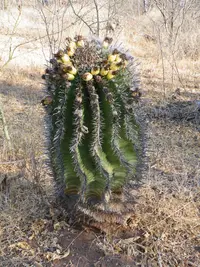
Recognize Ferocactus macrodiscus by its flattened, disk-like stem, usually wider than tall, with broad ribs divided into large chin-like tubercles.

Check the crown for a woolly center and stout, curved spines from each areole. The plant stays solitary and low, often under 1 foot (30 cm) tall.

Ferocactus macrodiscus Identification

Check Your Plant ID

Upload a clear image to check whether your plant ID is correct.

Clear images work best. Avoid photos taken too close or too far away

Check the plant’s body shape, ribs, spines, and flowers for Ferocactus macrodiscus.

  • The stem is strongly flattened and disk-like rather than columnar, usually wider than tall.
  • It stays low, often about 12 inches (30 cm) tall but up to 16 inches (40 cm) across.
  • Look for many broad, straight ribs with evenly spaced areoles, the small spine-bearing pads.
  • Each areole carries several stout radial spines and a few heavier central spines.
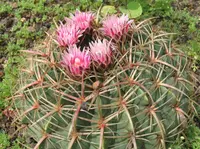
  • Flowers are large for the plant, funnel-shaped, and pink to magenta near the crown.

A broad, low body with large crown flowers is the quickest field clue.

Ferocactus macrodiscus shows clear stage-based shape and spine changes that aid identification.

  • Seedling: Starts as a small rounded body with few ribs and short, sparse spines, lacking the broad, flattened profile seen later.
  • Young plant: Body becomes distinctly depressed and disk-like, spreading wider than tall, with stronger rib definition and more obvious radial and central spines.
  • Mature plant: Develops a broad, flattened stem often 12-16 inches (30-40 cm) across, with heavy ribs and stout, curved central spines.
  • Flowering stage: Shows a woolly crown at the stem center, where large pink to magenta flowers appear in a ring above the flattened body.

The clearest seasonal clue in Ferocactus macrodiscus is flowering. In late spring to early summer, a ring of large pink to magenta flowers appears at the crown, making the otherwise low, flattened stem much easier to recognize. After flowering, woolly crown growth may remain visible for a time, and dry fruits can persist near the top.

A few barrel cacti can be mistaken for Ferocactus macrodiscus at a glance.

fishhook barrel cactus(Ferocactus latispinus)

Often confused because both are flattened barrel cacti with broad hooked central spines. F. latispinus usually has more numerous, narrower ribs and a more obvious hooked central spine set.

devil's tongue barrel cactus(Ferocactus recurvus)

Similar in having a depressed barrel shape and stout spines. F. recurvus becomes taller with age, while F. macrodiscus stays lower and broader; its ribs are usually less broad and plate-like.

Ferocactus macrodiscus is native to central Mexico, with records from the Mexican Plateau in states including Hidalgo, Querétaro, and San Luis Potosí. That range helps separate it from similar barrel cacti more typical of northwestern Mexico or the US Southwest. It grows in dry scrub and grassland, often on rocky or calcareous soils, including open slopes and flats. Seeing a flattened Ferocactus in these inland, semi-arid habitats is a useful identification clue.

  • Sharp spines: Ferocactus macrodiscus has rigid stem spines that can puncture skin on contact. This is a handling injury risk for both humans and pets, especially around the stem and crown.
  • Ingestion risk: The main concern is mechanical injury rather than poison. Pets or children that mouth or bite the stem or spines can injure the mouth, lips, or digestive tract by ingestion of spine fragments.

Not Sure About the ID?

Upload a photo to Botan for a quick ID check or second opinion before you label, buy, or repot it.

FAQ

Look for a flattened, disc-like cactus with broad ribs, blue-green to gray-green skin, and stout radial spines. Mature plants stay low and wide rather than columnar, which helps with Ferocactus macrodiscus identification.

Everything About Cactus

More Plant Identification Guides

Know Your Plant Better

Use a photo to identify it with Botan, then see plant details, care information, and common problems for that species.

Botan app identifying a plant from a photo
Can Plants Grow With Artificial Light?

6 min read · 15 Sept 2026

Can Plants Grow With Artificial Light?

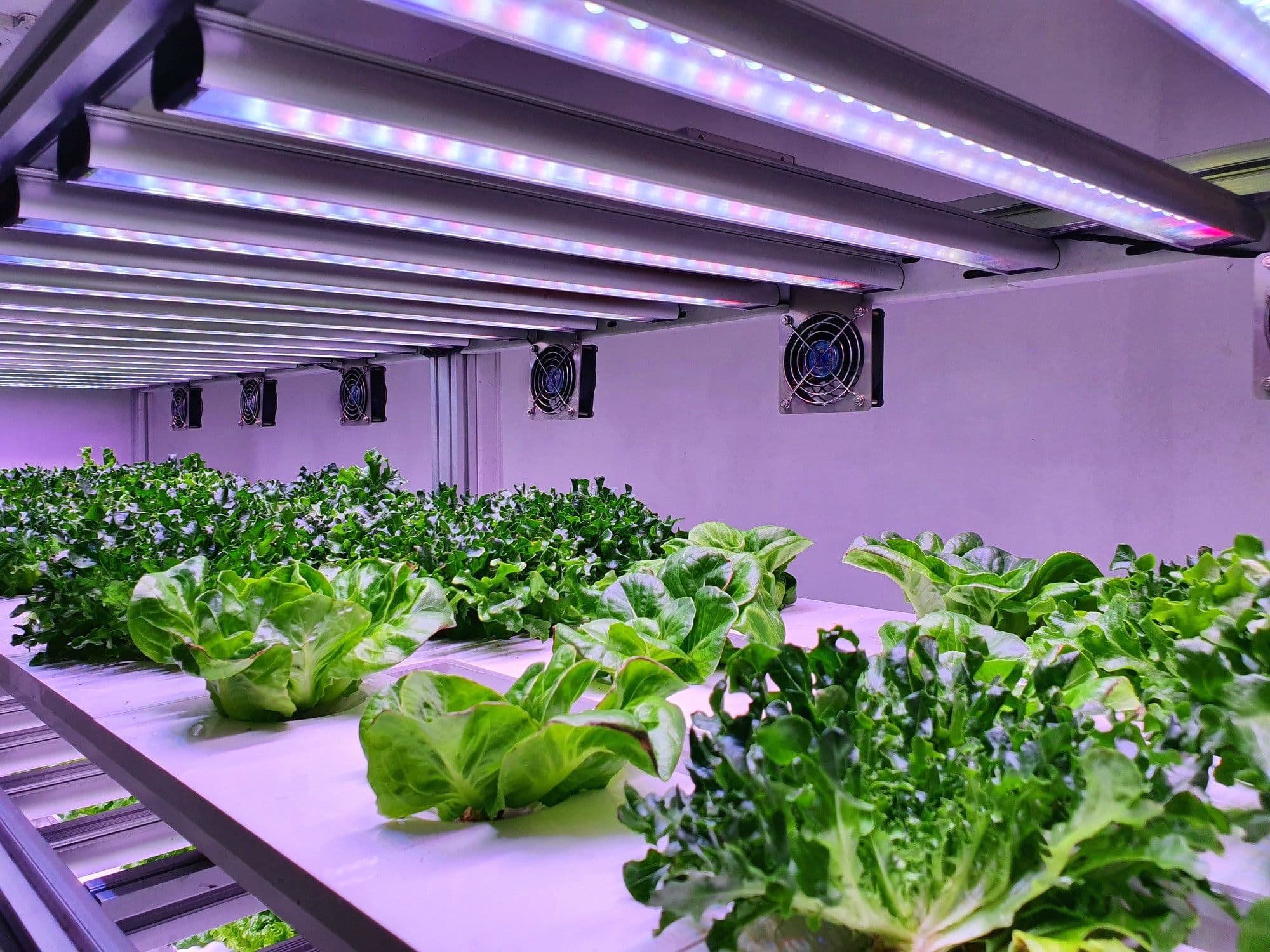
Plants can grow under artificial light when the setup provides a suitable spectrum, enough intensity, and sufficient daily exposure. This guide explains how artificial lighting compares with sunlight, which options work indoors, and how to match a setup to houseplants.

Plant Care
Can Plants Grow With Artificial Light?
Best Fertilizer for Grass in Summer: How to Choose the Right One

6 min read · 18 Aug 2026

Best Fertilizer for Grass in Summer: How to Choose the Right One

The right fertilizer in summer can make a lawn thrive. The wrong one can damage it. Here, you’ll learn the best NPK ratios by grass type, when and how to apply your formula, and how to recognize the signs of over- or under-fertilizing.

Plant Care
Best Fertilizer for Grass in Summer: How to Choose the Right One
How Fast Does Bamboo Grow Per Day, Month, and Year

10 min read · 7 Jul 2026

How Fast Does Bamboo Grow Per Day, Month, and Year

Bamboo grows extremely fast: some species can reach 5-6 m in just 3-4 months under the right conditions. This guide explains how much bamboo can grow per day, week, and year, and what affects its growth rate.

Plant Recommendations
How Fast Does Bamboo Grow Per Day, Month, and Year