Austrocactus spiniflorus Care

Austrocactus spiniflorus

About Austrocactus spiniflorus

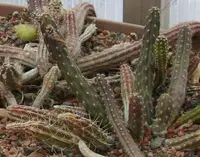
Austrocactus spiniflorus is a small, spiny cactus native to the dry, windy regions of Patagonia in southern Argentina and Chile. It typically forms low, cylindrical stems with prominent ribs and dense, stiff spines. In suitable conditions it produces relatively large, colorful flowers near the stem tips, which are striking against its compact body. This species is adapted to intense sun, poor mineral soils, and strong temperature swings, so it prefers bright light, very well-drained substrate, and minimal moisture. Its slow growth, sensitivity to excess water, and need for strong light make it moderately challenging for beginners, but quite manageable for growers who learn how to care for Austrocactus spiniflorus.

Main Plant Requirements

Care Difficulty

Moderate Care

Light Preference

Full Sun

Water Requirements

Low Water

Temperature Preference

Cold Hardy

Hardiness Zone

5–8

Soil Texture

Sandy, Rocky, Loamy

Soil pH

Slightly acidic (6.5–7.0), Neutral (7.0)

Soil Drainage

Well-drained

Fertilization

Minimal (feed rarely)

Get Personalized Care Plan

Scan your plant to receive care tips personalized for your specific plant

Available on iOS and Android

How to Care for the Austrocactus spiniflorus

This cactus prefers strong light that mimics its open, high-desert habitat.

  • Provide 6–8 hours of direct sun daily, ideally with morning sun and some protection from harsh mid-afternoon summer rays.
  • It tolerates light partial shade, but stems of Austrocactus spiniflorus may elongate and lose dense spines if light drops below about 4 hours of direct sun.
  • In very hot climates, use bright, filtered light or brief shade during heatwaves to prevent bleaching or corky, sunburned patches.

Watering should follow the soil’s drying pattern rather than a fixed calendar.

  • During active growth in spring–summer, water only when the top 3–5 cm of soil are completely dry, then soak and let excess drain away quickly.
  • Use a very fast-draining, gritty mix so roots are not exposed to standing water, which leads to soft, yellowing stems and root rot.
  • In autumn–winter, water sparingly or not at all, watching for slight wrinkling as a sign to give a light drink without fully saturating the soil.

Temperature management focuses on cool, dry winters and moderate, bright summers.

  • For active growth, keep temperatures around 65–80°F (18–27°C); short periods up to 90°F (32°C) are tolerated if soil stays dry and ventilation is good.
  • This species can survive brief drops near 20°F (-6°C) if kept completely dry, but extended freezing with wet soil increases rot risk.
  • In colder regions, protect from hard frost and sudden freeze–thaw cycles, moving containers or providing covers when temperatures swing sharply.

This cactus prefers dry air and usually does not need humidity adjustment indoors.

This species needs a very fast-draining, mineral-rich substrate to avoid root rot.

  • Use a gritty mix based on coarse sand or fine gravel with minimal organic matter, such as 70% mineral components and 30% cactus potting mix.
  • Ensure a loose, open structure that water passes through within seconds, with no pooling on the surface.
  • Aim for slightly acidic to neutral pH around 6.0–7.0, which supports nutrient uptake without encouraging rot.
  • Avoid dense peat-based mixes, unamended garden soil, or any medium that stays wet for more than 1–2 days.

This cactus is suitable for container growing when the pot is chosen to match its deep, taprooted habit.

  • Select a pot that is deeper than it is wide to accommodate the long taproot and prevent constriction stress.
  • Choose unglazed terracotta if possible, as its porous walls help excess moisture evaporate faster in cool or humid weather.
  • Add a thick, coarse drainage layer above the holes so water exits quickly and the base of the root zone never sits in saturated mix.

This cactus needs only light feeding to stay healthy in cultivation.

  • Use a low-strength balanced cactus fertilizer (for example 5-5-5 or 10-10-10) diluted to 25–50% of the label rate.
  • Apply once in mid to late spring and once in midsummer during active growth, on moist soil to avoid root burn.
  • Skip feeding in fall and winter dormancy, especially for outdoor plants in poor but well-drained soils.

Pruning needs for Austrocactus spiniflorus are minimal and mainly hygienic.

  • Best time is late winter to early spring, before strong new growth starts.
  • Remove dead, diseased, or rotting stems by cutting cleanly at the base with disinfected, sharp pruners or a knife.
  • Trim collapsed segments after cold or mechanical damage to reduce infection risk and maintain a compact, tidy clump.

Container-grown plants benefit from rare, careful repotting to maintain drainage and root health.

  • Check every 3–4 years; repot when roots circle the pot, emerge from drainage holes, or growth slows despite good light.
  • Repot in late spring using a coarse cactus mix, moving to a pot only 1 size larger with ample drainage holes.
  • Lift the plant with tongs or folded paper, gently loosen outer roots, and remove old, compacted soil without breaking the root ball excessively.
  • After repotting, keep soil barely moist and shaded for 7–10 days to limit transplant shock before returning to full sun.

Propagation is usually done from seed, which maintains the natural form.

  • Sow fresh seed in late winter to spring on a well-drained, sterile cactus mix, barely covering or pressing into the surface.
  • Maintain 70–80°F with bright, indirect light and consistently slight moisture until germination, using a clear cover to hold humidity.
  • Ventilate daily to limit fungal issues, then gradually increase airflow and light as seedlings develop spines.
  • Transplant sturdy seedlings into individual small pots once roots fill the cells, handling by the body rather than the delicate roots.

This species tolerates cold better than many cacti but still needs thoughtful winter management, especially in containers.

  • Established outdoor plants in very well-drained soil can handle light frosts if kept dry around the crown.
  • In regions colder than about 10–15°F, grow Austrocactus spiniflorus in pots that can be moved to a bright, cold, frost-free spot.
  • Keep winter soil almost dry, watering only enough to prevent complete desiccation of the roots and stems.

Care Tips

Cold rest period

Provide a cool, bright winter rest at 35–45°F with almost no water to encourage stronger spines and more reliable spring flowering when growing Austrocactus spiniflorus.

Deep, narrow potting

Use a deep, narrow clay pot to accommodate the long taproot and promote fast drying of the substrate, which reduces the risk of rot in the root neck area.

Spring root inspection

Unpot the plant briefly every 2–3 years at the start of spring to inspect roots for rot or mealybugs, trimming damaged tissue and repotting into fresh, dry mix before watering again.

Rain and dew protection

If grown outdoors, place the plant under a transparent overhang or in a cold frame to protect the crown from frequent rain or heavy dew, which can cause fungal spots and neck rot.

Controlled outdoor hardening

When moving from indoor to outdoor conditions, increase sun and cold exposure gradually over 10–14 days to prevent scorching of the epidermis and sudden cold shock to the tissues.

Common Pests and Diseases

Red spider mites

This pest thrives on stressed, sun-exposed stems in dry, still air and feeds by piercing epidermal cells, causing a dull, roughened surface and fine webbing between ribs and spines.

Solution

Increase air movement, lightly hose or shower the plant to remove mites and webbing, then apply a targeted miticide or insecticidal soap, repeating every 7–10 days until new growth appears clean; in collections, isolate affected plants and avoid chronic under-watering that leads to stress when caring for Austrocactus spiniflorus.

Root mealybugs

These insects live hidden in the potting mix, forming white, cottony clusters on roots and the stem base, leading to slow growth, shriveling, and poor response to watering.

Solution

Unpot the plant, wash roots under running water, and remove all old substrate, then soak roots briefly in an isopropyl alcohol or systemic insecticide solution labeled for root mealies, allow to dry, and repot in fresh, well-draining mineral soil while monitoring nearby pots for reinfestation.

Scale insects

This pest appears as small, hard, brown or gray bumps on ribs and between spines, sucking sap and causing yellowing spots and gradual weakening of stems.

Solution

Manually scrape or rub off visible scale with a cotton swab dipped in isopropyl alcohol, then treat the whole plant with horticultural oil or a systemic insecticide, repeating after 10–14 days and keeping the plant slightly drier and well lit to limit reinfestation.

Fusarium stem rot

This disease enters through small wounds or stressed tissue, causing localized soft, discolored areas that may expand into sunken, reddish-brown rot along the stem.

Solution

At the first sign, cut out all affected tissue back into firm, clean, green tissue with a sterile blade, dust the wound with a dry fungicide or sulfur powder, then keep the plant in a warm, bright, very dry place until a corky callus forms and avoid overhead watering that wets the stem.

Anthracnose lesions

This disease produces small, circular, sunken spots on the stem surface that can coalesce into larger necrotic patches, often following prolonged humidity or splashing water.

Solution

Remove and discard severely spotted segments, improve air circulation and reduce overhead watering, then treat remaining tissue with a copper-based or other labeled fungicide, applying 2–3 times at 7–10 day intervals while keeping the substrate free-draining and allowing surfaces to dry quickly.

Interesting Facts

Patagonian steppe specialist

This cactus is native to the cold, windy steppes of Patagonia in Argentina, where it grows in stony, well-drained soils and tolerates strong temperature fluctuations uncommon for many cacti.

Distinct hooked spines

Its ribs are armed with stout, often slightly hooked central spines that give the stems a bristling appearance and help shade the plant body from intense sun and rapid temperature swings.

Early-season flowering habit

In habitat, it produces relatively small but showy flowers in spring to early summer, often before many other local cacti, taking advantage of the brief period of higher soil moisture after winter.

FAQs about Austrocactus spiniflorus

This species usually flowers only when mature, well-rooted, and exposed to strong seasonal light differences and a cool, dry winter rest. Excess nutrients, frequent watering in winter, or insufficient light commonly reduce bud formation and flowering success.

Grow Healthy Plants with Botan Care

Keep your plants happy and healthy with plant identification, disease detection, and easy care guidance.

Botan plant care app — identify plants on mobile

Explore More Plants