Ferocactus peninsulae Care

Ferocactus peninsulae

About Ferocactus peninsulae

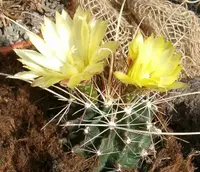
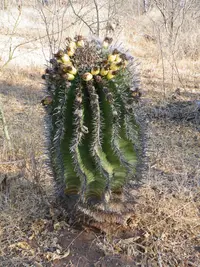
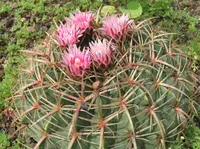
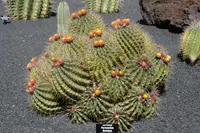
Ferocactus peninsulae is a slow-growing barrel cactus native to the Baja California peninsula in Mexico. It forms a rounded to slightly cylindrical body with pronounced ribs and strong, colorful spines. Mature plants may produce showy funnel-shaped flowers near the crown in warm seasons, adding ornamental value. This species typically grows in arid, rocky habitats with intense sun and very well-drained soils. Its drought tolerance and compact form make it suitable for containers and desert-style plantings. With proper light, minimal watering, and gritty soil, it is relatively straightforward to care for Ferocactus peninsulae.

Main Plant Requirements

Care Difficulty

Easy Care

Light Preference

Full Sun

Water Requirements

Low Water

Temperature Preference

Tropical / Frost Sensitive

Hardiness Zone

9–11

Soil Texture

Sandy, Loamy, Rocky

Soil pH

Slightly acidic (6.5–7.0), Neutral (7.0)

Soil Drainage

Well-drained

Fertilization

Minimal (feed rarely)

Get Personalized Care Plan

Scan your plant to receive care tips personalized for your specific plant

Available on iOS and Android

How to Care for the Ferocactus peninsulae

This desert cactus needs very bright light to full sun to maintain compact, healthy growth.

  • Provide 6–8 hours of direct sun daily, ideally with strong morning sun and some light afternoon shade in very hot, arid regions.
  • Young plants benefit from filtered light or 2–3 weeks of gradual exposure when moving into stronger sun to prevent corky sunburn patches.
  • In summer, protect Ferocactus peninsulae from reflected heat and all‑day afternoon sun; in winter, give the brightest possible, unobstructed light.

This species is drought-adapted and must dry well between waterings to prevent root problems.

  • Water only when the top 3–5 cm of soil are completely dry; in hot, active growth this may mean deep watering every 2–4 weeks depending on climate and soil.
  • Use a very fast-draining, gritty mix and water at soil level, then let excess drain away fully so roots do not sit in standing water.
  • In cool seasons, reduce watering sharply; wrinkles and slight softening suggest thirst, while yellowing and a mushy base indicate overwatering in Ferocactus peninsulae.

This cactus thrives in hot, arid conditions but is sensitive to prolonged cold and frost.

  • Aim for 70–90°F (21–32°C) during active growth; brief heat up to 100°F (38°C) is tolerated in low humidity with some air movement.
  • Avoid frost; the plant is safer kept above 40°F (4°C), with an absolute minimum around 32°F (0°C) only if completely dry and protected.
  • In winter rest, cooler but bright conditions around 50–60°F (10–16°C) help maintain a compact body, while sudden swings from hot days to near-freezing nights can cause stress cracking.

This cactus prefers dry indoor air and humidity management is rarely a concern.

Ferocactus peninsulae thrives in very fast-draining, mineral-rich soil that mimics arid desert conditions.

  • Use a gritty mix of 50–70% inorganic material such as coarse sand, pumice, or perlite blended with 30–50% cactus potting mix.
  • Aim for slightly acidic to neutral pH around 6.0–7.2 to support nutrient availability without encouraging rot organisms.
  • Increase aeration by using large, irregular particles (3–6 mm) rather than fine sand, which can pack and slow drainage.
  • Avoid dense, peat-heavy, or clay-based soils that stay wet for more than 24 hours after a thorough watering.

This species is well suited to container growing when the pot controls excess moisture and supports its heavy body.

  • Choose a wide, low, and heavy container to counterbalance the spiny, top-heavy stem and prevent tipping in strong wind.
  • Select unglazed terracotta if faster evaporation is needed in cooler or more humid climates, as it releases moisture through the pot walls.
  • Leave a dry, coarse top-dressing layer of gravel to reduce stem contact with damp soil and improve air movement around the crown.

This desert cactus benefits from light, controlled feeding during active growth only.

  • Use a low-nitrogen, balanced cactus fertilizer (for example 5-10-10) or dilute balanced NPK at 1/4 strength.
  • Feed Ferocactus peninsulae once every 4–6 weeks in spring and summer when growth is visible.
  • Avoid organic compost and rich slow-release products that keep soil moist for long periods.
  • Stop feeding in fall and winter to keep tissues firm and prevent weak, etiolated growth.

This species needs almost no structural pruning and is usually limited to basic cleanup.

Container-grown plants need infrequent repotting due to slow root growth.

  • Check for roots circling the pot, growing from drainage holes, or stalled growth to decide on repotting.
  • Plan repotting in late spring, about every 4–6 years, when the plant is actively growing.
  • Use a shallow, heavy pot with fresh, very gritty cactus mix to keep the root zone dry and stable.
  • Handle the body with folded newspaper or tongs, disturb roots as little as possible, then keep soil barely dry for 7–10 days.

This cactus is almost always propagated from seed rather than offsets.

  • Sow fresh seeds in late spring under bright, indirect light and warm temperatures around 70–80°F.
  • Use a sterile, very fine, gritty mix, and barely cover the seeds to allow light-assisted germination.
  • Maintain even, slight moisture with high air humidity but provide good air exchange to reduce damping-off.
  • After several months, gradually increase light and reduce humidity, then transplant seedlings once roots are firm.

This desert cactus needs dry, cool but frost-free conditions during winter dormancy, especially in containers.

  • Keep plants around 45–55°F in winter and allow soil to stay almost completely dry.
  • Move potted specimens indoors or into an unheated bright room or greenhouse before temperatures near freezing.
  • Avoid overhead watering in cold periods to prevent crown rot and tissue damage.
  • In mild climates with good drainage, use a gravel mulch to keep the root neck dry during winter rains.

Care Tips

Rotate pot seasonally

Turn the container 90° every 4–6 weeks during active growth so the barrel develops evenly and does not lean toward the light source.

Use top dressing

Apply a 1–2 cm layer of clean, angular gravel on the soil surface to keep the stem base dry, reduce fungal issues, and discourage fungus gnats.

Stabilize heavy plants

For larger specimens, use a heavy clay pot and pack coarse gravel around the root ball to prevent the plant from tipping or rocking when moved.

Protect from overhead water

When it rains or when overhead irrigation is used, give the crown area extra drainage by slightly tilting the pot and avoiding any debris trapped between the ribs and spines.

Plan safe handling

Handle the plant using folded newspaper straps, thick tongs, or several layers of towels rather than bare hands to avoid injury and prevent stem damage when caring for Ferocactus peninsulae.

Common Pests and Diseases

Root mealybugs

This pest lives hidden in the potting mix and feeds on roots, causing slow decline, yellowing, and poor growth. Symptoms include weak new spines, a plant that stays loose in the soil, and cottony white clusters on roots when unpotted.

Solution

Unpot the cactus, wash the roots thoroughly under lukewarm water, and remove all visible cottony masses by hand. Repot in fresh, dry, mineral cactus mix, discard the old soil, and, if infestation is heavy, drench the new soil once with a systemic insecticide labeled for root mealybugs, then keep the plant on the dry side while it recovers.

Stem mealybugs

These insects hide in spine clusters and ribs, sucking sap and leaving cottony white masses on the stem. This pest weakens the plant over time and can lead to sooty mold growth on the honeydew they excrete.

Solution

Isolate the plant, then use a cotton swab dipped in isopropyl alcohol (70%) to dab and dissolve visible mealybugs, repeating weekly until no new ones appear. For heavier infestations, wash the cactus gently with a strong stream of water, allow it to dry, and follow up with a systemic insecticide suitable for cacti, ensuring good light and low humidity to discourage reinfestation.

Red spider mites

These insects are tiny arachnids that thrive in hot, very dry conditions and cause a dull, rough, or bronzed look on the epidermis, especially on the sunniest side of the plant. Symptoms include very fine webbing in spine areoles and stippled or scarred skin that does not green up again.

Solution

Rinse the plant thoroughly with a firm but controlled stream of water to remove mites, then increase air movement and avoid stagnant, very dry indoor air. For ongoing problems, apply a miticide or insecticidal soap labeled for spider mites, making sure to reach between ribs and around areoles, and repeat treatments as directed until new growth appears healthy.

Corky scab (edema damage)

This disorder causes tan to brown, rough, cork-like patches on the lower or side surfaces of the stem where the skin was stressed. Symptoms include hard, dry, non-spreading lesions that often follow episodes of sudden overwatering, abrupt sun exposure changes, or mechanical injury.

Solution

Remove any contributing stress by switching to a very free-draining mineral mix, watering only when the soil is completely dry, and adjusting the plant gradually to stronger sun. Damaged tissue does not heal, but stable, dry corking is mainly cosmetic; monitor for softening or darkening, which would suggest secondary rot and would require cutting back to healthy, firm tissue.

Fungal stem rot

This disease usually starts at a wound or at the base after prolonged moisture, leading to soft, dark, or blackened tissue with a foul smell. Symptoms include rapid collapse of part of the stem, sometimes beginning in an areole or around the neck of the cactus near the soil line.

Solution

At the first sign, keep the plant completely dry and cut away all affected tissue with a sterile, sharp blade until only firm, green flesh remains, dusting the cut edges with sulfur or a copper-based fungicide. Allow the wound to callus in a dry, bright, and airy place for several days before replanting in fresh, dry cactus mix, and resume light watering only after strong callus formation and signs of new root or shoot growth appear, which is key when caring for Ferocactus peninsulae.

Interesting Facts

Baja desert specialist

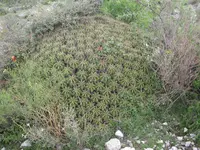
Ferocactus peninsulae is native almost exclusively to the Baja California peninsula, where it grows on rocky slopes, volcanic outcrops, and gravelly alluvial fans with extremely low rainfall and intense sun exposure.

Distinctive hooked spines

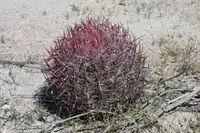
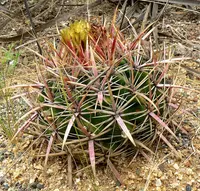
This species develops thick, strongly hooked central spines that can turn deep red to brown with age and help shade the stem surface, slightly reducing tissue overheating in harsh desert light.

Variable flower bands

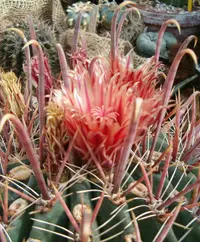
Its yellow to reddish-yellow flowers often show distinct darker midstripes on the petals, a pattern that helps distinguish it from some closely related Ferocactus species in the field.

Botan icon

Did you know?

In habitat, Ferocactus peninsulae often leans or bends slightly toward the south, an orientation thought to optimize light capture while limiting direct midday sun on the most exposed stem surface in its extremely hot desert environment.

FAQs about Ferocactus peninsulae

This species grows slowly, often adding only a few millimeters to 1 cm in diameter per year. Growth is faster in warm conditions with strong light, very well-drained mineral soil, and careful, infrequent watering during the active season.

Grow Healthy Plants with Botan Care

Keep your plants happy and healthy with plant identification, disease detection, and easy care guidance.

Botan plant care app — identify plants on mobile

Explore More Plants