Lobster Claw Care (Heliconia rostrata)

Also known as: Hanging Lobster Claw Heliconia
Lobster Claw

About Lobster Claw

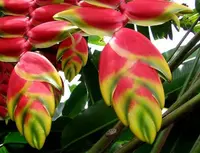
Lobster claw, Heliconia rostrata, is a tropical perennial known for its bold foliage and striking hanging bracts that resemble lobster claws. It forms dense clumps from rhizomes and can grow into a tall, architectural accent in warm climates.

In nature it occurs in tropical Central and South America, thriving in warm, humid forests with filtered light. It prefers consistently moist, rich, well-drained soil and protection from strong, drying winds.

Its growth is vigorous under suitable conditions, but it can be demanding outside the tropics due to its need for warmth and humidity. Understanding how to care for Lobster Claw helps owners decide if they can meet its environmental needs.

Main Plant Requirements

Care Difficulty

Moderate Care

Light Preference

Partial Sun

Water Requirements

Keep Soil Moist

Temperature Preference

Tropical / Frost Sensitive

Hardiness Zone

10–13

Soil Texture

Loamy, Silty, Organic-rich

Soil pH

Acidic (5.5–6.5), Slightly acidic (6.5–7.0)

Soil Drainage

Moist but well-drained

Fertilization

Moderate (every 2–4 weeks)

Get Personalized Care Plan

Scan your plant to receive care tips personalized for your specific plant

Available on iOS and Android

How to Care for the Lobster Claw

This tropical species needs strong, stable light to flower and keep robust foliage.

  • Provide 4–6 hours of morning sun with bright, filtered light the rest of the day; east or southeast exposure is ideal for Lobster Claw in most climates.
  • Tolerates light partial shade (2–4 hours direct sun), but flowering and bract color decrease if grown in deep shade under dense trees.
  • In hot summers, protect from harsh midday and late-afternoon sun to prevent leaf scorch; in cooler months allow more direct light to maintain growth.

This plant prefers constantly moist, but not waterlogged, soil to support its large leaves and vigorous growth.

  • Water when the top 2–3 cm of soil feel slightly dry; the root zone below should stay evenly moist without standing water.
  • Increase watering in warm, active growth periods when leaves transpire quickly, and reduce slightly in cooler seasons while still preventing the soil from drying out completely.
  • Watch for yellowing, soft stems or a sour smell as signs of overwatering and root issues, and for curling, crispy leaf edges as signs of underwatering or prolonged dryness.

This tropical plant grows best in warm, stable temperatures with no frost exposure.

  • Aim for 70–85°F (21–29°C) during active growth, which supports strong stems, large leaves, and reliable flower production.
  • Avoid temperatures below 50°F (10°C); brief dips near this level slow growth, and light frost at 32°F (0°C) can kill foliage or damage rhizomes.
  • Tolerates short heat spells up to about 95°F (35°C) if soil moisture and humidity stay high, but prolonged extreme heat with dry soil increases stress and leaf burn.

This species needs consistently high humidity to maintain healthy foliage and flowering.

  • Aim for 60–80% humidity; in dry homes, place the pot in a humid room or near a humidifier for better Lobster Claw indoor care.
  • Dry air causes browning leaf edges, rolled leaf tips, and slower new growth.
  • Group plants together or set the pot on a pebble tray with water, ensuring the pot base stays above the waterline.
  • Avoid strong air vents or heaters nearby, as moving dry air accelerates leaf moisture loss.

Heliconia rostrata prefers rich, airy, and evenly moist soil that drains freely yet retains some moisture.

  • Use a loamy mix containing roughly 50% peat or coco coir, 30–40% compost, and 10–20% perlite or coarse sand.
  • Ensure fast drainage so water does not pool; waterlogged conditions quickly damage the rhizomes and roots.
  • Keep pH slightly acidic to neutral, around 6.0–7.0, which supports nutrient uptake and stable growth.
  • Improve aeration by adding chunky materials such as pine bark fines, and avoid heavy clay, unamended garden soil, or compacted mixes.

This species can be grown successfully in large containers when given enough root space and stability.

  • Choose a deep, wide pot to accommodate spreading rhizomes and to reduce the risk of the plant becoming root-bound and stunted.
  • Use a heavier pot material or add weight (such as stones at the base) to counterbalance tall, top-heavy stems outdoors.
  • Select containers with several large drainage holes so excess water exits quickly and the lower substrate does not remain saturated.

Heliconia rostrata responds well to steady nutrition during warm, active growth.

  • Use a balanced, slow-release fertilizer (for example 10-10-10) or a light layer of compost at the start of spring.
  • Feed every 4–6 weeks through the growing season, adjusting for soil richness and plant vigor.
  • Apply fertilizers at half the label strength to avoid leaf burn and excessive salt buildup.
  • Reduce or stop feeding in late fall and winter when growth slows, especially for Lobster Claw indoor care.

Pruning Heliconia rostrata focuses on removing old growth to maintain healthy, attractive clumps.

  • Cut spent flower stalks back to the base once bracts fade, using clean, sharp pruners.
  • Remove dead, damaged, or diseased canes at ground level at any time to limit pests and disease.
  • In late winter or early spring, thin crowded stems to improve air movement and light penetration.
  • Disinfect tools between plants with alcohol or a bleach solution to reduce pathogen spread.

Heliconia rostrata is usually grown in the ground, but container plants or clumps may need periodic transplanting.

  • Look for crowded rhizomes, roots circling the pot, or reduced vigor as signals it is time to move or divide.
  • Transplant or up-pot in spring or early summer, when soil is warm and new shoots are emerging.
  • Aim for repotting or lifting and replanting every 2–3 years to refresh soil and manage clump size.
  • Water well after moving, keep shade and wind exposure low for 7–10 days, and maintain evenly moist soil to reduce root stress.

Heliconia rostrata is most reliably propagated by division of its rhizomes rather than from seed.

  • Divide established clumps in spring, when new shoots are 10–20 cm tall and soil is warming.
  • Lift the clump and separate sections with at least 1–2 healthy shoots and firm rhizome tissue.
  • Replant divisions at the same depth in fertile, well-drained soil and water thoroughly.
  • Maintain warm temperatures, bright filtered light, and consistently moist substrate until strong new growth appears.

This tropical species is frost sensitive and needs specific winter care in cooler climates.

  • In USDA zones below 10, grow in containers and move indoors before temperatures drop near 50°F.
  • For in-ground plants in mild climates, mulch 5–10 cm over the root zone to buffer soil temperature.
  • Cut back frost-damaged foliage above healthy tissue in late winter, then remove debris to deter pests.

Care Tips

Rhizome Spacing

When planting or repotting, space rhizomes 20–30 cm apart and shallowly cover them so new shoots have room to emerge and clumps do not become congested and weak.

Sturdy Flower Support

Install discreet bamboo stakes or a low wire ring around the clump before bracts form so the tall flowering stems stay upright and do not kink or snap in wind or heavy rain.

Mulch Heat Buffer

Apply a 5–8 cm layer of coarse organic mulch around the root zone to keep soil evenly cool, reduce weed competition, and protect shallow rhizomes from temperature swings.

Salt Build‑up Management

In containers or irrigated beds, flush the soil every 1–2 months by watering deeply until excess drains out to reduce salt accumulation that can scorch leaf tips.

Division For Renewal

Every 2–3 years, lift and divide older clumps, keeping only vigorous rhizome sections with at least 2–3 healthy shoots, to maintain strong flowering and manage plant spread when growing Lobster Claw outdoors in warm climates.

Common Pests and Diseases

Heliconia rust

This disease causes yellow to brown powdery pustules on leaves and sometimes bracts, leading to leaf yellowing and premature drop. Symptoms include reduced vigor and poor flowering under warm, humid conditions.

Solution

Remove and discard heavily infected leaves, keep foliage as dry as possible, and improve spacing and airflow around clumps. In humid climates, apply a copper-based fungicide or a labeled rust-control fungicide at the first signs of pustules, repeating as directed while avoiding overhead watering.

Heliconia leaf spot

This disease produces small water-soaked lesions on leaves that expand into brown or tan spots with darker margins, often coalescing into large dead patches. Symptoms include tattered or shredded-looking foliage as damaged tissue dries and tears in wind or strong sun.

Solution

Cut off and dispose of affected leaves, sanitize pruning tools, and avoid wetting leaves when watering. Improve air movement, reduce overcrowding, and if conditions stay wet, use a labeled broad-spectrum fungicide on new growth to protect uninfected foliage.

banana weevil borer

This pest bores into rhizomes and lower stems, causing tunneling that weakens the plant and interferes with water and nutrient flow. Symptoms include stunted growth, wilting during heat, and plants that snap or lodge easily at the base.

Solution

Inspect rhizomes before planting, remove and destroy infested clumps, and keep old rotting pseudostems and debris cleared, since these harbor adults and larvae. In problem areas, use pheromone or cut-stem traps to reduce adult populations and consider applying a labeled systemic insecticide to the soil around heavily affected stands.

mealybugs

These insects cluster on leaf sheaths, undersides of leaves, and flower bracts, sucking sap and excreting sticky honeydew that encourages sooty mold. Symptoms include distorted new growth, sticky surfaces, and black moldy patches on leaves and bracts.

Solution

Wipe or spray colonies with a strong jet of water, then treat remaining insects with cotton swabs dipped in isopropyl alcohol or apply an insecticidal soap or neem oil to all leaf surfaces, including sheaths. Reduce ant activity around plants, since ants protect and spread mealybugs, and repeat treatments weekly until populations collapse.

spider mites

These pests thrive on heliconia in hot, dry sites, causing tiny yellow stippling on leaves and fine webbing along midribs and leaf edges. Symptoms include dull, dusty-looking foliage that may bronze or dry along margins over time.

Solution

Rinse foliage thoroughly with water, focusing on leaf undersides, and increase humidity around the plant to disrupt mite development, which is important for Lobster Claw indoor care. Use insecticidal soap or a horticultural oil labeled for mites, applied in repeated intervals to new and existing foliage while avoiding application in full sun during high heat.

Interesting Facts

Specialized hummingbird partners

In its native range from Peru to Bolivia, this species is primarily pollinated by long-billed hummingbirds that match the curve and depth of its pendant bracts, an example of coevolution between flower shape and bird beak morphology.

Pendant inflorescences

Unlike many upright heliconias, this species bears long, hanging inflorescences with overlapping red bracts and yellow-green tips, which help shed rainwater and protect the true flowers hidden inside from fungal damage.

Rainforest understory niche

This species naturally grows along rainforest edges, clearings, and stream banks, where filtered light and consistently warm, humid air support its large leaves and long-lasting inflorescences.
Botan icon

Did you know?

The distinctive, long-lasting bracts of this species can persist for several weeks on the plant and in floral arrangements because they are modified, thickened leaves rather than delicate petals, which makes them structurally tougher and slower to degrade.

FAQs about Lobster Claw

Lack of blooms usually comes from insufficient maturity, low light, or nutrient imbalance. Plants often need several seasons to flower well. Stable warmth, consistent moisture, and balanced fertilizer support Heliconia rostrata care focused on strong flowering shoots.

Grow Healthy Plants with Botan Care

Keep your plants happy and healthy with plant identification, disease detection, and easy care guidance.

Botan plant care app — identify plants on mobile

Explore More Plants