Fishbone water-fern Care (Blechnum nudum)

Fishbone water-fern

About Fishbone water-fern

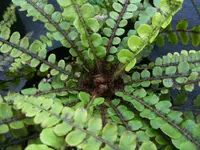
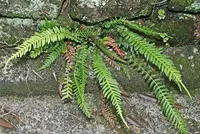
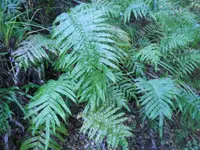
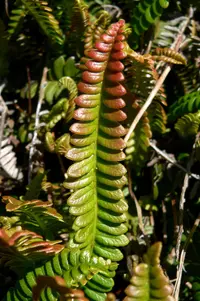
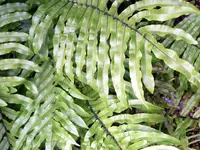
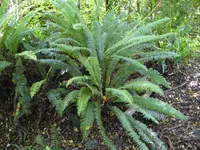
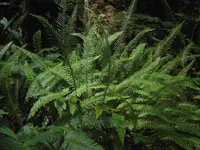
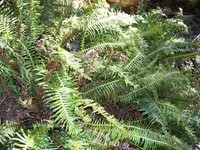
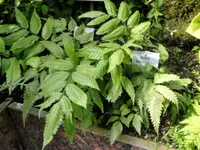
Fishbone water-fern (Blechnum nudum) is an evergreen fern native to moist forests and stream edges in Australia and nearby regions. It grows as a clumping rosette with elegant, upright fronds that resemble a fishbone pattern. New fronds often emerge in warm bronze or pinkish tones before maturing to deep green, giving the plant a layered, architectural look. It prefers consistently damp conditions, high humidity, and shelter from harsh sun, which can make indoor culture a little more demanding. Gardeners who learn how to care for Fishbone water-fern often value it for adding a lush, natural woodland feel to shaded gardens, terrariums, or water-adjacent plantings.

Main Plant Requirements

Care Difficulty

Moderate Care

Light Preference

Partial Shade

Water Requirements

Keep Soil Moist

Temperature Preference

Cool Climate

Hardiness Zone

8–10

Soil Texture

Loamy, Silty, Organic-rich

Soil pH

Acidic (5.5–6.5)

Soil Drainage

Moist but well-drained

Fertilization

Minimal (feed rarely)

Get Personalized Care Plan

Scan your plant to receive care tips personalized for your specific plant

Available on iOS and Android

How to Care for the Fishbone water-fern

This fern prefers cool, shaded positions that mimic moist forest or creek-side habitats.

  • Provide bright to medium shade with filtered or dappled light, such as under trees or beside a south- or east-facing wall that blocks harsh midday sun.
  • Allow 1–2 hours of soft morning sun only; strong midday or afternoon sun can scorch Fishbone water-fern fronds and dry the soil too quickly.
  • In hotter months, increase shade or use shade cloth; in cooler seasons, slightly brighter indirect light helps maintain compact, healthy growth.

This species needs consistently moist conditions and does not tolerate drying out completely.

  • Keep soil evenly moist, not saturated; in garden beds, the top 1–2 cm should stay slightly damp, especially along creeks or in boggy spots with slow drainage.
  • Increase watering in warm, windy, or low-humidity periods, watching for limp, crisping frond tips as a sign of underwatering, and dull yellowing fronds as a sign of waterlogging.
  • Use rich, organic soil that holds moisture but still drains, and avoid standing water deeper than a few cm to protect the crown and roots of Blechnum nudum from rot.

This fern thrives in mild, frost-free to light-frost climates with cool, moist air.

  • Aim for 55–75°F (13–24°C) for best growth, with steady moisture; growth slows below 50°F (10°C) but the plant can persist if roots remain insulated.
  • Tolerates brief dips to about 25–28°F (-4 to -2°C) with mulched roots, but repeated hard frosts can damage or kill emerging fronds.
  • In hot spells above 85°F (29°C), increase shade, humidity, and soil moisture, and protect from hot, dry winds that rapidly desiccate the fronds.

This fern prefers consistently moist, high-humidity conditions similar to a sheltered streamside habitat.

  • Aim for 60–80% humidity; it tolerates brief dips lower but reacts poorly to very dry heated rooms.
  • Crisping frond tips, dull color, and slowed unfurling of new fronds signal humidity stress.
  • Use a wide pebble tray under the pot, group plants, or place Fishbone water-fern in a humid bathroom to raise humidity.

This species grows best in consistently moist, organic-rich, well-aerated soil that mimics damp forest or stream margins.

  • Use a loose mix of 50–60% peat-free compost or coco coir, 20–30% fine bark, and 10–20% perlite to combine moisture retention with air spaces.
  • Aim for slightly acidic to neutral pH around 5.5–6.8, which supports nutrient uptake and healthy root growth in Blechnum nudum.
  • Keep the mix evenly moist but never waterlogged; excess standing water drives out oxygen and encourages root rot.
  • Avoid heavy clay, compacted garden soil, or very sandy mixes that either stay saturated or dry out rapidly with uneven moisture.

This fern is suitable for container growing when the pot supports its moisture needs and spreading root system.

  • Choose a pot slightly wider than deep to accommodate shallow, fibrous roots and keep moisture distribution even.
  • Select a stable, heavier container if placing it outdoors so fronds do not act as a sail in wind and tip the pot.
  • Use a cachepot or saucer only as an outer layer and empty collected runoff promptly to prevent the root zone from sitting in stagnant water.

Blechnum nudum has modest nutrient needs but responds well to light, consistent feeding in active growth.

  • Use a balanced, dilute liquid fertilizer (for example 10-10-10 at 1/4–1/2 strength) every 4–6 weeks in spring and summer.
  • Alternatively, apply a light topdressing of fine compost or a low-dose slow-release fertilizer in early spring.
  • Skip feeding in winter or when growth slows, as Fishbone water-fern rests and excess salts may damage roots.
  • Always water before applying fertilizer to avoid root burn and distribute nutrients evenly through the potting mix or soil.

Blechnum nudum needs only light, maintenance pruning to stay tidy and healthy.

  • Best time for pruning is late winter to early spring, before strong new frond growth starts.
  • Remove dead, yellowing, or damaged fronds at the base with clean, sharp scissors or pruners.
  • Thin out badly crowded or overlapping fronds to improve air flow and reduce fungal issues.
  • Limit cutting to spent fronds; heavy pruning does not improve growth and may weaken the crown.

Blechnum nudum prefers stable conditions, so repot or transplant only when clear signs show the plant is constrained.

  • Check for roots circling the container, pushing out of drainage holes, or a pot that dries very quickly as signals to repot.
  • Plan repotting or outdoor transplanting for early spring, just before vigorous new growth begins.
  • Repot every 2–3 years at most, shifting to a slightly larger pot with moisture-retentive, well-drained mix.
  • Handle the root ball gently, loosen only lightly, keep the crown at the same depth, and water thoroughly to reduce stress.

Blechnum nudum is usually propagated by division rather than from spores in home conditions.

  • Divide mature clumps in early spring when new croziers (emerging fronds) are just appearing.
  • Lift the plant carefully and split the root mass into sections, each with several healthy fronds and a firm crown.
  • Replant divisions into moist, well-drained, slightly acidic mix and keep in bright, indirect light.
  • Maintain consistently even moisture and high humidity to support new root establishment and reduce transplant shock.

Blechnum nudum is fairly cool tolerant but benefits from simple winter precautions in colder climates.

  • In USDA zones around 8–9, established plants usually overwinter outdoors with minimal damage.
  • Apply a 5–7 cm mulch layer around the root zone to buffer temperature swings, keeping mulch off the crown.
  • In colder areas or containers, move plants to a sheltered, frost-free spot with bright, indirect light.

Care Tips

Encourage Basal Clumping

Remove the oldest, browned fronds cleanly at the base once or twice a year to keep the crown open, reduce rot risk, and stimulate tighter new clump growth when growing Fishbone water-fern.

Shade-Transition Hardening

When moving a plant from indoor shade to a brighter, sheltered outdoor position, increase light levels gradually over 7–10 days to prevent frond scorch and bleaching.

Moisture-Retentive Mulch

Apply a 3–5 cm layer of fine pine bark or composted leaf litter around, but not touching, the crown to keep the root zone evenly cool and moist, especially during warm, drying weather.

Container Elevation Strategy

Raise pots on feet or bricks so excess water can drain freely, which prevents anaerobic, sour-smelling media and reduces the risk of crown and root rot in long-term container culture.

Cool-Season Protection

In regions with occasional light frost, tuck potted plants close to a sheltered wall or under evergreen canopy and cover the container surface with mulch to buffer roots from temperature swings.

Common Pests and Diseases

Scale insects

These insects attach to fronds and stems, appearing as small brown or grey bumps and sucking sap, which leads to yellowing and weak fronds over time.

Solution

Prune out heavily infested fronds, then wipe remaining scale with a cotton pad dipped in diluted alcohol or insecticidal soap, taking care not to saturate the crown. Improve air movement and monitor closely, repeating treatment every 7–10 days until new growth appears clean.

Fern aphids

These insects cluster on soft new fronds and undersides, feeding on sap and causing distortion, pale growth, and sticky honeydew that can attract sooty mould.

Solution

Rinse fronds thoroughly with a firm but gentle stream of water, then treat remaining colonies with a ready-to-use insecticidal soap or horticultural oil, ensuring full coverage of undersides. Repeat at 5–7 day intervals until no new aphids or sticky residue are seen, and avoid overfertilising, which encourages very soft, aphid-prone growth.

Rhizoctonia crown rot

This disease starts at the crown and upper roots, with symptoms including slow decline, blackened or brown mushy crown tissue, and fronds that yellow and collapse from the base.

Solution

Remove and discard affected plants or cut away all soft, discoloured crown tissue and repot healthy sections into fresh, free-draining medium, keeping the crown just above the mix. Reduce watering, avoid water sitting around the crown, and ensure pots or sites drain well to prevent reinfection.

Leaf spot fungi

This disease causes small dark or tan spots on fronds that can merge into larger irregular patches, especially in dense, humid plantings or under overhead watering.

Solution

Trim off and discard badly spotted fronds, then water at the soil level rather than over the foliage to keep fronds dry. Improve spacing and airflow, and if spotting continues, use a fern-safe copper or chlorothalonil fungicide according to label directions, focusing on young, emerging fronds.

Interesting Facts

Juvenile fronds differ

Blechnum nudum often shows distinct juvenile and adult fronds on the same plant, with younger fronds usually finer and more delicate while older fronds become tougher and more leathery.

Naturally water-associated

This species commonly grows along streams, seeps, and swampy ground in eastern Australia, reflecting its adaptation to consistently moist, low-lying habitats.

Short woody trunk

Mature plants can develop a short, woody, trunk-like base that slightly elevates the rosette of fronds above the ground, a trait that helps distinguish it from many other ground ferns.

Botan icon

Did you know?

In the wild, Blechnum nudum often forms dense colonies along waterways, and these fern stands can play a role in stabilizing moist banks and providing shaded microhabitats for invertebrates and small amphibians.

FAQs about Fishbone water-fern

Fronds usually brown from low humidity, dry soil, or exposure to hot sun and wind. Salty or strongly alkaline water can also scorch tips. Trim damaged fronds and improve moisture and shelter to prevent further browning.

Grow Healthy Plants with Botan Care

Keep your plants happy and healthy with plant identification, disease detection, and easy care guidance.

Botan plant care app — identify plants on mobile

Explore More Plants