Kiokio Care (Blechnum novae-zelandiae)

Also known as: Palm-leaf Fern
Kiokio

About Kiokio

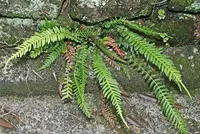
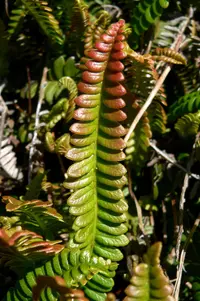
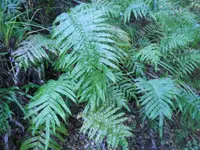
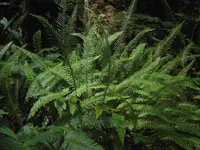
Kiokio, Blechnum novae-zelandiae, is a hardy ground fern native to New Zealand, often found along stream banks, forest edges, and damp hillsides. It forms spreading clumps of arching fronds that can create a dense, ferny carpet over time. Younger fronds may emerge with a copper or reddish tint before turning deep green, giving the plant a layered, textured look in the garden. This species prefers consistently moist, humus-rich soil and shelter from harsh, drying sun or wind. It is considered a robust, low-maintenance fern when its need for moisture and shade is met, which guides most decisions on how to care for Kiokio.

Main Plant Requirements

Care Difficulty

Moderate Care

Light Preference

Partial Shade

Water Requirements

Keep Soil Moist

Temperature Preference

Cool Climate

Hardiness Zone

8–10

Soil Texture

Loamy, Peaty, Organic-rich

Soil pH

Strongly acidic (4.5–5.5), Acidic (5.5–6.5)

Soil Drainage

Moist but well-drained

Fertilization

Minimal (feed rarely)

Get Personalized Care Plan

Scan your plant to receive care tips personalized for your specific plant

Available on iOS and Android

How to Care for the Kiokio

This fern prefers cool, shaded conditions that mimic damp forest floors.

  • Provide 2–4 hours of early morning sun with dappled or filtered light for the rest of the day, especially in hotter regions.
  • Site Kiokio where it receives bright shade or high, filtered light; avoid harsh midday and afternoon sun that can scorch fronds and bleach color.
  • In summer, increase shade or use overhead filtering; in winter, allow a bit more indirect light but avoid sites with less than 2 hours of ambient daylight exposure.

This species thrives in consistently moist, never stagnant, soil.

  • Maintain soil that feels evenly moist when pressed 2–3 cm down, allowing only the top 1–2 cm to begin drying between waterings.
  • Increase watering during hot, dry periods, using slow, deep soaking so moisture penetrates the root zone, and reduce slightly in cooler months while preventing complete drying.
  • Watch for limp, crisp fronds as a sign of underwatering and yellowing, soft fronds as an indicator of poor drainage or overwatering in Blechnum novae-zelandiae.

This fern prefers mild, frost-free conditions with stable temperatures.

  • Aim for 55–75°F (13–24°C) for active growth, keeping it cooler and moist rather than hot and dry.
  • Protect from frost; temperatures below 28°F (-2°C) can damage fronds, although short light frosts may be survived if soil remains moist and roots insulated with mulch.
  • In hot spells above 82°F (28°C), provide extra shade, higher humidity, and mulch to keep roots cool, and avoid hot, reflective sites near walls or paving.

This fern prefers consistently moist air and benefits from higher humidity than a typical heated home.

  • Aim for 60–80% humidity; use a fine-mist humidifier or pebble tray near the plant.
  • Tolerates brief dips to 40–50%, but fronds may brown at edges and tips in prolonged dry air.
  • Crisping pinnules, dull color, and stalled new fronds signal humidity stress; increase local moisture immediately for Kiokio.

This species thrives in loose, moisture-retentive but free-draining, organic-rich soil.

  • Use a mix of roughly 50% peat or coco coir, 30% composted bark, and 20% perlite or pumice for structure and drainage.
  • Maintain soil pH slightly acidic, around 5.5–6.5, similar to a woodland floor profile suited to Blechnum novae-zelandiae.
  • Ensure the mix feels springy and crumbly, not compacted; incorporate fine bark and perlite to keep air pockets around roots.
  • Avoid heavy clay, pure sand, or mixes that stay waterlogged, which promote root rot and poor frond development.

This fern adapts well to container growing when moisture and stability are carefully managed.

  • Choose a pot that is wider than it is deep to accommodate the shallow, spreading rhizomes without crowding.
  • Select a sturdy, weighty container to counterbalance the arching fronds and reduce tipping in wind or on balconies.
  • Use a container material like glazed ceramic or plastic if you need slower moisture loss, especially in exposed or warm sites.

This fern grows in relatively low-nutrient forest soils and needs only light, occasional feeding in cultivation.

  • Apply a balanced diluted liquid fertilizer (around 10-10-10 at 1/4–1/2 strength) every 4–6 weeks in spring and summer.
  • Use a thin layer of compost as a top-dressing to mimic natural leaf litter around Kiokio and improve soil structure.
  • Avoid high-salt synthetic fertilizers and never apply to dry soil; water before and after feeding.
  • Stop feeding in fall and winter, when growth slows, to prevent soft, weak fronds.

Blechnum novae-zelandiae needs minimal pruning, mainly to keep the clump tidy and healthy.

  • Best time for pruning is late winter to early spring, before strong new growth starts.
  • Remove dead, damaged, or diseased fronds at the base using clean, sharp pruners or scissors.
  • Thin out congested interior fronds if needed to improve air flow and maintain a neat, arching shape.
  • Avoid cutting into the central crown, since this can slow recovery and reduce new frond production.

This fern is more often grown in the ground, but container plants or young specimens benefit from careful, infrequent repotting or transplanting.

  • Look for roots circling the pot, pushing through drainage holes, or noticeably slower growth as signs it needs more space.
  • Plan to repot or transplant every 2–3 years in early spring, when active growth is about to resume.
  • Use a slightly larger container or planting hole with moist, free-draining, organic-rich soil and firm gently around the rootball.
  • Keep roots shaded and moist during the move, then water thoroughly and maintain even moisture for several weeks to reduce transplant shock.

This fern is usually propagated by division; spore propagation is possible but slow and more technical.

  • Divide mature clumps in early spring when new croziers are just emerging and soil is moist but not waterlogged.
  • Lift the clump carefully, then separate sections with several healthy fronds and a solid portion of rhizome and roots.
  • Plant divisions into shaded, humid conditions with loose, organic-rich soil and water thoroughly to settle roots.
  • Maintain high humidity and steady moisture, avoiding waterlogging, until strong new frond growth confirms establishment.

This fern is cool-tolerant but not deeply frost-hardy, so some winter protection is useful in colder regions.

  • In USDA zones around 8–9, established plants usually overwinter outdoors with modest care.
  • Apply a 5–8 cm layer of organic mulch around the root zone, keeping it just clear of the crown, to buffer soil temperature.
  • In colder areas or for container plants, move pots to a sheltered, frost-free spot such as an unheated porch or cool greenhouse.

Care Tips

Frond crown protection

Mulch lightly with fine bark or leaf mold around, but not on top of, the crown to keep roots cool and moist while preventing rot at the frond base.

Rhizome stabilization

In windy or sloping sites, pin the creeping rhizomes with U-shaped landscape staples or short bamboo pegs to keep new growth anchored and prevent the plant from lifting out of the soil.

Controlled spread management

Check the outer edges of the clump each spring and gently spade-cut any running rhizomes that are moving into paths or neighboring plants, then replant useful divisions where extra groundcover is desired.

Frond grooming routine

Inspect fronds monthly and remove only fully dead, diseased, or severely damaged fronds at the base with clean pruners to improve air movement and reduce fungal issues without weakening the plant.

Seasonal moisture monitoring

During hot, dry, or windy periods use a simple soil probe or a wooden chopstick to check that moisture still reaches 10–15 cm deep, adjusting irrigation before fronds begin to crisp at the tips when growing Kiokio.

Common Pests and Diseases

Scale insects

This pest feeds on the fronds and midribs, often appearing as small brown or grey bumps along the stems of Kiokio. Symptoms include sticky honeydew and sooty black mold on the foliage.

Solution

Wipe affected fronds with a soft cloth or cotton pad dipped in diluted insecticidal soap or a 70% isopropyl alcohol solution, repeating weekly until new growth appears clean. In outdoor plantings, prune and discard heavily infested fronds and encourage natural predators such as lady beetles by avoiding broad-spectrum insecticides nearby.

Fern aphids

These insects cluster on soft new fronds and undersides of leaflet segments, causing curling, distortion, and pale or mottled growth. Honeydew and associated sooty mold can also appear on lower fronds.

Solution

Rinse colonies off with a firm stream of water, focusing on new fronds and undersides. For persistent infestations, apply insecticidal soap or a ready-to-use neem oil product in the early morning or evening, repeating every 7–10 days until the new flush of growth is unaffected.

Fern rust

This disease causes orange, brown, or yellow pustules or powdery spots on the undersides of fronds, sometimes leading to premature browning and drop. Symptoms include patchy discolouration that often follows the leaf veins.

Solution

Remove and discard all affected fronds, keeping tools clean and avoiding overhead watering to reduce leaf wetness duration. Improve spacing and airflow around plants, and if rust continues to spread, use a labeled fungicide for ornamental ferns, applying according to the product directions and focusing on new, healthy fronds as a protective barrier.

Leaf spot fungus

This disease produces small brown or black water-soaked spots that can merge into irregular patches on fronds, particularly in humid, shaded sites. Symptoms include thinning or tattering of older fronds as tissue dies in the spotted areas.

Solution

Cut off and discard spotted fronds to reduce spore spread, and water at the soil level rather than overhead so fronds dry quickly. In very humid locations, increase airflow and, if needed, use a preventative fungicide labeled for ferns at the start of the wet season, repeating as directed when conditions stay wet for long periods.

Slugs and snails

These pests chew irregular holes in tender fronds and can strip emerging croziers (unfurling fronds), leaving ragged edges and slime trails. Symptoms include missing leaflet tips and shredded new growth in damp, shaded plantings.

Solution

Hand-pick slugs and snails in the evening or early morning and remove nearby hiding spots such as dense debris or boards. For ongoing damage, place iron phosphate slug bait around but not on the crown following label directions, and use barriers such as copper tape around pots to protect young or container-grown plants.

Interesting Facts

Juvenile to adult shift

This species shows a clear heteroblastic change, with stiff, upright juvenile fronds that gradually transition into longer, arching adult fronds as the crown enlarges and the rhizome thickens.

Tolerant of waterlogged soils

Kiokio commonly grows along stream margins, road cuttings, and wet banks in New Zealand, where its fibrous root system anchors it in unstable, seasonally waterlogged substrates.

Important bank stabilizer

Dense colonies form on disturbed slopes and exposed soil, where overlapping rhizomes and fronds help reduce erosion and provide shaded, moist microhabitats for mosses and seedlings of other native plants.

Botan icon

Did you know?

In New Zealand, the brightly colored young fronds of kiokio were traditionally used as a natural food wrapping and cooking layer, placed under or around foods in earth ovens to protect them from direct heat and impart a subtle flavor.

FAQs about Kiokio

Brown tips or edges usually result from low humidity, underwatering, or excess fertilizer salts. Improve humidity, water thoroughly but not constantly, and flush the potting mix occasionally to remove built-up salts. Avoid direct hot drafts and heaters nearby.

Grow Healthy Plants with Botan Care

Keep your plants happy and healthy with plant identification, disease detection, and easy care guidance.

Botan plant care app — identify plants on mobile

Explore More Plants