Great Horsetail Care (Equisetum telmateia)

Also known as: giant horsetail, Northern Giant Horsetail
Great Horsetail

About Great Horsetail

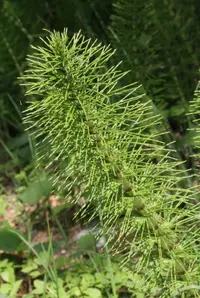
Great horsetail, Equisetum telmateia, is a vigorous, ancient spore-producing plant related to ferns rather than flowering plants. It forms tall, hollow, segmented stems with a strong vertical look.

In nature it typically grows in damp places such as stream banks, wet ditches, and moist woodland edges across parts of Europe and western Asia. The plant spreads by deep, creeping rhizomes, which makes it persistent and often difficult to remove once established.

It prefers consistently moist soil, good light, and space to spread, which shapes how to care for Great Horsetail in gardens or contained water features.

Main Plant Requirements

Care Difficulty

Moderate Care

Light Preference

Partial Shade

Water Requirements

Aquatic

Temperature Preference

Cold Hardy

Hardiness Zone

5–8

Soil Texture

Loamy, Silty, Organic-rich

Soil pH

Acidic (5.5–6.5), Slightly acidic (6.5–7.0)

Soil Drainage

Waterlogged tolerant

Fertilization

Minimal (feed rarely)

Get Personalized Care Plan

Scan your plant to receive care tips personalized for your specific plant

Available on iOS and Android

How to Care for the Great Horsetail

This moisture-loving species thrives in bright, cool conditions that mimic stream banks and wet woodland edges.

  • Provide 4–6 hours of indirect or lightly filtered sun, such as morning sun with dappled shade in the afternoon, to prevent scorching of sterile shoots.
  • Tolerates partial shade and can grow in sites with only 2–3 hours of direct morning light if the area stays consistently moist.
  • Avoid intense afternoon sun in hot summers; foliage may yellow or crisp, so use taller plants or structures to cast light shade.
  • ,

This plant is adapted to very wet habitats and prefers consistently saturated conditions rather than intermittent drying.

  • Aim for soil that stays constantly moist to wet; in garden beds, there should be no drying deeper than 1–2 cm at the surface around the stems.
  • In naturalistic plantings near ponds or streams, allow shallow standing water around roots; in drier spots, use organic mulch to slow evaporation.
  • Signs of underwatering include stunted, sparse shoots, while foul odor, slimy stems, or blackened rhizomes indicate prolonged stagnation without oxygen.
  • ,

This hardy species tolerates a wide temperature range but grows fastest in cool to mild conditions.

  • Optimal growth occurs around 55–70°F (13–21°C), typical of cool spring and early summer in many temperate regions.
  • Mature plants tolerate winter lows near 5–10°F (-15 to -12°C) when rhizomes are in the ground, though top growth dies back in hard frost.
  • Heat above 85°F (29°C) can slow new shoot formation, so Great Horsetail benefits from ample moisture and partial shade during hot spells.
  • ,

This species prefers consistently moist air but usually tolerates typical outdoor humidity in temperate regions.

  • Aim for 50–80% humidity, matching the damp environments where Great Horsetail naturally grows.
  • Crisping shoot tips or reduced segment length can indicate air that is too dry, especially in exposed, windy positions.
  • Increase local humidity by growing near water features, using dense companion planting, or providing wind protection that reduces drying air movement.

This rhizomatous species thrives in saturated, mineral-rich substrates rather than typical potting soil.

  • Use heavy, organic-rich loam or clay with added compost, mimicking stream banks or wet meadows where Equisetum telmateia occurs.
  • Allow very slow drainage or even standing water; soil should stay wet year-round and must never dry out completely.
  • Aim for slightly acidic to neutral pH, around 5.5–7.0, avoiding strongly alkaline, chalky substrates that can limit growth.
  • To improve structure for containers, blend garden loam, coarse sand, and compost, avoiding peat-heavy, fluffy mixes that dry quickly.

This species can be grown in containers if the pot is managed to stay consistently wet and stable.

  • Choose a deep, heavy container to anchor the tall, reed-like shoots and prevent tipping in wind.
  • Use a saucer or outer cachepot that can hold extra water, keeping the root zone saturated without flooding surrounding areas.
  • Position the pot where it cannot invade beds or soil through drainage holes, as creeping rhizomes may escape into surrounding ground.

Equisetum telmateia usually thrives in moist, nutrient-rich soil and needs only light feeding in cultivation.

  • Use a mild, balanced liquid fertilizer at 1/4–1/2 strength or apply a thin layer of compost in early spring.
  • Feed every 6–8 weeks through the active growing season if growth is weak or soil is poor.
  • Avoid fertilizing in winter dormancy to prevent soft, weak shoots.
  • Rinse soil occasionally with plain water if using soluble fertilizers to limit salt buildup.

Pruning Equisetum telmateia focuses on containment and tidiness rather than shaping.

  • Cut dead, yellowing, or storm-damaged stems at ground level during late winter or early spring.
  • Thin crowded clumps by removing entire stems to improve air flow and reduce spread.
  • Use sharp hand pruners or shears and dispose of cut stems to limit unwanted rhizome fragments.
  • Light seasonal cutting controls height and footprint without harming new shoot production.

This vigorous rhizomatous plant is usually grown in the ground, so management centers on careful transplanting or container division.

  • Transplant or divide clumps in early spring when new shoots just start to emerge for faster recovery.
  • Move or split plants every 2–4 years if growth slows, centers thin out, or stems appear crowded.
  • Lift a section with a spade, keeping a generous root and rhizome mass intact to minimize stress.
  • Replant at the same depth in consistently moist soil, then water thoroughly and shade lightly for 1–2 weeks.

Equisetum telmateia is most reliably propagated by division of its rhizome-based clumps.

  • Divide established plants in early spring, lifting sections with several healthy shoots and firm rhizomes.
  • Replant divisions immediately in saturated, humus-rich soil, spacing them to allow future spread.
  • For controlled containers, plant rhizome pieces in wide, non-perforated pots filled with heavy loam.
  • Maintain constant moisture and bright light without strong midday sun until new shoots are well established.

This hardy Great Horsetail tolerates substantial frost and generally needs little targeted winter care in the ground.

  • In cold regions, allow stems to brown naturally, then cut back to ground level in late winter.
  • Apply a 3–5 cm mulch around outdoor clumps in exposed sites to buffer freeze–thaw cycles.
  • For container plants in very cold climates, move pots into a sheltered, frost-sheltered but cool area.

Care Tips

Contain Spreading Rhizomes

Install a deep root barrier 30–45 cm into the soil around the planting area to prevent the aggressive rhizomes from invading nearby beds or lawn.

Use Flowing Water

Position plants where they receive gentle water movement, such as near an outlet in a pond or along a recirculating stream, to keep oxygen levels higher and reduce stagnation-related rot issues.

Divide To Rejuvenate

Lift and divide overcrowded clumps every 3–4 years in late winter or very early spring, discarding any weak or hollow rhizomes to maintain vigorous, upright growth.

Manage Height Selectively

Cut only the tallest, oldest fertile stems at the base if they lean or shade nearby plants, leaving younger sterile shoots intact to keep the stand dense and visually balanced.

Monitor For Alkali Runoff

Avoid locating the plant downhill from concrete, mortar, or lime-treated areas, since alkaline runoff can slowly raise pH and weaken growth over several seasons when caring for Great Horsetail.

Common Pests and Diseases

Rust fungus

This disease causes orange to brown pustules or dusty patches on stems and fertile shoots, sometimes leading to yellowing and weakening of the plant. Symptoms include reduced vigor and premature dieback of affected stems in dense, wet clumps.

Solution

Remove and discard heavily infected stems to reduce spore load, and avoid overhead watering in cultivated stands. Improve air circulation by thinning crowded patches, and if needed apply a sulfur or copper-based fungicide labeled for rusts, following label directions and keeping sprays away from ponds and streams.

Leaf spot

This disease produces small brown to black spots or streaks on the green stems, often merging into larger discolored areas under persistent moisture. Symptoms include cosmetic damage and gradual decline in dense, shaded, poorly ventilated stands.

Solution

Cut and dispose of spotted or blighted stems to limit spread, and reduce irrigation frequency so the plant is not constantly wet above ground. Increase sun exposure and airflow where possible, and in ornamental plantings a broad-spectrum biofungicide containing Bacillus species can help suppress further infections.

Aphids

These insects cluster on young shoot tips and joints, sucking sap and causing distortion, yellowing, and sticky honeydew deposits on stems. This pest can encourage sooty mold growth on the honeydew, making stems look blackened and dirty.

Solution

Spray stems thoroughly with a strong stream of water to dislodge colonies, repeating as needed. For persistent infestations use insecticidal soap or a light horticultural oil, ensuring full coverage of joints and shoot tips while avoiding runoff into natural waterways.

Scale insects

These insects appear as small, fixed, shell-like bumps along the ridges and joints of stems, feeding on sap and causing gradual yellowing and stunting. This pest can be overlooked because the protective coverings resemble natural stem texture.

Solution

Gently scrape or rub off visible scales with a gloved hand or soft brush, then wash stems with water. For heavier infestations, apply horticultural oil during the active growth period to smother immature scales, taking care not to treat directly over ponds or streams.

Spider mites

These pests are tiny and often hard to see, but symptoms include fine speckling, dull or bronzed stems, and delicate webbing in dry, hot conditions. This pest thrives where humidity is low and air movement is restricted around the plant.

Solution

Increase humidity around cultivated clumps, and hose down stems regularly to remove mites and webs. If populations remain high, use insecticidal soap or a miticidal oil product labeled for spider mites, applying in the cooler part of the day and repeating according to product directions.

Interesting Facts

Giant among horsetails

This species is one of the largest horsetails, with fertile stems and sterile shoots that can reach over 2 m tall in ideal, moist conditions, making it much larger than the more common field horsetail.

Two-form shoot system

It produces distinct fertile and sterile shoots: short, pale, cone-tipped fertile stems emerge first in spring and die back, followed by tall, green, strongly branched sterile stems that handle most of the photosynthesis.

Moisture-loving habitat specialist

In its native European and western Asian range, this plant typically forms dense stands along streams, seeps, and wet woodland edges where groundwater is consistently high and soils remain saturated or very moist.

Botan icon

Did you know?

Fossil and genetic evidence show that horsetails, including this species, belong to one of the oldest surviving lineages of vascular plants, with close relatives in the Equisetales group already present in the fossil record over 300 million years ago during the Carboniferous period.

FAQs about Great Horsetail

This species spreads vigorously through deep, running rhizomes and dense colonies of shoots. In garden settings it can quickly occupy moist, open ground and is often considered invasive, so root barriers or containers are recommended for control.

Grow Healthy Plants with Botan Care

Keep your plants happy and healthy with plant identification, disease detection, and easy care guidance.

Botan plant care app — identify plants on mobile

Explore More Plants