broadleaf maidenhair Care (Adiantum latifolium)

broadleaf maidenhair

About broadleaf maidenhair

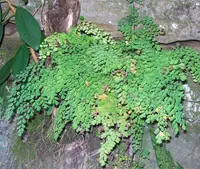
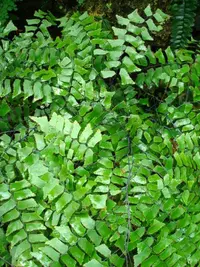
Broadleaf maidenhair, Adiantum latifolium, is a delicate terrestrial fern valued for its airy, layered fronds and graceful arching habit. The fronds carry fan-shaped leaf segments on fine, dark stems, creating a soft, lacy texture.

This species occurs naturally in tropical and subtropical forests of the Americas, often in shaded, humid, rocky areas. It prefers consistently moist, well-drained, humus-rich soil and gentle, indirect light.

Its fine roots and thin fronds make it less tolerant of drying out or harsh indoor air, so it is moderately demanding compared with many houseplants. Those who learn how to care for broadleaf maidenhair are rewarded with steady, elegant growth in suitable conditions.

Main Plant Requirements

Care Difficulty

Hard Care

Light Preference

Partial Shade

Water Requirements

Keep Soil Moist

Temperature Preference

Tropical / Frost Sensitive

Hardiness Zone

10–11

Soil Texture

Loamy, Peaty, Organic-rich

Soil pH

Acidic (5.5–6.5)

Soil Drainage

Moist but well-drained

Fertilization

Light (every 4–6 weeks)

Get Personalized Care Plan

Scan your plant to receive care tips personalized for your specific plant

Available on iOS and Android

How to Care for the broadleaf maidenhair

This fern prefers soft, indirect light that mimics a shaded forest floor.

  • Provide bright, filtered light or light shade, such as under high tree canopy or behind sheer curtains, with 2–4 hours of gentle morning sun and no harsh afternoon sun.
  • Avoid direct midday sun, which scorches the delicate fronds of broadleaf maidenhair and causes bleaching or crisp brown edges within days.
  • In deep shade, fronds grow sparse and pale; move the plant where you can comfortably read a book without artificial light, especially in winter when days are shorter.

This species needs evenly moist, never soggy, soil to keep its fine roots healthy.

  • Water whenever the top 1–2 cm of soil feels just barely dry, using enough water to moisten the root zone while allowing excess to drain freely away.
  • Choose a loose, humus-rich mix that drains well yet holds moisture; persistent puddling, sour smell, or black, mushy roots indicate overwatering and poor aeration.
  • Crisping frond tips or fronds that droop and feel papery signal underwatering; in hotter or windy weather, check soil moisture more often than in cool seasons.

This fern thrives in warm, frost-free conditions with fairly stable temperatures.

  • Aim for 65–80°F (18–27°C) for best growth; consistent warmth supports steady frond production and reduces stress on fine leaf tissue.
  • Protect from cold below about 50°F (10°C); prolonged exposure near 40°F (4°C) or any frost can damage fronds and may kill the crown of Adiantum latifolium.
  • In hot spells above 85°F (29°C), increase shade and humidity, avoid hot, drying winds, and never place the plant against heat-reflecting walls or metal surfaces.

This fern needs high, consistent humidity to keep fronds healthy and prevent rapid browning.

  • Aim for 60–80% humidity; place the plant in naturally humid rooms or group it with other plants.
  • Dry air causes crisping frond edges, stalled new growth, and premature leaflet drop on broadleaf maidenhair.
  • Increase humidity with a room humidifier, covered pebble tray under the pot, or an open terrarium-style enclosure with airflow.

This fern prefers loose, humus-rich, evenly moist soil that never stays waterlogged.

  • Use a mix of 40% peat or coco coir, 40% fine compost, and 20% perlite or fine bark to mimic forest floor conditions.
  • Aim for slightly acidic to neutral pH, around 6.0–7.0, which suits Adiantum latifolium root function.
  • Ensure rapid drainage through ample perlite or bark so water flows freely yet the mix retains light, even moisture.
  • Avoid heavy garden soil, dense clay, or mixes with a high sand fraction that either compact or dry out rapidly.

This species is well suited to container growing when moisture and root space are managed carefully.

  • Choose a pot only 2–4 cm wider than the root ball to keep the mix from staying cold and wet in the center.
  • Select a stable, low, wide container that supports the spreading fronds and prevents tipping as the plant fills out.
  • Use unglazed clay if the environment is very humid, or glazed/plastic pots in drier homes to slow moisture loss from the mix.

Adiantum latifolium benefits from light, consistent feeding during active growth but is sensitive to excess salts.

  • Use a balanced liquid fertilizer (for example 10-10-10) diluted to 1/4–1/2 strength for broadleaf maidenhair.
  • Feed every 4–6 weeks in spring and summer when new fronds are forming.
  • Avoid slow-release pellets that may burn fine roots; use well-diluted liquid or mild compost tea instead.
  • Stop feeding in fall and winter, or reduce to 1 very light application if growth continues indoors.

Pruning Adiantum latifolium focuses on removing old or damaged fronds to keep the clump healthy and airy.

  • Best time is late winter or early spring, before strong new growth begins.
  • Cut completely brown, yellow, or torn fronds at the base using clean, sharp scissors or snips.
  • Thin a few crowded, overlapping fronds to improve air movement and maintain a graceful, arching form.
  • Avoid cutting green, healthy fronds heavily, as this can slow growth and stress the plant.

This fern prefers slightly snug pots, so repot only when clear crowding or slowdown in growth appears.

  • Check for roots circling the pot, pushing through drainage holes, or water running straight through as signs it needs a larger container.
  • Plan to repot every 2–3 years in spring, when Adiantum latifolium is starting active growth.
  • Move up just 1 pot size, handling the root ball gently and keeping the existing soil intact as much as possible.
  • Water thoroughly after repotting, keep humidity high, and shade from strong light for 7–10 days to limit transplant shock.

Adiantum latifolium is most reliably multiplied by careful division of mature clumps rather than by spores at home.

  • Divide in early spring when new fiddleheads are just emerging and the plant is actively preparing to grow.
  • Lift the root mass and split it into sections with several healthy fronds and firm rhizomes per piece.
  • Replant divisions into small pots with moist, airy, peat-free fern mix, keeping crowns at the same depth.
  • Maintain high humidity, gentle airflow, and stable warmth around 65–75°F to encourage rooting and recovery.

This fern is frost sensitive and needs mild, protected conditions in winter, especially in containers.

  • In climates below 40°F, grow Adiantum latifolium in pots and overwinter indoors in a cool, bright room.
  • Maintain temperatures ideally above 55°F and avoid cold drafts near windows or doors.
  • Keep soil just lightly moist, reducing watering compared to summer but never allowing complete dry-out.
  • For outdoor plantings in mild zones, add a 3–5 cm mulch layer to buffer root temperature swings.

Care Tips

Frond Edge Protection

Keep the pot slightly recessed inside a cachepot or decorative sleeve so the delicate frond tips do not brush against traffic areas, doorways, or curtains, which quickly damages the leaf edges.

Gentle Airflow Management

Place the plant where air moves gently, such as near but not directly in front of an oscillating fan, to reduce fungal issues on fronds without drying them out.

Moisture Check By Weight

Learn the pot’s weight when the mix is evenly moist versus nearly dry, then lift it before watering so you avoid overwatering this fine‑rooted fern when caring for broadleaf maidenhair.

Portion-Based Repotting

When repotting, divide only the most crowded outer sections into 2–3 small clumps and replant them at the same depth, leaving the center undisturbed to minimize transplant shock.

Quarantine After Purchase

Keep new plants in a separate area for 10–14 days and inspect fronds and the soil surface regularly so any hidden pests or fungal problems are identified before placing them with other ferns.

Common Pests and Diseases

Scale insects

This pest feeds on fronds and rachises, causing yellowing, stunted growth, and sticky honeydew on the delicate leaf segments. Symptoms include small, dome-shaped bumps along stems and the undersides of fronds.

Solution

Remove heavily infested fronds and gently scrape or wipe remaining insects with a cotton swab dipped in isopropyl alcohol, taking care not to damage thin tissue. Improve air circulation, avoid overfertilizing, and repeat gentle treatments weekly until no new scale appears.

Spider mites

These insects thrive in warm, dry indoor air and cause pale speckling, frond dullness, and fine webbing between leaf segments. This pest can quickly desiccate the thin leaf tissue if not controlled.

Solution

Rinse fronds thoroughly with lukewarm water, including the undersides, to knock down mites, and increase humidity to above 50–60% to make conditions less favorable. For persistent problems, use repeated applications of insecticidal soap or horticultural oil labeled for ferns, applied very lightly to avoid frond burn.

Mealybugs

These insects appear as white, cottony clusters in frond joints and along stems, sucking sap and causing distortion, yellowing, and leaf drop. Honeydew and sooty mold may develop on affected foliage in more advanced infestations.

Solution

Isolate the plant, prune and discard badly affected fronds, then dab visible mealybugs with a cotton swab dipped in isopropyl alcohol. Follow with gentle insecticidal soap sprays directed into crevices every 7–10 days until no new insects are seen, and keep the plant under stable, non-drafty conditions to reduce stress.

Rhizoctonia leaf spot

This disease causes irregular tan to dark brown spots and patches that often start at the frond base or along the midrib, sometimes leading to blighted sections. In humid, crowded conditions, symptoms can spread rapidly across overlapping fronds.

Solution

Remove and discard affected fronds, then reduce leaf wetness by watering at the substrate level and spacing plants for better airflow. In collections with repeated outbreaks, use a fungicide labeled for ferns and Rhizoctonia, and keep foliage dry overnight to limit reinfection.

Bacterial blight

This disease produces water-soaked, translucent lesions on young fronds that quickly turn brown and papery, often along the margins or tips. Symptoms include rapid collapse of tender growth when moisture and warmth are high and air movement is poor.

Solution

Immediately remove and dispose of all affected fronds, avoid overhead misting, and improve ventilation around the plant. Sterilize tools between cuts, allow the substrate surface to dry slightly between waterings, and avoid crowding to reduce the spread of bacteria and protect new fronds, which is central to Adiantum latifolium plant care.

Interesting Facts

Neotropical forest specialist

This fern is naturally distributed from Central America through northern South America and the Caribbean, where it grows on shaded forest floors and moist slopes in lowland to lower-montane tropical forests.

Broad, fanlike pinnae

Unlike many maidenhair ferns with very finely divided leaf segments, this species has relatively broad, fan-shaped pinnae that give fronds a fuller, more continuous blade appearance while still maintaining the characteristic black, wiry stalks of the genus.

Moist limestone habitats

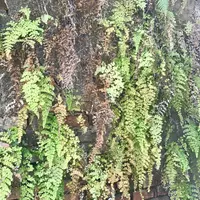
In parts of its range, this species is frequently associated with moist, calcareous substrates such as limestone or marl outcrops, where constant seepage and high humidity support dense colonies.

Botan icon

Did you know?

This species has been recorded forming extensive, almost pure stands along shaded, dripping rock faces and ravine walls in some Caribbean locations, where its fronds can dominate the visual appearance of the cliff vegetation during wet periods.

FAQs about broadleaf maidenhair

Brown leaf tips or fronds usually result from low humidity, underwatering, or exposure to hot or cold drafts. Accumulated salts from hard water or excess fertilizer can also scorch tissue. Trim damaged fronds and correct the underlying cause.

Grow Healthy Plants with Botan Care

Keep your plants happy and healthy with plant identification, disease detection, and easy care guidance.

Botan plant care app — identify plants on mobile

Explore More Plants