common maidenhair fern Care (Adiantum aethiopicum)

Also known as: Southern Maidenhair Fern
common maidenhair fern

About common maidenhair fern

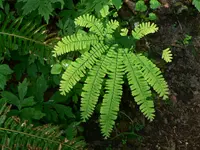
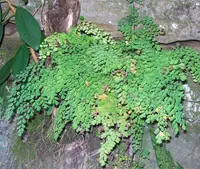
The common maidenhair fern, Adiantum aethiopicum, is a delicate, clumping fern valued for its fine, fan-shaped leaf segments on thin, dark stems. It forms soft, layered mounds that suit pots, terrariums, and shaded garden edges.

This species is native to parts of Africa, Australia, and nearby regions, where it grows in sheltered, consistently moist locations. It prefers cool, humid conditions and does not tolerate drying out or harsh sun, which makes it slightly more demanding than many houseplants.

Those who learn how to care for common maidenhair fern find it rewarding for shaded indoor spaces with stable moisture, gentle light, and free-draining, humus-rich soil.

Main Plant Requirements

Care Difficulty

Hard Care

Light Preference

Partial Shade

Water Requirements

Keep Soil Moist

Temperature Preference

Warm Climate

Hardiness Zone

9–11

Soil Texture

Loamy, Peaty, Organic-rich

Soil pH

Acidic (5.5–6.5)

Soil Drainage

Moist but well-drained

Fertilization

Light (every 4–6 weeks)

Get Personalized Care Plan

Scan your plant to receive care tips personalized for your specific plant

Available on iOS and Android

How to Care for the common maidenhair fern

This fern prefers soft, indirect light that mimics a shaded woodland floor.

  • Provide 2–4 hours of gentle morning sun or bright filtered light; avoid direct midday or afternoon sun that can scorch fronds.
  • Grow common maidenhair fern in dappled shade outdoors or an east-facing position indoors, shielded by sheer curtains or nearby taller plants.
  • In summer, shift slightly deeper into shade if fronds pale or crisp; in winter, move closer to windows or brighter shade to compensate for shorter days.

This fern needs consistently moist but not waterlogged soil to maintain healthy fronds.

  • Water whenever the surface 1–2 cm feels just barely dry, aiming to keep the root zone evenly damp rather than cycling between wet and dry.
  • Use loose, humus-rich soil with good drainage; prolonged soggy conditions cause blackened, limp fronds and root rot, while bone-dry soil leads to crisp, brown leaf edges.
  • In warmer months, expect more frequent watering and monitor fronds for slight droop as a cue; reduce frequency in cooler seasons while still preventing complete drying.

Stable, mild temperatures support steady growth and reduce frond stress.

  • Ideal growth occurs around 60–75°F (16–24°C), similar to cool, sheltered understory conditions.
  • Protect Adiantum aethiopicum from temperatures below 40°F (4°C); light frost can damage fronds, and repeated freezing may kill the plant.
  • In hot spells above 85°F (29°C), increase shade and humidity, avoid hot, reflected surfaces, and prevent soil from drying out, as heat plus drought quickly scorches foliage.

This fern needs consistently high humidity to keep fronds fine and hydrated.

  • Aim for 60–80% humidity; common maidenhair fern browns quickly below about 50%.
  • Crisping tips, dull color, and rapid frond drop signal air that is too dry.
  • Use a wide pebble tray under the pot, grouped plants, or a room humidifier rather than misting.

This species prefers loose, humus-rich soil that stays evenly moist but not sodden.

  • Use a mix of 50% peat-free compost, 25% fine bark, and 25% perlite or pumice for structure and drainage.
  • The soil should feel springy, with many tiny air spaces so roots receive oxygen even when moist.
  • Keep pH slightly acidic to neutral (pH 6.0–7.0) by using composted leaf mold rather than alkaline additives.
  • Avoid heavy garden soil, pure peat, or mixes that stay waterlogged, which encourage root rot in Adiantum aethiopicum.

This fern grows well in containers when moisture and stability are managed carefully.

  • Choose a wide, shallow pot to accommodate its spreading, shallow roots and prevent the center from staying soggy.
  • Select plastic or glazed ceramic if extra moisture retention is needed, or terracotta in very humid climates to prevent stagnation.
  • Place the pot in a stable cachepot or on a flat tray so the light fronds are not disturbed by minor knocks or drafts.

Adiantum aethiopicum benefits from light feeding but is sensitive to excess salts.

  • Use a balanced liquid fertilizer (around 10-10-10 or 20-20-20) diluted to 1/4–1/2 strength for common maidenhair fern.
  • Feed every 4–6 weeks during spring–summer when fronds are actively growing.
  • Avoid granular slow-release pellets that can burn fine roots in small pots.
  • Stop feeding in fall–winter, or reduce to once for the season if growth continues indoors.

Pruning Adiantum aethiopicum focuses on tidying old fronds and supporting fresh growth.

  • Best time is late winter or early spring, then light touch-ups through the growing season.
  • Cut dead, yellow, or badly damaged fronds at the base with clean, sharp scissors.
  • Thin overcrowded, tangled fronds to improve air flow and reduce fungal issues.
  • Selective pruning maintains a neat, arching shape and directs energy to new, healthy fronds.

This fern prefers stable conditions, so repotting is done only when clearly needed.

  • Repot when roots circle the pot, mix dries very fast, or growth slows despite good care.
  • Best timing is early spring, repotting every 2–3 years at most into the next pot size up.
  • Use a loose, moisture-retentive mix and keep rhizomes at the same depth as before.
  • Handle roots gently, water thoroughly, then keep in shaded, humid conditions for 1–2 weeks to reduce stress.

Adiantum aethiopicum is most practically multiplied by careful division of mature clumps.

  • Divide in early spring when new fronds start emerging and the plant is actively growing.
  • Lift the plant, gently tease apart the rhizomes, and create divisions with several fronds and healthy roots each.
  • Replant divisions into small pots with moist, airy mix, keeping crowns just at the surface.
  • Maintain high humidity, consistent moisture, and soft indirect light until strong new fronds appear.

This fern dislikes hard frost and needs some protection in colder climates.

  • In mild regions, apply a 3–5 cm mulch around the root zone to buffer soil temperature.
  • In colder zones, grow in containers and move indoors before temperatures drop below 40°F.
  • Indoors, keep 55–65°F, high humidity, and avoid dry, hot air from heaters.
  • Trim dead fronds at the end of winter once new growth begins.

Care Tips

Frond Refresh Cycles

Instead of cutting single yellowing fronds, remove entire tired crowns at the base at the start of spring to stimulate a flush of fresh, compact growth for the season.

Tray Microclimate

Place the pot on a wide pebble tray with water below the pot base to create a stable, humid microclimate around the fronds without soaking the root zone, especially in heated or air-conditioned rooms.

Gentle Division Method

When dividing, slice the rhizome into sections that each have several healthy fronds and a solid root mass, then pot divisions slightly deeper than before to reduce wobble and desiccation stress.

Frond Edge Monitoring

Check the finest leaflet tips and edges weekly; crisping here often appears before full wilt and signals the need for faster response to drafts, heater vents, or low ambient humidity during common maidenhair fern indoor care.

Draft Shield Setup

If the plant must sit near a vent or doorway, place a taller, sturdy plant or a perforated screen between it and the air source to diffuse moving air and prevent rapid frond desiccation.

Common Pests and Diseases

Scale insects

This pest attaches to the thin fronds and stems and feeds on sap, causing yellowing, weak growth, and sticky honeydew that may lead to sooty mold.

Solution

Isolate the plant, then gently wipe fronds and stipes with a soft cloth or cotton pad dipped in diluted insecticidal soap or horticultural oil, repeating every 7–10 days until no new scale appears. Improve air movement and avoid spraying harsh chemicals that can scorch the delicate foliage, an important point in Adiantum aethiopicum care instructions.

Spider mites

These insects thrive in dry, warm indoor air, causing fine speckling, dull fronds, and sometimes very fine webbing between leaf segments.

Solution

Increase humidity to 50–60%, then rinse fronds thoroughly with lukewarm water, including the undersides, and follow with a labeled miticidal soap if needed, repeating weekly until controlled. Keep the plant away from hot, dry drafts and check nearby plants to prevent re‑infestation.

Fungal leaf spots

This disease produces small brown or black spots that can merge into larger patches, often starting on older or crowded fronds in humid, stagnant air.

Solution

Remove and discard affected fronds, avoid wetting the foliage, and water at the soil level so the crown stays dry. Improve airflow around the plant and, if spots continue to spread, use a fern‑safe fungicide according to the label, reducing overall humidity slightly until new growth appears clean.

Bacterial blight

Symptoms include water‑soaked, translucent patches on fronds that turn brown and may spread rapidly along the leaf blade and midrib, especially in warm, wet conditions.

Solution

Immediately remove and discard all visibly affected fronds, sterilizing scissors between cuts, and keep water off the foliage and crown. Improve ventilation, reduce overhead misting, and avoid splashing when watering; severely affected plants are best discarded to protect nearby ferns.

Fungus gnat larvae

This pest lives in consistently wet potting mix, where the larvae feed on fine feeder roots and organic matter, leading to poor growth and fronds that yellow or collapse in extreme cases.

Solution

Allow the top 1–2 cm of the mix to dry slightly between waterings while still keeping the root zone evenly moist, and use yellow sticky traps to reduce adult populations. For heavier infestations, apply a biological control such as Bacillus thuringiensis israelensis (BTI) or beneficial nematodes, and repot into a fresh, well‑drained but moisture‑retentive mix if the substrate is breaking down.

Interesting Facts

Distinct southern lineage

This species is part of a mainly Southern Hemisphere group of maidenhair ferns and shows clear genetic separation from visually similar northern species, reflecting an ancient biogeographic split between temperate regions.

Natural rock crevice specialist

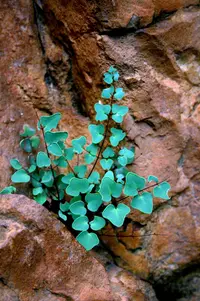
In the wild it often grows in thin soil trapped in rock crevices, cliff faces, and shaded walls, where its wiry black stipes and spreading rhizomes help anchor it against periodic drying and water runoff.

Tolerance of light disturbance

Compared with many other maidenhair ferns, it can persist in sites that experience moderate human disturbance, such as old stone walls and cut road banks, which has aided its persistence in some parts of its native range.
Botan icon

Did you know?

In parts of southern Australia and New Zealand, this species is a characteristic component of moist, shaded forest and stream-bank communities, where its dense patches help stabilize fine soils and provide sheltered microhabitats for mosses and small invertebrates.

FAQs about common maidenhair fern

Brown leaf tips or fronds usually come from dry air, missed waterings, or exposure to hot or cold drafts. Sudden sun exposure, fertilizer burn, or a compacted, poorly aerated root zone can also cause browning over time.

Grow Healthy Plants with Botan Care

Keep your plants happy and healthy with plant identification, disease detection, and easy care guidance.

Botan plant care app — identify plants on mobile

Explore More Plants