Huperzia squarrosa Care

Huperzia squarrosa

About Huperzia squarrosa

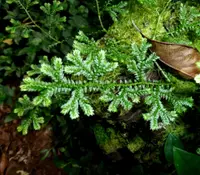
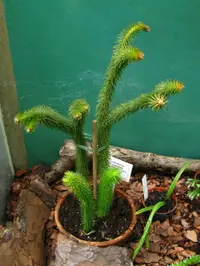
Huperzia squarrosa is an epiphytic clubmoss, not a true fern, with upright, bottlebrush-like stems densely covered in small, overlapping leaves. It often forms cascading or fountain-shaped clumps that look soft but have a firm, slightly bristly texture. In nature it grows in humid tropical forests, usually on tree trunks or mossy rocks, where air is moist and temperatures are stable. This background makes it sensitive to drying out, direct harsh sun, and low humidity, so it is not an easy beginner plant. Those who care for Huperzia squarrosa need to provide gentle light, constant light moisture, and excellent air circulation around the roots and foliage.

Main Plant Requirements

Care Difficulty

Hard Care

Light Preference

Bright Indirect Light

Water Requirements

Keep Soil Moist

Temperature Preference

Tropical / Frost Sensitive

Hardiness Zone

11–12

Soil Texture

Peaty, Organic-rich, Loamy

Soil pH

Strongly acidic (4.5–5.5), Acidic (5.5–6.5)

Soil Drainage

Moist but well-drained

Fertilization

Light (every 4–6 weeks)

Get Personalized Care Plan

Scan your plant to receive care tips personalized for your specific plant

Available on iOS and Android

How to Care for the Huperzia squarrosa

This epiphytic fern prefers soft, filtered light similar to bright forest shade.

  • Provide 6–8 hours of bright, filtered light daily, such as under shade cloth or beneath high tree canopy, avoiding direct midday sun.
  • Tolerate gentle early-morning or late-afternoon sun for 1–2 hours, but leaves scorch and turn pale or brown under strong noon exposure.
  • In winter, move Huperzia squarrosa slightly closer to brighter exposure, but still shield fronds with sheer fabric or dappled shade to prevent stress.

Moist but never waterlogged conditions are essential for this species’ roots and stems.

  • Allow only the top 1–2 cm of the growing medium to approach dryness, then water thoroughly so moisture penetrates the full root zone and drains away.
  • In warm, active growth, check moisture every 2–3 days; in cooler seasons extend intervals, guided by touch rather than a fixed schedule.
  • Wilting, crisp fronds indicate underwatering, while blackened stem bases, sour smell, or algae on the medium suggest excess moisture and poor drainage.

Stable, warm temperatures support healthy growth and reduce stress on this forest epiphyte.

  • Aim for 65–80°F (18–27°C) for best growth, keeping daily swings small to mimic sheltered understory conditions.
  • Protect the plant from temperatures below 55°F (13°C); brief drops toward 45°F (7°C) can cause tissue damage, especially to tender new growth.
  • Heat above 85°F (29°C) is tolerated only with high humidity and good air movement; avoid hot, dry winds and never expose it to frost.

This epiphytic species needs consistently high humidity to maintain healthy, turgid foliage.

  • Aim for 70–90% humidity; 60% is the minimum for reliable long-term performance.
  • In dry air, fronds become pale, crisp at the tips, and new growth stalls.
  • Use a nearby cool-mist humidifier, grouped plants, and an open-grid support to hold a moist microclimate around the foliage.

Huperzia squarrosa prefers a loose, moisture-retentive yet airy medium rather than dense mineral soil.

  • Use a mix similar to epiphytic orchids: roughly equal parts fine bark, peat or coco coir, and perlite or pumice.
  • Ensure rapid drainage; water should pass through within seconds while the mix stays evenly damp, never waterlogged.
  • Aim for slightly acidic conditions, around pH 5.5–6.5, to support nutrient uptake and healthy root-like structures.
  • Avoid compacted garden soil, heavy peat blocks, or mixes that form clumps, and fluff the medium periodically to preserve aeration.

This species adapts well to container culture when the pot and supports are chosen to match its epiphytic habit.

  • Select a relatively shallow but wide container so the sprawling stems can be supported without burying their bases.
  • Use a hanging basket or elevated pot with a rigid frame to prevent top-heavy plants from tipping as fronds elongate.
  • Prefer plastic or glazed containers over porous clay to slow moisture loss and keep the loose mix evenly damp.

This species is sensitive to excess nutrients, so fertilizing Huperzia squarrosa must stay light and infrequent.

  • Use a balanced liquid fertilizer (around 10-10-10) diluted to 1/4–1/8 strength to avoid root burn.
  • Feed only during active growth in spring and summer, about every 4–6 weeks at most.
  • Skip fertilizer in fall and winter when growth slows, relying on good water quality instead.
  • Never apply fertilizer to dry substrate; water first, then add the diluted solution to damp media.

Pruning needs are minimal and focus on health and tidiness rather than reshaping this plant.

  • Best time for light pruning is late winter to early spring, before strong new growth starts.
  • Use clean, sharp scissors to remove dead, yellowing, or diseased shoots close to their base.
  • Thin crowded or tangled stems slightly to improve air flow without changing the natural trailing form of Huperzia squarrosa.
  • Avoid hard cutting back; remove only small sections at a time to limit stress on slow-growing plants.

This epiphytic species prefers stable conditions, so repotting is infrequent and should be done gently.

  • Repot every 2–3 years or when roots circle the container, growth slows, or the mix breaks down and stays soggy.
  • Carry out repotting in spring, shifting to a slightly larger pot with a loose, chunky, fast-draining epiphytic mix.
  • Loosen the root mass carefully with fingers, avoiding aggressive root disturbance or washing off all original media.
  • Water lightly after potting, keep humidity high, and shade from strong light for 1–2 weeks to reduce transplant stress.

Propagation of Huperzia squarrosa is specialized and slow, so it is rarely attempted by casual growers.

Cold sensitivity means this species needs sheltered, frost-free winter conditions, especially in containers.

  • Keep plants indoors or in a heated greenhouse where temperatures stay around 55–70°F and never below 45°F.
  • Provide bright, indirect light with slightly reduced intensity compared to summer to prevent stress.
  • Maintain higher humidity (50–70%) and good air movement while slightly reducing watering frequency.
  • Do not fertilize in winter; allow a mild rest period with stable temperatures and evenly moist, not wet, media.

Care Tips

Mounting technique

Mount the plant on a slab of hardwood or cork with long-fiber sphagnum wrapped loosely around the roots, which keeps the root zone airy and allows new roots and fronds to attach and hang naturally over time.

Airflow management

Provide gentle, constant air movement with a small fan on low setting aimed nearby rather than directly at the plant to reduce fungal problems while preventing fronds from drying out at the tips.

Water quality control

Use rainwater, distilled, or reverse-osmosis water and flush thoroughly each time so salts do not accumulate in the moss or mounting material, which this species is very sensitive to.

Support for heavy fronds

As fronds lengthen and become heavy, add discreet hooks or soft ties under the mount so the plant hangs vertically without kinking or snapping the older stems near the base.

Acclimation after purchase

After buying a plant, increase humidity and light only gradually over 2–3 weeks and avoid repotting or remounting during this period, which reduces stress and helps when caring for Huperzia squarrosa in a new environment.

Common Pests and Diseases

Scale insects

These insects feed on stems and leaf bases, often hiding between overlapping leaf segments and causing yellowing or stunted frond growth. Symptoms include sticky honeydew and small, rounded bumps that do not brush off easily.

Solution

Remove affected frond sections if heavily infested, then gently scrub remaining stems with a cotton swab dipped in isopropyl alcohol or insecticidal soap, taking care not to damage the delicate tissue. Improve air circulation, avoid overfertilizing, and repeat spot treatments weekly until no new scale appears, which is key for effective Huperzia squarrosa care instructions.

Mealybugs

These insects form white, cottony clusters in leaf axils and along the stems, sucking sap and causing slow decline, distorted growth, and occasional frond drop. This pest often appears when plants are kept in too-dry air or are stressed by irregular watering.

Solution

Isolate the plant, then physically remove visible clusters with a cotton swab dipped in isopropyl alcohol, focusing on crevices and the bases of leaf segments. Follow with a gentle spray of insecticidal soap and maintain higher humidity and more stable moisture to reduce plant stress and reinfestation risk.

Fungal leaf blight

This disease causes dark, water-soaked spots that enlarge along the soft, hanging fronds, sometimes leading to rapid browning and dieback of entire segments. Symptoms include irregular lesions that may appear after prolonged leaf wetness or stagnant, humid air.

Solution

Prune out all affected frond sections with sterilized scissors and dispose of them, then increase air movement around the plant and avoid water sitting on the foliage. Allow the surface of the growing medium or mount to dry slightly between waterings and, if spread continues, use a low-toxicity fungicide labeled for ornamental foliage in indoor settings.

Botrytis (gray mold)

This disease develops as soft, pale or brown patches on fronds and stem bases, which can become covered with gray, fuzzy mold, especially in cool, stagnant, and very humid conditions. Symptoms include drooping segments and a rapid collapse of tender growth.

Solution

Remove and discard all affected tissues, including any decaying organic matter around the base, then improve ventilation and reduce overcrowding among nearby plants. Water early in the day so foliage dries quickly and keep humidity high but not stagnant, using a fan or slightly increased spacing to prevent further Botrytis development.

Spider mites

These pests are tiny and often nearly invisible, but they cause fine stippling, dull fronds, and occasional fine webbing, particularly when the plant is grown in warm, dry indoor air. This pest may lead to gradual thinning and shedding of older segments if not controlled.

Solution

Rinse the entire plant thoroughly with lukewarm water, directing a gentle spray to the undersides of leaf segments and the inner frond layers. Follow with repeated applications of insecticidal soap or horticultural oil every 5–7 days, while raising ambient humidity and keeping the plant away from hot, dry air sources such as vents or heaters.

Interesting Facts

Forking clubmoss branches

This species forms arching, repeatedly forked stems that can hang more than 1 m, giving mature plants a distinctive, cascading, bottlebrush look unlike the creeping habit seen in many other clubmosses.

Epiphyte of wet forests

It naturally grows as an epiphyte on mossy trunks and branches in humid tropical and subtropical cloud forests, rooting into organic debris rather than soil, which explains its preference for constant moisture and excellent aeration.

Primitive vascular lineage

As a member of Lycopodiaceae, it belongs to one of the oldest living lineages of vascular plants, retaining microphylls (small leaves with a single unbranched vein) that reflect an early stage in leaf evolution.

Botan icon

Did you know?

The species is considered rare or locally uncommon in parts of its range because it depends on intact, cool, constantly moist forest canopies, so habitat loss and forest disturbance can quickly reduce its wild populations.

FAQs about Huperzia squarrosa

This species grows slowly, often adding only a few cm of stem length per year. Growth is noticeably faster in consistently warm, humid, shaded conditions and can almost stall if air is dry or temperatures fluctuate strongly.

Grow Healthy Plants with Botan Care

Keep your plants happy and healthy with plant identification, disease detection, and easy care guidance.


Botan plant care app — identify plants on mobile

Explore More Plants