
Use shallow containers
Plant in wide, shallow pots rather than deep ones to keep the fine roots evenly moist and to prevent water from collecting at the bottom and causing rot.

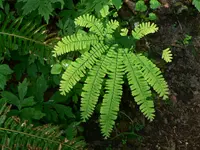
Five-finger fern, Adiantum aleuticum, is a delicate deciduous fern valued for its fine, fan-shaped leaf segments arranged like fingers on slender black stems. It forms airy clumps that give a light, graceful texture to shaded spaces.
This species is native to North America, often found in cool, moist woodlands, rocky stream banks, and shaded cliffs. Its preference for consistent moisture and humidity makes it somewhat sensitive to drying out, so it is not the easiest fern for beginners.
Those learning how to care for five-finger fern should know it prefers cool, shaded conditions, evenly moist but well-drained soil, and protection from hot, dry air.

Care Difficulty
Hard Care

Light Preference
Partial Shade

Water Requirements
Keep Soil Moist

Temperature Preference
Cool Climate

Hardiness Zone
3–8

Soil Texture
Loamy, Silty, Organic-rich

Soil pH
Strongly acidic (4.5–5.5), Acidic (5.5–6.5)

Soil Drainage
Moist but well-drained

Fertilization
Minimal (feed rarely)
Scan your plant to receive care tips personalized for your specific plant
Available on iOS and Android
This fern prefers soft, woodland-style light that protects its delicate fronds from harsh sun.
Adiantum aleuticum needs consistently moist but not waterlogged soil to support its fine roots and fronds.
This fern grows best in cool to mild conditions that avoid both hard frost and intense heat.
This fern needs consistently high humidity to maintain healthy fronds.
This species prefers loose, organic-rich, evenly moist soil that never becomes waterlogged or compacted.
This fern grows well in containers when moisture-retentive media and stable conditions are maintained.
Adiantum aleuticum is a light feeder, so use gentle nutrition to support steady frond growth without burning the fine roots.
Pruning Adiantum aleuticum focuses on hygiene and maintaining a fresh, airy clump rather than shaping.
This fern prefers stable conditions, so repotting or transplanting should be infrequent and done gently.
Adiantum aleuticum is usually propagated by division, which is more reliable for home growers than spore sowing.
This fern is cold hardy in many temperate regions but benefits from some winter attention, especially in containers.

Plant Health Check
Not sure what's wrong with your plant? Check your plant's health inside the app.
DNA studies show this species is genetically distinct from the visually similar western maidenhair fern, confirming it as a separate species with its own northern and high-elevation distribution pattern.
In the wild, it often grows on moist rock faces and cold-water seeps, including along streams fed by snowmelt, where constant cool moisture and moving air favor its growth.
Some wild populations occur on serpentine and other metal-rich or naturally radioactive substrates, indicating an unusual tolerance for chemically harsh and mineral-imbalanced soils compared with many other ferns.
This species is one of the few maidenhair ferns native to both coastal and inland regions of northwestern North America, with a range that stretches from low-elevation sea bluffs to high mountain talus slopes, illustrating a broad ecological amplitude within a single fern species.
Brown leaf tips or fronds usually come from low humidity, drying out between waterings, or exposure to hot or cold drafts. Salt buildup from hard water or excess fertilizer can also scorch tissue. Trim damage and correct the stress source.
Keep your plants happy and healthy with plant identification, disease detection, and easy care guidance.
Hemionitis concolor
Hemionitis concolor
Krauss's Clubmoss
Selaginella kraussiana
Selaginella erythropus
Selaginella erythropus
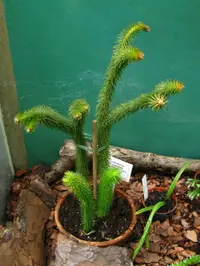
Huperzia squarrosa
Huperzia squarrosa
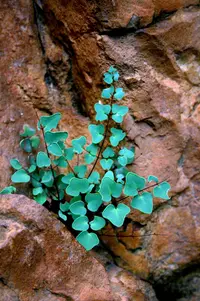
Hemionitis calomelanos
Hemionitis calomelanos
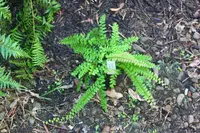
hairy false cloak fern
Hemionitis incana
fuzzy maidenhair
Adiantum tricholepis
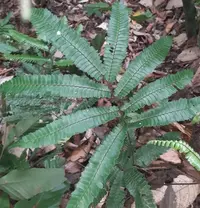
fourleaf maidenhair
Adiantum tetraphyllum