diamond maidenhair Care (Adiantum trapeziforme)

Also known as: Diamond maidenhair fern
diamond maidenhair

About diamond maidenhair

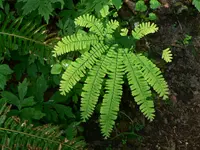
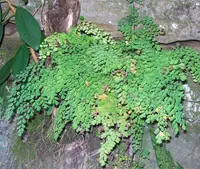
The diamond maidenhair, Adiantum trapeziforme, is a tropical fern valued for its delicate, fan-shaped leaf segments on thin, dark stalks. It forms soft, arching clumps that give a light, airy look indoors.

In nature, it grows in warm, humid forests of the Americas, often on rocky, shaded slopes or moist ledges. This background explains its preference for stable moisture, high humidity, and gentle, filtered light.

The plant is considered moderately demanding, as it reacts quickly to drying out, drafts, or sudden changes in conditions. Those who learn how to care for diamond maidenhair find it rewarding but not a set-and-forget houseplant.

Main Plant Requirements

Care Difficulty

Hard Care

Light Preference

Bright Indirect Light

Water Requirements

Keep Soil Moist

Temperature Preference

Tropical / Frost Sensitive

Hardiness Zone

10–11

Soil Texture

Loamy, Peaty, Organic-rich

Soil pH

Acidic (5.5–6.5), Slightly acidic (6.5–7.0)

Soil Drainage

Moist but well-drained

Fertilization

Light (every 4–6 weeks)

Get Personalized Care Plan

Scan your plant to receive care tips personalized for your specific plant

Available on iOS and Android

How to Care for the diamond maidenhair

This fern prefers soft, filtered light that mimics bright forest shade.

  • Provide bright, indirect light or dappled shade, such as under taller plants or sheer curtains, for 6–8 hours per day.
  • Allow gentle early-morning sun only; avoid strong midday or afternoon sun, which can scorch fronds of diamond maidenhair and cause pale, crispy edges.
  • In deeper shade growth becomes thin and sparse, so move slightly closer to a bright window or canopy gap, especially in darker winter months.

This fern needs steadily moist but not waterlogged soil to maintain healthy fronds.

  • Water when the top 1–2 cm of soil feels just barely dry, aiming to keep the root zone evenly damp without standing water.
  • Use a loose, humus-rich mix with good drainage; persistent sogginess causes black, mushy roots and yellowing fronds, while crisp, browning tips indicate underwatering.
  • In cool seasons or low light, reduce volume and frequency slightly; in warm, active growth, increase watering, guided by soil feel rather than a fixed schedule for Adiantum trapeziforme.

This species grows best in consistently warm, frost-free conditions.

  • Aim for 65–80°F (18–27°C) for steady growth, with only small daily swings to avoid stress on new fronds.
  • Protect from cold; growth slows below 55°F (13°C) and foliage is often damaged near 40°F (4°C), while even brief frost can kill fronds to the ground.
  • In hot weather above 85°F (29°C), increase humidity and shade and avoid hot, drying winds, which can cause rapid frond wilt and browning.

This fern needs consistently high humidity to maintain healthy, delicate fronds.

  • Aim for 60–80% humidity; use a room humidifier or enclosed display case near the plant.
  • It tolerates short dips to 40–50%, but frond tips brown and curl in prolonged dry air.
  • Crisping leaf edges, stalled new fronds, and increased shedding signal humidity stress in diamond maidenhair.

This species prefers a loose, humus-rich medium that stays lightly moist yet never stagnant.

  • Use a peat- or coco-based mix with plenty of fine bark and leaf mold to mimic forest floor conditions.
  • Ensure fast drainage by blending in 20–30% perlite, pumice, or coarse sand to prevent waterlogging.
  • Target a slightly acidic pH of 5.5–6.5, avoiding limy mixes that can restrict nutrient uptake.
  • Avoid heavy garden soil or pure compost that compacts, suffocating fine roots and encouraging rot.

This fern grows well in containers when moisture and stability are managed carefully.

  • Choose a wide, shallow pot to match its creeping rhizomes and reduce deep, soggy soil pockets.
  • Use a slightly heavier clay or ceramic pot if the fronds grow large, to prevent tipping over.
  • Raise the container on feet or a stand so excess water drains freely and air reaches the drainage holes.

This fern responds well to light, consistent feeding during active growth but is sensitive to excess salts.

  • Use a balanced liquid fertilizer (around 10-10-10 or 20-20-20) diluted to 1/4–1/2 strength for diamond maidenhair.
  • Apply every 4–6 weeks in spring and summer on moist soil, never on dry roots.
  • Pause or reduce feeding to 1 low-dose application the entire season in fall and winter.
  • Organic options like dilute fish emulsion or fine compost extract work well for gentle nutrition.

Pruning Adiantum trapeziforme focuses on hygiene and maintaining a neat, airy clump.

  • Best time is late winter or early spring, before strong new frond growth starts.
  • Remove dead, yellowing, or damaged fronds at the base using clean, sharp scissors or snips.
  • Thin out crowded, crossing fronds to improve air flow and reduce fungal issues.
  • Light, periodic pruning encourages fresh, upright fronds and a more balanced shape.

Container-grown plants benefit from occasional repotting to refresh the root zone and growing space.

  • Check for roots circling the pot, emerging from drainage holes, or slowed growth as signals to repot.
  • Aim to repot every 2–3 years in spring, when new fronds begin to appear.
  • Move to a pot only 2–3 cm wider, using a loose, peat-free, high-organic mix to limit root disturbance.
  • Water thoroughly, keep humidity high, and shade from strong sun for 1–2 weeks to reduce transplant stress.

Adiantum trapeziforme is most practically multiplied by division rather than by spores for home growers.

  • Divide mature clumps in spring when active growth resumes and temperatures are mild.
  • Gently lift the plant, tease apart the rhizomes so each section has healthy roots and several fronds.
  • Plant divisions into small pots with moist, well-drained, high-organic mix.
  • Maintain 70–80°F, high humidity, and shaded light until strong new fronds appear.

This tropical fern is frost sensitive and needs mild, protected conditions in winter.

  • Move container plants indoors before temperatures drop below 50°F, placing them in bright, indirect light.
  • Maintain indoor temperatures around 60–75°F with high humidity and away from heating drafts.
  • Keep soil lightly moist but not waterlogged, reducing watering as growth slows.
  • In mild climates, mulch the root zone lightly to buffer brief cool spells.

Care Tips

Use mesh liner

Line the bottom of the pot with a fine plastic or fiberglass mesh before adding mix so the delicate roots stay contained while drainage holes remain fully open.

Protect frond bases

When removing old fronds, cut them cleanly at the soil surface with fine scissors instead of pulling, which can loosen the shallow rhizomes and stress new growth.

Stage away from drafts

Place the plant at least 3–4 ft from doors, vents, or frequently opened windows, since moving air dehydrates the very thin fronds far faster than the soil dries.

Use bottom-watering tray

Set the pot on a shallow tray of water and pebbles for 10–20 minutes, then drain fully, which hydrates the fine root system evenly without splashing the fronds or compacting the mix.

Rotate by humidity source

Rotate the plant every 2–3 weeks relative to its nearest humidity source, such as a humidifier or grouped plants, to keep frond texture and spread even when growing diamond maidenhair in one direction of airflow or light.

Common Pests and Diseases

Scale insects

This pest feeds on fronds and stems, causing yellowing, stunted growth, and sticky honeydew deposits on the delicate leaf tissue.

Solution

Isolate the plant, then gently wipe or dab visible scale with cotton swabs dipped in 70% isopropyl alcohol, taking care not to tear the fronds. Rinse the foliage with lukewarm water, improve humidity and air movement, and repeat spot treatments weekly until no new scale appears; horticultural oil labeled safe for ferns can be used as a follow‑up if needed.

Mealybugs

These insects hide in frond bases and along rachises, sucking sap and leaving white, cottony masses and distorted new fronds.

Solution

Move the plant away from others and carefully remove visible mealybugs with a soft brush or cotton swab dipped in diluted alcohol, avoiding saturation of tender tissue. Follow with a gentle shower of lukewarm water, increase air circulation without drafts, and repeat inspections and manual removal every few days until populations are gone; an insecticidal soap formulated for ferns can support control if used lightly and repeatedly.

Fern aphids

These insects cluster on soft new fronds, leading to curling, deformed foliage and sticky honeydew that can encourage sooty mold.

Solution

Shower the plant with a gentle stream of lukewarm water to dislodge aphids from both sides of the fronds, supporting ongoing Adiantum trapeziforme plant care. After rinsing, apply a mild insecticidal soap labeled safe for ferns to the undersides of fronds, repeat every 5–7 days for several cycles, and keep the plant in stable, humid, shaded conditions to reduce stress and susceptibility.

Botrytis blight

This disease shows as brown, water-soaked spots on fronds that may expand and develop gray, fuzzy mold, especially in cool, stagnant, humid air.

Solution

Remove and discard all affected fronds, sterilizing scissors between cuts, then improve airflow, avoid overhead watering, and keep fronds dry while maintaining root-zone moisture. If conditions stay very humid, use a small fan for gentle air movement and reduce crowding around the plant; in severe or recurring cases, a fungicide labeled for ornamental ferns can be applied according to directions.

Bacterial leaf spot

Symptoms include small, dark, water-soaked lesions on fronds that may merge, causing patches of dead tissue along the leaf segments.

Solution

Promptly prune and discard spotted fronds, avoiding wetting the foliage and watering only at the substrate level. Improve air circulation, reduce leaf contact with standing water, and keep tools and pots clean; if spread continues, consider replacing heavily affected plants and avoiding overhead misting in that area for some time.

Interesting Facts

Largest maidenhair frond

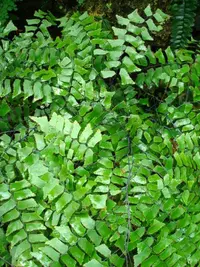
Among maidenhair ferns, this species produces some of the largest fronds, with individual triangular leaf segments that can reach several centimeters across, giving the plant a noticeably bolder texture than most Adiantum species.

Native to humid limestone

In the wild it often grows on shaded, humid limestone cliffs and rock faces in tropical America, where constant seepage water and high calcium levels shape its natural habitat.

Glossy dark stipes

The supporting stalks, called stipes, are characteristically dark brown to nearly black and somewhat glossy, creating a strong contrast with the pale to mid‑green leaf blades.
Botan icon

Did you know?

This species is considered one of the primary ancestors used in breeding some large-fronded ornamental maidenhair cultivars, chosen for its unusually big, trapezoid leaf segments and strong architectural appearance.

FAQs about diamond maidenhair

This species is a fern and does not produce flowers at any stage. Instead, it reproduces with spores that form on the undersides of mature fronds, so a lack of blooms is completely normal.

Grow Healthy Plants with Botan Care

Keep your plants happy and healthy with plant identification, disease detection, and easy care guidance.

Botan plant care app — identify plants on mobile

Explore More Plants