Tubers Need Depth
Plant tubers at 10–15 cm depth in a tall pot rather than a wide one so the developing root system and inflorescence stalk have stable support and are less likely to topple as they elongate.

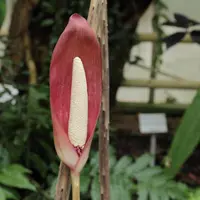
Anchomanes difformis is a tropical aroid grown mainly for its bold foliage and unusual, sometimes foul-smelling inflorescences. It grows from a tuber and sends up large, divided leaves on tall, mottled stalks.
In nature, it occurs in humid, shaded forests of West and Central Africa, often in rich, moist soils. The plant has a seasonal growth pattern, with active leafy growth followed by a rest period when conditions become drier or cooler.
Its size, dormancy phase, and strong flower odor can make it more challenging for beginners, but understanding how to care for Anchomanes difformis makes it manageable as a specialty collection plant.

Care Difficulty
Moderate Care

Light Preference
Partial Shade

Water Requirements
Keep Soil Moist

Temperature Preference
Tropical / Frost Sensitive

Hardiness Zone
10–11

Soil Texture
Loamy, Organic-rich

Soil pH
Acidic (5.5–6.5), Slightly acidic (6.5–7.0)

Soil Drainage
Moist but well-drained

Fertilization
Light (every 4–6 weeks)
Scan your plant to receive care tips personalized for your specific plant
Available on iOS and Android
This plant prefers bright shade that mimics a forest understory.
Anchomanes difformis grows from a tuber and needs moisture balanced with good drainage.
This species thrives in consistently warm, frost-free conditions.
This aroid prefers moderately humid air but adapts if extremes are avoided.
Anchomanes difformis grows best in loose, organic-rich, sharply draining soil that still holds some moisture.
This species is suitable for container growing when its deep tuber and spreading roots are given enough stable space.
This tuberous aroid grows from a nutrient-storing rhizome, so feeding focuses on the active growing season only.
Pruning needs are minimal and focus on hygiene rather than shaping this plant.
Handling this species centers on giving the underground rhizome enough room and avoiding disturbance during active growth.
Vegetative propagation relies mainly on division of the underground rhizome rather than stem cuttings.
This plant is frost-sensitive and benefits from deliberate winter management, especially in cooler regions.

Plant Health Check
Not sure what's wrong with your plant? Check your plant's health inside the app.
The leaf of this species is highly divided and dracontioid, meaning a single large blade is repeatedly split into many segments, giving it a lacy, almost tree-like appearance on top of one thick petiole.
It grows from an underground tuber that drives a marked seasonal rhythm: the huge leaf and inflorescence appear during the rainy season and the plant may retreat completely underground in the dry season.
Its inflorescence emits a strong, unpleasant scent that attracts carrion-associated flies, which act as the main pollinators by visiting the foul-smelling spadix and spathe structure.

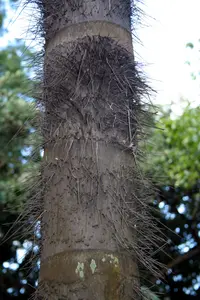
In some West and Central African farming systems, its large, spiny petioles are left standing in fields as natural barriers to deter browsing animals from disturbing newly planted crops.
This species spreads by underground tubers and offsets, forming clumps that can expand steadily in suitable conditions. It is not usually listed as invasive but can overwhelm small beds if offsets are not periodically removed or contained.
Keep your plants happy and healthy with plant identification, disease detection, and easy care guidance.