footstool palm Care (Saribus rotundifolius)

footstool palm

About footstool palm

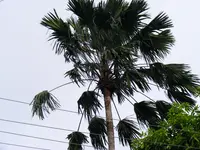
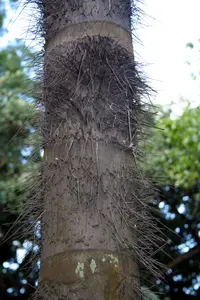
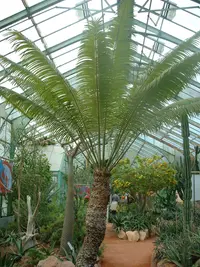
The footstool palm, Saribus rotundifolius, is a single-trunked fan palm valued for its rounded, pleated leaves and neat, upright form. It develops a smooth, ringed gray trunk topped by a dense crown, giving a clean architectural look.

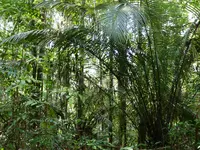
This species is native to Southeast Asia and the western Pacific, where it grows in warm, humid, lowland forests and coastal areas. In suitable climates it becomes a tall landscape palm, while in cooler regions it is kept smaller in large containers.

It is moderately slow-growing and needs stable warmth, good light, and space, so it is not the easiest beginner palm. With protected sun, regular moisture, and well-drained soil, it is possible to care for footstool palm successfully over many years.


Main Plant Requirements

Care Difficulty

Moderate Care

Light Preference

Full Sun

Water Requirements

Moderate Water

Temperature Preference

Tropical / Frost Sensitive

Hardiness Zone

10–11

Soil Texture

Sandy, Loamy, Organic-rich

Soil pH

Acidic (5.5–6.5), Slightly acidic (6.5–7.0)

Soil Drainage

Moist but well-drained

Fertilization

Light (every 4–6 weeks)

Get Personalized Care Plan

Scan your plant to receive care tips personalized for your specific plant

Available on iOS and Android

How to Care for the footstool palm

This palm prefers strong light and performs best with several hours of direct sun daily as it matures.

  • Provide 4–6 hours of direct sun, ideally morning to early afternoon, with bright, indirect light for the rest of the day.
  • Young footstool palm plants benefit from light shade or filtered sun, especially in hot climates, to prevent leaf scorch and bleaching.
  • In summer, protect from intense late-afternoon sun in very hot regions; in winter, avoid deep shade by trimming overhead cover or repositioning if potted.

This species prefers evenly moist, well-drained soil rather than alternating extremes of wet and dry.

  • Water when the top 3–5 cm of soil feel dry, allowing excess to drain away so roots do not stand in waterlogged conditions.
  • In hot, windy weather, check soil more often and increase frequency if leaves start to fold, droop, or feel dry at the tips.
  • Reduce watering slightly in cooler months, watching for yellowing, soft leaf bases as a sign of overwatering and crisp browning tips as a sign of underwatering.

This palm is a true tropical species and grows best in consistently warm conditions without frost exposure.

  • Aim for 70–90°F (21–32°C) for active growth, with the warmest temperatures paired with slightly higher humidity and reliable soil moisture.
  • Short dips to about 45–50°F (7–10°C) may be tolerated, but repeated exposure below 50°F (10°C) slows growth and increases stress risk.
  • Saribus rotundifolius is not frost hardy; freezing temperatures can kill foliage and growing points, while extreme heat above 100°F (38°C) requires shade and careful watering.

This species prefers moderately humid air and reacts to extended dry indoor conditions.

  • Aim for 50–70% humidity; short dips lower are tolerated but prolonged very dry air weakens growth.
  • Crisping tips, brown leaflet edges, and stalled new fronds indicate humidity stress rather than only underwatering.
  • Group the footstool palm with other plants, use a nearby humidifier, or place the pot on a pebble tray to raise local humidity.

This palm prefers deep, moist, well‑aerated soil that never stays waterlogged.

  • Use a loose, rich mix such as 2 parts loam or all‑purpose potting mix, 1 part coarse sand, and 1 part bark or perlite for structure.
  • Target slightly acidic to neutral pH, roughly 6.0–7.0, which supports balanced nutrient uptake for Saribus rotundifolius.
  • Ensure rapid drainage so water runs through in seconds, but enough organic matter remains to hold moisture between waterings.
  • Avoid dense clay, compacted ground, or mixes heavy in fine peat alone, since poor aeration increases risk of root rot and slow growth.

This species can be grown in large containers for some years, provided the pot is chosen for stability and drainage.

  • Select a wide, heavy container or use ballast in the base to prevent the tall, top‑heavy palm from tipping in wind.
  • Choose a pot at least as deep as the expected root ball height so the strong tap‑like roots can extend without circling tightly.
  • Use thick‑walled clay or concrete if outdoor, as these materials add weight and slightly reduce moisture swings in hot weather.

Saribus rotundifolius benefits from moderate feeding in containers or nutrient-poor soils.

  • Use a balanced NPK liquid fertilizer at half strength every 4–6 weeks during spring–summer active growth.
  • Alternatively, apply a slow-release palm-formula granule at label rate once in spring for simple footstool palm indoor care.
  • Avoid fertilizing in late fall–winter, especially outdoors, to prevent weak, tender growth.
  • Water before and after feeding to reduce root burn and help nutrients move into the root zone.

Saribus rotundifolius needs minimal pruning, mainly to keep the crown clean and safe.

  • Carry out pruning in late winter or early spring before strong new growth starts.
  • Remove only completely brown, dead, or storm-damaged fronds, cutting close to the trunk without nicking it.
  • Leave green fronds, even if slightly spotted, because they still supply energy and support trunk thickening.
  • Use sharp bypass loppers or a pruning saw, cleaned with alcohol, to reduce infection risk and make smooth cuts.

This palm is usually grown in the ground, but containers and young Saribus rotundifolius specimens may need occasional transplanting.

  • Check for roots circling the pot, lifting the plant, or water running straight through as signs it has outgrown its container.
  • Plan repotting or landscape transplanting in late spring–early summer when soil is warm and growth is active.
  • Move up only 1 pot size, keep the root ball as intact as possible, and fill with a well-drained, gritty mix.
  • Water thoroughly after moving, then keep soil lightly moist and shaded for 1–2 weeks to limit transplant shock.

Saribus rotundifolius is almost always propagated from seed and is slow and technical for home growers, so it is rarely attempted.

This tropical palm is frost-sensitive and needs careful winter management in most temperate climates.

  • Keep outdoor plants only in mild regions where temperatures remain above 30–32°F most winters.
  • For container-grown specimens, move indoors or to a heated greenhouse before the first frost.
  • Maintain indoor temperatures around 60–70°F with bright light and reduced, but not bone-dry, watering.
  • In marginal climates, mulch the root zone 5–10 cm deep and wrap the trunk with breathable insulation during cold snaps.

Care Tips

Wind hardening outdoors

In the first 1–2 years after planting, use temporary windbreaks like shade cloth or a slatted fence on the windward side, then gradually remove them over 6–12 months so the palm can develop a stronger root system and sturdier trunk in exposed sites.

Staking young trunk

For young, top-heavy plants, install 2–3 short, padded stakes around the root zone and tie loosely with a soft, wide tie to keep the trunk upright while still allowing slight movement, checking and adjusting ties every 2–3 months to prevent girdling.

Mulch management ring

Maintain a 5–10 cm deep mulch ring that extends at least 60–90 cm from the trunk but keep mulch pulled back 10–15 cm from the base to reduce trunk rot and discourage pests that hide at the crown base.

Strategic root space

When planting near paving, pools, or foundations, allow at least 2–3 m clearance from hardscape so the expanding root system and trunk base have room without lifting surfaces or crowding structures.

Proactive frond sanitation

In warm, humid climates, remove storm-damaged or hanging fronds promptly and dispose of them away from the planting area to reduce fungal disease pressure and pests, which is an important part of caring for footstool palm in landscapes.

Common Pests and Diseases

Red palm mite

This pest feeds on the underside of fan leaves, causing pale stippling that can progress to bronzing and premature leaf decline. Symptoms include fine webbing along leaf segments and a rough, sand-like appearance on close inspection.

Solution

Rinse fronds thoroughly with a strong but gentle stream of water, focusing on the undersides, and repeat weekly until populations drop. For heavier infestations, use a horticultural oil or insecticidal soap labeled for mites, applied in the early morning or evening, and reduce heat and dust by improving airflow around the palm.

Palm leaf spot

This disease produces small brown to black lesions on the leaf blade that may enlarge and merge, giving the fan a blotched or tattered look. Symptoms include yellow halos around spots and premature browning of older leaves, especially in humid, shaded conditions.

Solution

Remove and discard heavily spotted fronds to reduce inoculum and keep the canopy drier by spacing plants and avoiding overhead watering. If spotting continues in warm, humid weather, apply a copper-based or other palm-safe fungicide according to label directions and maintain good air circulation around the plant.

Scale insects

These insects appear as small, fixed bumps along leaf ribs, petioles, and sometimes the trunk, sucking sap and weakening the palm. Symptoms include sticky honeydew, sooty mold growth, and gradual yellowing or decline of affected fronds.

Solution

Manually remove individual scales from accessible fronds with a soft cloth or cotton swab dipped in alcohol, then wash foliage with lukewarm water and mild insecticidal soap. For persistent problems, repeat treatments every 7–10 days and improve light and overall Saribus rotundifolius care so the palm can outgrow minor damage.

Pink disease

This disease, caused by a fungus that colonizes woody tissue, leads to dieback of young palm stems and fronds. Symptoms include pink to salmon-colored crusts or threads on infected areas and progressive drying and death of attached leaves.

Solution

Prune out and destroy all visibly affected fronds and stem sections, cutting back into healthy tissue and disinfecting tools between cuts. Improve drainage and airflow, avoid wetting the trunk, and if the disease is caught early, protect remaining tissue with a registered fungicide drench or spray targeted to pink disease on palms.

Interesting Facts

Distinctive circular crown

This species develops a very rounded, almost spherical crown of fan-shaped leaves when mature, which makes it stand out clearly from many more open-crowned palm species in coastal landscapes.

Blue-green juvenile foliage

Young plants often show a noticeable bluish to blue-green tint on their stiff, circular leaf blades, a coloration that tends to become more uniformly green as the palm ages and the canopy fills out.

Natural coastal tolerance

It is naturally found in coastal lowland habitats in Southeast Asia and is known to tolerate high light, heat, and wind exposure, which explains its frequent use as a seaside avenue and park planting in tropical regions.

Botan icon

Did you know?

This palm has been widely used as a replacement for some disease- and storm-prone ornamental palms in tropical cities, because its dense, rounded canopy and relatively sturdy trunk structure allow it to perform reliably along busy streets and exposed waterfront promenades.

FAQs about footstool palm

Yellowing leaves usually come from natural aging, overwatering with poor drainage, nutrient deficiency, or cold stress. Check soil moisture, improve drainage, avoid waterlogged mix, and apply a balanced palm fertilizer during the warm growing season.

Grow Healthy Plants with Botan Care

Keep your plants happy and healthy with plant identification, disease detection, and easy care guidance.

Botan plant care app — identify plants on mobile

Explore More Plants