Strong trellis setup
Install a sturdy trellis, fence, or tensioned wire system before planting so the vine can attach early, as mature stems become heavy and can tear out weak supports.

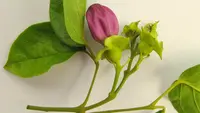
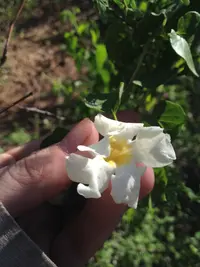
Liana de cuello, Amphilophium paniculatum, is a vigorous evergreen climber in the trumpet vine family. It climbs by twining stems and can quickly cover fences, pergolas, or trees. Leaves are typically divided and glossy, and the plant produces tubular flowers that are attractive to pollinators in warm climates. It is native to tropical and subtropical regions of the Americas, where it grows in open woodland and disturbed areas. This species can be quite hardy in frost-free zones but may become invasive where conditions are ideal. Gardeners who want to care for liana de cuello should note that it prefers warm temperatures, sun to light shade, and well-drained soil with steady moisture.

Care Difficulty
Moderate Care

Light Preference
Full Sun

Water Requirements
Regular Water

Temperature Preference
Tropical / Frost Sensitive

Hardiness Zone
10–11

Soil Texture
Sandy, Loamy, Organic-rich

Soil pH
Acidic (5.5–6.5), Slightly acidic (6.5–7.0)

Soil Drainage
Moist but well-drained

Fertilization
Light (every 4–6 weeks)
Scan your plant to receive care tips personalized for your specific plant
Available on iOS and Android
This vigorous tropical climber prefers bright, warm conditions with consistent sun exposure.
This fast-growing vine needs steadily moist but not waterlogged soil once established.
This species thrives in warm, frost-free climates with stable seasonal temperatures.
This vigorous tropical vine grows best with moderately high humidity but adapts to many outdoor conditions.
Provide loose, well-drained, organic-rich soil to support rapid vine growth and deep rooting.
This climbing vine can grow successfully in containers if the pot is large, stable, and drains well.
Amphilophium paniculatum responds well to moderate feeding during its active growing season.
Pruning helps Amphilophium paniculatum stay manageable, healthy, and free-flowering.
This vigorous climber is usually grown in-ground, with transplanting done thoughtfully to limit stress.
Amphilophium paniculatum is commonly propagated from semi-ripe cuttings and seeds under warm conditions.
This tropical vine has low frost tolerance and benefits from careful winter management in cooler climates.

Plant Health Check
Not sure what's wrong with your plant? Check your plant's health inside the app.
This liana often behaves as semi-deciduous in drier subtropical and tropical climates, dropping part or most of its foliage in a pronounced dry season, then rapidly flushing new leaves once rains return.
Its foliage serves as a larval food source for certain swallowtail butterflies in its native range in Central and South America, making it an important structural and nutritional component of local forest-edge food webs.
The species produces its tubular flowers in loose, branched clusters called panicles, which present many blossoms at once and increase visibility to pollinators such as bees and hummingbirds.
This species is a vigorous, twining vine that climbs by wrapping its stems around supports. It can also scramble over shrubs and fences, forming dense, woody growth if not pruned and directed regularly.
Keep your plants happy and healthy with plant identification, disease detection, and easy care guidance.