Provide firm trellis
Install a sturdy vertical trellis or mesh before planting so the vines can climb easily and fruits hang free, which keeps the spiny gourds cleaner and reduces rot from ground contact.

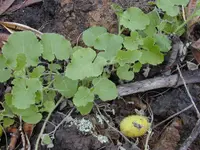
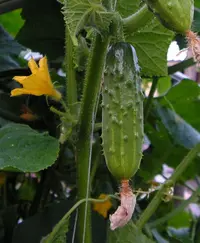
Hedgehog gourd, Cucumis dipsaceus, is an annual climbing vine in the cucumber family, grown mainly for its unusual, spiny fruits. The fruits are oval with soft, hair-like spines that give a fuzzy, hedgehog-like look. Vines grow quickly and can cover supports, fences, or trellises in a single warm season.
This species is native to East Africa but is now naturalized in several tropical and subtropical regions. It is relatively easy to grow where summers are warm, as long as it has sun, regular moisture, and well-drained soil. Gardeners who want to care for hedgehog gourd should note that it can reseed and spread in favorable climates.

Care Difficulty
Moderate Care

Light Preference
Full Sun

Water Requirements
Regular Water

Temperature Preference
Tropical / Frost Sensitive

Hardiness Zone
10–12

Soil Texture
Sandy, Loamy, Organic-rich

Soil pH
Acidic (5.5–6.5), Slightly acidic (6.5–7.0)

Soil Drainage
Moist but well-drained

Fertilization
Light (every 4–6 weeks)
Scan your plant to receive care tips personalized for your specific plant
Available on iOS and Android
Cucumis dipsaceus, often grown as an annual vine, performs best in bright outdoor conditions with consistent direct sun.
This species prefers evenly moist, well-drained soil and reacts quickly to both drought and waterlogging.
This warm-season vine thrives in stable, frost-free conditions and slows growth when exposed to cold.
This species grows well in typical outdoor humidity and rarely needs special moisture control.
This annual vine prefers loose, well-drained, moderately fertile soil for steady growth.
This species adapts well to container growing when given enough root volume and support for its climbing habit.
Cucumis dipsaceus responds well to modest feeding during its active warm-season growth.
Pruning Cucumis dipsaceus is mainly used to manage vigor and keep vines productive.
This species is usually grown as an annual vine, so transplanting young plants matters more than long-term repotting.
This plant is most commonly propagated from seed rather than by vegetative methods.
In most climates this vine behaves as a tender annual, so long-term winter care is limited.

Plant Health Check
Not sure what's wrong with your plant? Check your plant's health inside the app.
The fruits develop a dense covering of soft, flexible spines that give them a teasel-like appearance, which is why the species is sometimes called teasel gourd or hedgehog gourd. These spines are an outgrowth of the fruit surface and are not true thorns.
This species is an annual vine that completes its life cycle within a single warm season, climbing by means of tendrils along supports such as shrubs, fences, or other vegetation. In suitable climates it can grow rapidly and produce many small, spiny fruits in one season.
Originally cultivated mainly as an ornamental curiosity for its unusual fruits, this plant has escaped from gardens in some tropical and subtropical regions. In a few areas it is now documented as a naturalized or weedy species along disturbed habitats and field margins.

The ripe fruits contain many small, mucilaginous seeds, and in some regions children use the slippery seed mass as an improvised soap-like substance, taking advantage of its ability to create a slimy lather when rubbed in water.
This species is a vigorous annual vine that climbs using tendrils. Given support, it will scramble vertically; without support, it sprawls along the ground, forming dense, tangled growth that can overrun nearby low plants.
Keep your plants happy and healthy with plant identification, disease detection, and easy care guidance.