Himalayan ivy Care (Hedera nepalensis)

Himalayan ivy

About Himalayan ivy

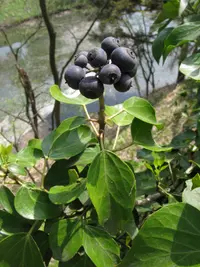
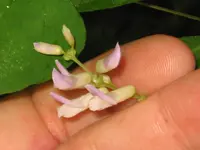
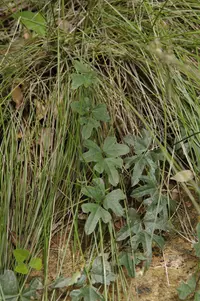
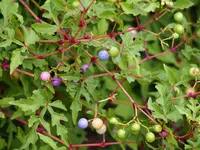
Himalayan ivy (Hedera nepalensis) is a woody evergreen climber from mountain forests of the Himalayas and nearby regions. It attaches to trees, rocks, and walls with small aerial roots.

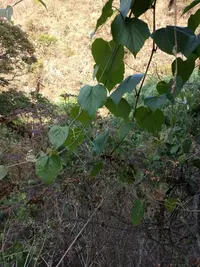
Its leaves are usually leathery, glossy, and often narrower than common English ivy, giving it a slightly more refined look. Growth can be vigorous in mild climates, forming dense vertical or groundcover mats.

This species tolerates cool conditions and some shade but prefers moist, well-drained soil and protection from very hot, dry sites. Understanding how to care for Himalayan ivy starts with controlling its spread and providing suitable support or space.

In suitable conditions it is generally hardy and long-lived, though monitoring is needed to prevent it from becoming invasive outdoors in some regions.

Main Plant Requirements

Care Difficulty

Moderate Care

Light Preference

Partial Shade

Water Requirements

Moderate Water

Temperature Preference

Cool Climate

Hardiness Zone

7–10

Soil Texture

Loamy, Sandy, Organic-rich

Soil pH

Acidic (5.5–6.5), Slightly acidic (6.5–7.0)

Soil Drainage

Moist but well-drained

Fertilization

Minimal (feed rarely)

Get Personalized Care Plan

Scan your plant to receive care tips personalized for your specific plant

Available on iOS and Android

How to Care for the Himalayan ivy

This species prefers bright but gentle light to maintain dense, healthy foliage.

  • Outdoors, aim for 2–4 hours of soft morning sun with afternoon shade, or dappled light under trees for Himalayan ivy.
  • Plants tolerate partial to full shade, but in deep shade growth becomes sparse and leaves smaller; shift gradually toward brighter, indirect light if this occurs.
  • Avoid harsh midday or reflected afternoon sun, which can scorch leaves; in summer, provide extra shade, in winter allow more open exposure.

Hedera nepalensis prefers slightly moist but not saturated soil with brief drying between waterings.

  • Water when the top 2–4 cm of soil feels dry, using enough water to moisten the root zone, then let excess drain away fully.
  • In spring and summer, expect faster drying and more frequent watering; in cooler months, allow the soil to stay dry slightly longer to reduce root rot risk.
  • Wilting with dry soil indicates underwatering, while yellowing, soft leaves and a sour soil smell suggest overwatering or poor drainage that needs correction.

This ivy grows best in cool to mild conditions rather than intense heat.

  • Optimal growth occurs around 50–70°F (10–21°C), with steady temperatures promoting dense, steady vine development.
  • The plant tolerates brief drops to about 20°F (-6°C) once established, but repeated freezes below this can damage foliage and stems, especially in exposed sites.
  • In hot climates, growth slows above 80°F (27°C); provide shade and mulch to keep roots cooler and protect from rapid freeze–thaw cycles in winter.

This species prefers moderate humidity but usually adapts to typical indoor air if watering is consistent.

  • Aim for 40–60% humidity to reduce leaf browning and crisp edges on Himalayan ivy.
  • Tolerates short spells of drier air, but persistent low humidity plus underwatering causes curling, pale, or crispy leaf tips.
  • Increase humidity with a nearby humidifier or grouped plants; avoid misting if leaves stay wet for hours, as this encourages fungal spots.

This species prefers loose, moist but well-drained soil that does not stay waterlogged.

  • Use a loamy, organic-rich mix such as 2 parts all-purpose potting mix, 1 part compost, and 1 part perlite or fine bark for drainage.
  • Structure should be crumbly, not compact; roots need air spaces to avoid anaerobic conditions that lead to rot.
  • Aim for slightly acidic to neutral pH, around 6.0–7.0, which supports nutrient availability for Hedera nepalensis.
  • Avoid heavy clay, poorly drained sites, or pure sand; improve dense ground soil by blending in compost and grit or perlite before planting.

This species grows well in containers when the pot supports its trailing or climbing habit.

  • Choose a broad, moderately deep pot so roots can spread horizontally, which stabilizes the plant as stems lengthen.
  • Select a heavier material such as ceramic or clay outdoors to prevent the container from tipping as foliage becomes top-heavy.
  • Ensure drainage holes are generous and keep the pot slightly elevated so excess water can exit freely and not pool under the base.

Hedera nepalensis benefits from light, controlled feeding during its active growing season.

  • Use a balanced liquid fertilizer (around 10-10-10 or 20-20-20) or well-diluted organic compost tea for Himalayan ivy indoor care.
  • Feed every 4–6 weeks in spring and summer only, skipping feedings if growth already looks strong and healthy.
  • Dilute liquid fertilizer to 1/2–1/4 strength to avoid root burn, especially in containers.
  • Stop fertilizing in fall and winter, when growth slows and the plant rests.

Hedera nepalensis responds well to thoughtful pruning that keeps growth dense and controlled.

  • Carry out main pruning in late winter or early spring before strong new growth starts.
  • Remove dead, damaged, or diseased stems first, then thin crowded, tangled shoots to improve light and airflow.
  • Shorten long, straggling vines to encourage branching and a fuller shape on walls, groundcovers, or containers.
  • Use clean, sharp hand pruners or scissors, cutting just above a leaf node to promote healthy regrowth.

Hedera nepalensis is often grown as groundcover but adapts to containers, which occasionally need repotting or transplanting.

  • Check for roots circling the pot base, pushing from drainage holes, or for slowed growth as signs a larger container is needed.
  • Plan repotting or outdoor transplanting for early spring or early fall, avoiding extreme heat or frost periods.
  • Move container plants every 2–3 years into a pot 2–5 cm wider, using fresh, well-draining mix to support new roots.
  • Handle the root ball gently, loosen only the outer roots, water thoroughly after planting, and shade briefly to reduce transplant stress.

Hedera nepalensis is commonly multiplied by stem cuttings and simple layering.

  • Take 8–12 cm tip cuttings in spring or early summer from healthy, non-flowering shoots with several leaf nodes.
  • Insert cuttings into moist, well-draining mix, burying 1–2 nodes and keeping humidity high with a clear cover or propagation dome.
  • Place in bright, indirect light at 65–75°F; roots usually form within a few weeks under stable moisture conditions.
  • For layering, pin a flexible stem to moist soil so a node is covered, then separate and plant once roots are established.

Hedera nepalensis is fairly cold hardy but benefits from simple winter precautions, especially in containers or exposed sites.

  • In regions with freezing winters, apply a 5–8 cm mulch layer around outdoor plants to insulate the root zone.
  • Leave established groundcover slightly untrimmed going into winter to shield lower stems and buds.
  • Move container plants to a sheltered, frost-free spot such as an unheated porch or cool indoor area with light.
  • Water sparingly in winter, keeping soil just lightly moist so cold, waterlogged conditions do not damage roots.

Care Tips

Train Early Growth

Install a small trellis or hooks and gently tie young vines with soft garden ties or jute twine, guiding them in the desired direction before stems lignify and become harder to reposition.

Use Cool Microclimates

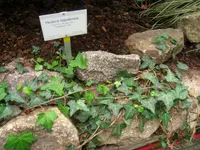
Place the plant in slightly cooler, shaded spots such as a north-facing wall or the shadier side of a balcony, which better matches its natural mountain habitat and encourages denser foliage.

Root Pruning Renewal

Every 2–3 years for container plants, unpot, trim back 10–20% of the outer root mass with clean pruners, and repot in fresh mix to control size and promote new fibrous roots.

Regular Pest Scouting

Inspect leaf undersides and stem nodes weekly for aphids, scale, or spider mites, and promptly treat light infestations with a targeted insecticidal soap spray before they spread along the vines.

Segmented Propagation Strategy

When caring for Himalayan ivy, take 7–10 cm stem cuttings with at least 2–3 nodes, remove the lower leaves, and root segments horizontally on moist substrate so multiple new shoots emerge from a single vine section.

Common Pests and Diseases

Spider mites

This pest often thrives on Hedera nepalensis in dry, warm indoor or sheltered outdoor spots, causing fine stippling and a dull, dusty look to the foliage. Symptoms include tiny webbing on the undersides of leaves and gradual yellowing, especially on older growth.

Solution

Shower the foliage thoroughly with lukewarm water, focusing on leaf undersides, and repeat weekly until no webbing or mites are seen. For persistent infestations, use a ready-to-use insecticidal soap or neem oil spray labeled for mites, and combine this with slightly higher humidity and better air movement to reduce reinfestation while following basic Hedera nepalensis care instructions.

Scale insects

These insects attach to stems and leaf veins as small, rounded or oval bumps and suck sap, causing weakened growth and sticky honeydew on leaves and nearby surfaces. Sooty mold may develop on the honeydew, giving leaves a blackish coating.

Solution

Physically remove scales by gently scraping with a cotton swab or soft brush dipped in alcohol, then rinse the plant with water. Follow up with 2–3 applications of horticultural oil or insecticidal soap at 7–10 day intervals, making sure to coat stems and leaf undersides, and prune heavily infested stems if needed.

Leaf spot

This disease appears as brown, tan, or black circular spots, sometimes with yellow halos, scattered on the leaves. In humid, shaded conditions, spots can merge and cause sections of the leaf to die and drop.

Solution

Remove and discard affected leaves and any fallen debris around the plant, then improve air circulation and avoid wetting foliage when watering. If new spots continue to appear, apply a copper-based or other broad-spectrum fungicide labeled for leaf spot on ornamental vines, following the label intervals until new growth stays clean.

Bacterial leaf blight

This disease causes water-soaked, irregular lesions that quickly turn dark brown to black, often starting along leaf edges and tips. Symptoms include rapid yellowing and collapse of affected leaves, especially in plants kept crowded and constantly moist.

Solution

Immediately remove and dispose of all affected leaves and any nearby plant debris, and avoid overhead watering to keep foliage dry. Improve spacing and airflow, sterilize cutting tools with alcohol between cuts, and if spread continues, discard heavily affected plants to protect nearby Hedera species and other ornamentals.

Aphids

These insects cluster on tender shoot tips and undersides of young leaves, sucking sap and causing curling, distortion, and sticky honeydew. Ants are often attracted to the honeydew, and new growth may appear stunted or twisted.

Solution

Rinse off colonies with a firm stream of water, repeating every few days until numbers drop. For ongoing problems, treat soft growth with insecticidal soap or neem oil, carefully coating new shoots and leaf undersides, and reduce excess nitrogen fertilization that encourages very soft, aphid-prone growth when growing Himalayan ivy.

Interesting Facts

High-altitude adaptation

Hedera nepalensis is naturally distributed from the Himalayas across parts of China and Southeast Asia, where it often grows at higher elevations with cool, moist conditions and marked seasonal temperature swings.

Distinct leaf morphology

Compared with common English ivy, this species often has thicker, more leathery leaves that may be less deeply lobed, an adaptation that helps reduce water loss and tolerate cooler mountain climates.

Epiphytic and terrestrial growth

In its native range, it can grow as a ground-covering vine, a climbing plant on rock faces and tree trunks, and occasionally as an epiphyte, meaning it may root on other plants without taking nutrients from them.

Botan icon

Did you know?

Some wild populations of Hedera nepalensis grow on steep Himalayan cliffs and rock faces, where their dense root-like aerial holdfasts help stabilize thin soil and contribute to slope protection in fragile mountain ecosystems.

FAQs about Himalayan ivy

This species can spread widely by creeping stems and aerial roots, especially in mild, moist climates. In suitable regions it may cover walls, trees, or ground quickly, so regular pruning and clear physical boundaries are important.

Grow Healthy Plants with Botan Care

Keep your plants happy and healthy with plant identification, disease detection, and easy care guidance.

Botan plant care app — identify plants on mobile

Explore More Plants