Amphilophium carolinae Care

Amphilophium carolinae

About Amphilophium carolinae

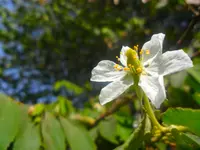
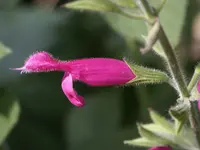
Amphilophium carolinae is a vigorous tropical climbing vine in the Bignoniaceae family, grown mainly for its decorative foliage and showy tubular flowers. It typically scrambles over supports, fences, or trees, forming a dense green curtain when given space and warmth.

This species is native to parts of South America, where it grows in warm, humid environments with ample rainfall. In cultivation it prefers bright light, moderate moisture, and well-drained soil, and it grows best in frost-free climates or protected spaces.

Once established, it is moderately easy to manage but needs structural support and regular pruning to control its size. Gardeners who learn how to care for Amphilophium carolinae often use it to quickly cover pergolas or large trellises.

Main Plant Requirements

Care Difficulty

Moderate Care

Light Preference

Full Sun

Water Requirements

Moderate Water

Temperature Preference

Tropical / Frost Sensitive

Hardiness Zone

10–11

Soil Texture

Sandy, Loamy, Organic-rich

Soil pH

Acidic (5.5–6.5), Slightly acidic (6.5–7.0)

Soil Drainage

Moist but well-drained

Fertilization

Light (every 4–6 weeks)

Get Personalized Care Plan

Scan your plant to receive care tips personalized for your specific plant

Available on iOS and Android

How to Care for the Amphilophium carolinae

This vigorous climber prefers bright, warm conditions with protection from harsh midday sun.

  • Provide 4–6 hours of direct morning sun, then bright filtered light or light shade in the afternoon to prevent leaf scorch.
  • Tolerates partial shade, but flowering of Amphilophium carolinae decreases if it receives less than 3–4 hours of direct or very bright light daily.
  • In hot summers, use overhead light shade cloth or plant near a lightly shaded fence; in winter, ensure the site stays as bright and open as possible.

This vine performs best in evenly moist but well‑drained soil that never stays saturated for long.

  • Water when the top 3–5 cm of soil feels dry, allowing deeper soil to stay slightly moist, especially during active growth and flowering.
  • Reduce frequency in cooler months, letting the soil dry a bit deeper, while avoiding complete dryness that causes leaf curl, dull foliage, or stem dieback.
  • Ensure soil drains freely; persistent wetness, sour smell, yellowing leaves, and soft stems indicate overwatering and poor aeration around the roots of Amphilophium carolinae.

This species prefers warm, frost‑free conditions and reacts poorly to prolonged cold.

  • Aim for 65–85°F (18–29°C) for steady growth, with the strongest vegetative growth and flowering typically toward the upper end of this range.
  • Protect from frost; leaf and stem damage often appears around 32°F (0°C), and the plant may die back if temperatures drop below 28°F (−2°C).
  • In hot climates, it tolerates short periods up to about 95°F (35°C) if soil moisture is maintained and roots are mulched to moderate temperature swings.

This vigorous climber prefers moderately humid air but tolerates short dry spells.

  • Aim for 50–70% humidity to support active growth and reduce leaf edge browning.
  • Dry indoor air may cause curling, crispy tips, and slower vine extension, especially in heated rooms.
  • Increase humidity with grouped plants, a water-filled pebble tray under the pot, or a room humidifier placed nearby.

This species grows best in loose, well-drained, organic-rich soil that still holds moderate moisture.

  • Use a loamy mix combining roughly 40% compost, 40% coconut coir or peat, and 20% perlite or coarse sand for structure and drainage.
  • Target a slightly acidic to neutral pH around 6.0–7.0, which supports nutrient availability and healthy root development.
  • Ensure the soil drains freely; water should pass through within seconds rather than pooling on the surface or in the pot.
  • Avoid heavy clay, compacted ground, or mixes dominated by fine peat that stay soggy and restrict aeration, which encourages root rot in Amphilophium carolinae.

This vigorous climber is suitable for container growing when the pot is chosen for root space and stability.

  • Select a deep, wide container that allows the long, exploring roots to anchor and prevents the plant from becoming root-bound too quickly.
  • Choose a heavier material such as ceramic or thick terracotta to stabilize the pot against wind and the weight of the climbing vines.
  • Set the container where a trellis, fence, or wires are accessible so the plant’s weight is supported above the pot rather than pulling at the rim.

This vigorous climber responds well to moderate feeding during the active growing season.

  • Use a balanced liquid fertilizer (such as 10-10-10 or 20-20-20) diluted to 1/2 strength every 4–6 weeks in spring and summer.
  • Alternatively, apply a slow-release balanced fertilizer or a thin layer of well-rotted compost at the start of spring.
  • Skip feeding in late fall and winter when growth slows, especially in cooler regions.
  • Flush the pot or planting area with plain water a few times each season to prevent salt buildup around the roots.

Amphilophium carolinae benefits from periodic pruning to control size and encourage flowering wood.

  • Carry out main pruning in late winter or very early spring before vigorous new growth starts.
  • Remove dead, diseased, or storm-damaged stems first, then thin weak or congested shoots to open the framework.
  • Shorten long, wandering vines to maintain the desired height and support coverage while stimulating lateral flowering shoots.
  • Use clean, sharp bypass pruners and make angled cuts just above a healthy bud or side shoot.

This twining vine is more often planted in the ground, but young container plants or new outdoor plantings benefit from careful transplanting.

  • Plan major transplanting or shifting to a larger container for early spring, once frost risk has passed and growth is about to resume.
  • Look for roots circling the pot, quick drying of the soil, or reduced vigor as signs it needs more space.
  • When transplanting, disturb the root ball only lightly, trim circling roots, and replant at the same depth in a well-drained soil mix.
  • Water thoroughly after planting, keep the root zone evenly moist for several weeks, and provide temporary shade to limit stress.

This species is usually propagated vegetatively to maintain flowering quality and vigor.

  • Take semi-ripe stem cuttings in late spring or early summer, 8–12 cm long with 2–3 nodes.
  • Remove lower leaves, dip the base in a rooting hormone, and insert into a moist, free-draining mix such as perlite and peat or coco coir.
  • Maintain high humidity (for example, under a clear cover) and bright, indirect light at 70–80°F until roots form.
  • Sow fresh seeds in warm conditions if available, noting that seedlings may vary from the parent plant.

In mild, frost-free climates this vine can remain evergreen, but it is sensitive to hard freezes.

  • In regions with light frost, add a 5–8 cm layer of mulch around the root zone in late fall, keeping it slightly away from the stems.
  • Where severe frost occurs, grow Amphilophium carolinae in a large container and move it indoors or into a greenhouse for winter.
  • Indoors, provide bright light, reduced watering, and good air circulation while keeping temperatures mainly above 50°F.

Care Tips

Sturdy trellis choice

Install a rigid, weather-resistant trellis or wire system before planting so the vine can attach early and develop a stable framework that supports its long, vigorous stems and heavy flowering flushes.

Directional stem training

Guide young stems horizontally along wires or fencing using soft ties, as this encourages more lateral shoots and flower-bearing spurs compared with allowing all growth to run straight upward.

Root-zone mulching

Maintain a 5–8 cm layer of composted bark or wood chips over the root zone, keeping it a few cm away from the stem, to stabilize soil moisture, keep roots cooler, and reduce weed competition.

Seasonal growth control

In late winter, selectively thin out the oldest, most congested stems at the base to open the plant to light and air, which reduces fungal problems and keeps flowering wood young and productive when growing Amphilophium carolinae.

Preventing stem damage

Space support wires or slats 20–30 cm apart so twining stems can loop naturally without being forced at sharp angles, which helps prevent kinking and breakage in windy conditions.

Common Pests and Diseases

Caterpillars

This pest commonly chews young shoots, flower buds, and soft leaves, leaving irregular holes and ragged edges on the vine. Symptoms include frass (dark droppings) on leaves and distorted new growth.

Solution

Hand-pick caterpillars in early morning or evening and prune heavily damaged tips. For heavier infestations, use Bacillus thuringiensis (Bt) spray directed to the undersides of leaves, and keep the area around the vine free of weeds that shelter larvae as part of overall Amphilophium carolinae care instructions.

Leaf spot

This disease produces small brown or tan lesions on leaves that may enlarge, merge, and cause premature leaf drop, especially in warm, humid conditions. Symptoms include yellow halos around spots and thinning foliage on lower and inner parts of the vine.

Solution

Remove and discard affected leaves, avoid overhead watering, and improve airflow by thinning congested stems. If the problem persists, apply a copper-based fungicide according to label directions and keep the soil surface clean of fallen debris to reduce reinfection.

Powdery mildew

This disease forms a white to gray powdery coating on both sides of leaves and young stems, often starting in shaded or crowded sections of the vine. Symptoms include yellowing, leaf curling, and reduced flowering when the infection is severe.

Solution

Increase sun exposure and airflow by pruning overcrowded stems and avoiding excess nitrogen fertilization. Treat active infections with a sulfur-based or potassium bicarbonate fungicide, ensuring thorough coverage of upper and lower leaf surfaces.

Scale insects

These insects attach along stems and leaf midribs as small, dome-shaped or oval bumps, sucking sap and weakening the vine. This pest often produces sticky honeydew that attracts sooty mold and ants.

Solution

Wipe stems and leaves with a cloth or cotton pad dipped in diluted alcohol to remove individual scales, and prune heavily infested stems. For persistent infestations, use a horticultural oil spray targeting the crawler stage and repeat as directed to disrupt the life cycle.

Spider mites

This pest thrives in hot, dry conditions and causes fine stippling on leaves, bronzing, and eventual leaf drop on exposed parts of the vine. Symptoms include delicate webbing between leaves and stems, especially on the undersides of foliage.

Solution

Increase humidity and hose down the vine thoroughly, focusing on the undersides of leaves to dislodge mites. In more serious cases, apply an insecticidal soap or horticultural oil at regular intervals, and monitor closely during hot, dry weather to catch reinfestation early.

Interesting Facts

Neotropical forest climber

This species is a woody liana native to moist and semi-deciduous forests of southeastern Brazil, where it climbs trees to reach higher light levels in the canopy.

Trumpet-shaped blossoms

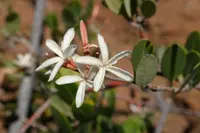
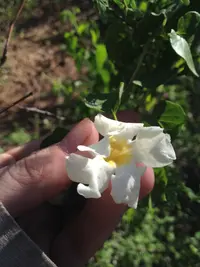
It produces tubular to trumpet-shaped flowers with a flaring limb, adapted to pollination by larger nectar-feeding insects and possibly hummingbirds in its natural range.

Paired capsule fruits

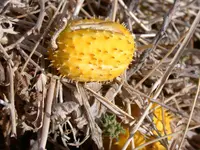
After pollination it develops elongated, dry capsule fruits that open to release flattened, winged seeds designed for wind dispersal, allowing the vine to colonize nearby forest gaps.

FAQs about Amphilophium carolinae

This species is a vigorous woody vine that climbs using twining stems. It naturally grows upward onto trellises, fences, or trees rather than creeping as a ground cover, so it needs vertical space and structural support.

Grow Healthy Plants with Botan Care

Keep your plants happy and healthy with plant identification, disease detection, and easy care guidance.

Botan plant care app — identify plants on mobile

Explore More Plants