Japanese Maple Care (Acer palmatum 'Shaina')

Also known as: Maple
Japanese Maple

About Japanese Maple

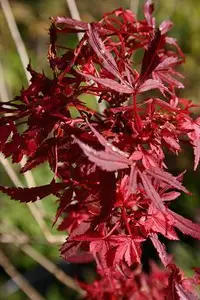
Acer palmatum 'Shaina' is a compact Japanese maple cultivar valued for its dense, rounded form and finely divided, red foliage. It suits small gardens, patios, and containers. New leaves emerge bright red, deepen to burgundy, and often develop richer tones in cooler weather, giving strong seasonal interest in limited space. This tree originates from selections of species native to Japan, Korea, and parts of China, adapted to temperate climates with distinct seasons. It tends to grow slowly and remains relatively small, which makes it easier to site and maintain. For those learning how to care for Japanese Maple, Shaina typically prefers dappled light, evenly moist but well-drained soil, and shelter from harsh drying winds.

Main Plant Requirements

Care Difficulty

Moderate Care

Light Preference

Partial Shade

Water Requirements

Moderate Water

Temperature Preference

Cold Hardy

Hardiness Zone

5–8

Soil Texture

Loamy, Sandy, Organic-rich

Soil pH

Acidic (5.5–6.5), Slightly acidic (6.5–7.0)

Soil Drainage

Moist but well-drained

Fertilization

Minimal (feed rarely)

Get Personalized Care Plan

Scan your plant to receive care tips personalized for your specific plant

Available on iOS and Android

How to Care for the Japanese Maple

This compact maple prefers bright but gentle light that protects its foliage from scorch.

  • Provide 3–5 hours of morning sun with light afternoon shade; dappled light under taller trees suits a Japanese maple well.
  • In hot summer climates, avoid strong sun from 12–4 pm, which can cause leaf scorch, crispy edges, and early defoliation.
  • In cooler or northern areas, it can handle more direct sun, but monitor for pale leaves or weak growth as signs of insufficient light.

This shrub needs consistently moist but not saturated soil, especially during its active growing season.

  • Water when the top 3–5 cm of soil feels dry, soaking the root zone deeply rather than giving frequent shallow sips.
  • Ensure soil drains freely; signs of overwatering include yellowing leaves, dieback at branch tips, and soggy soil that stays wet for days.
  • In spring and summer, monitor moisture after hot, dry, or windy days; reduce watering in fall and winter while preventing complete drying.

This maple is cold hardy yet sensitive to sudden extremes in both heat and frost.

  • Optimal growth occurs around 60–80°F (16–27°C), with steady spring and early summer temperatures supporting healthy leaf and shoot development.
  • Dormant trees tolerate down to about 0°F (-18°C) once established, but late spring frosts can damage new leaves and young shoots.
  • In heat above 90°F (32°C), provide shade and mulch to cool roots, as extended high temperatures increase stress and leaf scorch risk.

This compact maple prefers moderate, consistent outdoor humidity but tolerates short dry spells.

  • Aim for 40–60% humidity; prolonged levels below 30% combined with heat increase leaf scorch risk.
  • Watch for browning leaf edges, crisp tips, and premature leaf drop as signs of low-humidity stress.
  • Increase humidity slightly by mulching the root zone and grouping plants, rather than misting foliage, which can encourage disease.

Acer palmatum 'Shaina' needs evenly moist, well-aerated soil that drains freely but does not dry out too fast.

  • Use a loose loam rich in organic matter, with a crumbly structure that holds moisture yet allows air to reach the roots.
  • Target slightly acidic soil around pH 5.5–6.5; mix in pine bark fines or leaf mold to achieve this reaction and improve structure.
  • Combine garden loam with compost and fine bark, plus a small amount of coarse sand or perlite, to enhance drainage and aeration.
  • Avoid heavy clay that puddles, compacted ground, or pure sand, which either suffocates roots or dries out rapidly and stresses the tree.

This dwarf maple is well suited to container growing outdoors on patios or balconies.

  • Choose a pot wider than it is deep to accommodate its shallow, spreading roots and reduce tipping in windy conditions.
  • Select a heavy, frost-resistant container material, such as thick ceramic, to buffer temperature swings and stabilise the tree.
  • Ensure multiple unobstructed drainage holes so water exits quickly, preventing waterlogging in the fine fibrous root system.

Acer palmatum 'Shaina' benefits from light, controlled feeding during the active growing season.

  • Use a balanced, slow-release fertilizer (for example 10-10-10) or a thin layer of mature compost in early spring.
  • Feed once in spring and, if growth is weak, once again in early summer; avoid midsummer and late-season applications.
  • Apply at half the label rate for trees in containers or young Japanese maple specimens to prevent root burn.
  • Do not fertilize during fall and winter dormancy, as this encourages soft, frost-sensitive growth.

Pruning helps maintain the compact, layered structure of Acer palmatum 'Shaina' while removing weak growth.

  • Carry out light structural pruning in late winter or very early spring, before buds break.
  • Remove dead, damaged, crossing, or inward-growing branches to open the canopy and improve airflow.
  • Use clean, sharp bypass pruners, making cuts just above a healthy outward-facing bud or side branch.
  • Avoid heavy cuts into main framework branches, which can spoil the natural form and invite dieback.

This compact maple is often grown in containers or small gardens, so thoughtful transplanting limits stress.

  • Check for roots circling the pot, water running straight through, or slowed growth as signs it needs a larger container or ground planting.
  • Plan repotting or transplanting for late winter to early spring, when the tree is dormant but major freezes have passed.
  • Move up only 1 pot size, using a free-draining, slightly acidic mix, and gently loosen circling roots without tearing them.
  • Water thoroughly after planting, shade from harsh sun for 1–2 weeks, and keep soil evenly moist to help roots re-establish.

Propagation of Acer palmatum 'Shaina' is specialized and mainly done by grafting onto suitable rootstock.

  • Nurseries typically graft dormant scions onto vigorous understock in late winter under clean, controlled conditions.
  • Seed-grown Japanese maple seedlings do not come true to the 'Shaina' form, so they serve mainly as rootstock.
  • Softwood cuttings in early summer root poorly and often lack long-term vigor, even under mist and with rooting hormone.
  • Home gardeners usually purchase grafted plants rather than attempting propagation, due to low success and slow results.

This dwarf maple is cold hardy in many temperate regions but benefits from some winter protection, especially in containers.

  • In-ground trees tolerate typical frosts in USDA zones 5–8 once established, provided soil drains well.
  • Apply 5–8 cm of mulch over the root zone in late fall, keeping it a few cm away from the trunk.
  • For container plants, wrap pots with insulating material and move them to a sheltered, unheated but frost-moderated spot.

Care Tips

Canopy Heat Protection

In hot summer afternoons, use shade cloth or a nearby taller shrub to filter harsh sun onto the canopy, which greatly reduces leaf scorch on the fine dissected foliage.

Wind-Shelter Positioning

Site the plant near a fence, wall, or evergreen hedge that blocks prevailing winds, since still air around the canopy helps prevent torn leaves and excessive drying of the small branches.

Mulch Root Zone

Apply a 5–7 cm layer of shredded bark or composted wood chips in a wide ring around the base, keeping it a few cm away from the trunk, to keep roots cool and stable while suppressing weeds.

Structural Branch Thinning

Every 2–3 years in late winter, selectively remove crossing or congested interior twigs to open the framework, which improves light penetration, airflow, and long-term branch strength without changing the overall shape.

Container Rotation Routine

For potted plants, rotate the container 90° every 2–4 weeks through the growing season so the crown develops evenly, especially if growing Japanese Maple on a balcony or near a wall with light from only one direction.

Common Pests and Diseases

Verticillium wilt

This disease often causes sudden wilting, branch dieback, and one-sided yellowing where entire sections of the canopy decline while others look normal.

Solution

Prune out and destroy affected branches well back into healthy wood, disinfect tools between cuts, and avoid planting or replanting Japanese maples in known infested soil; maintain even soil moisture and reduce stress, but remove and discard severely affected trees since there is no reliable cure once infection is advanced.

Leaf scorch

Symptoms include browning and crisping of leaf edges, often with red cultivars like 'Shaina' during hot, windy, or very sunny conditions, while veins may stay greener.

Solution

Provide afternoon shade, maintain consistent soil moisture with a 5–8 cm mulch layer, and avoid overhead watering during the hottest part of the day; protect from hot, dry winds and never let the root zone fully dry out during summer heat spikes.

Japanese maple scale

This pest appears as tiny white or grayish bumps on branches and twigs, leading to twig dieback and a general decline in vigor if populations build up.

Solution

Prune and dispose of heavily infested twigs, gently scrub small colonies with a soft brush and soapy water, and apply a targeted horticultural oil spray during the crawler stage while ensuring good coverage of branches and undersides of stems.

Aphids

These insects feed on tender new growth, causing distorted leaves and sticky honeydew that can lead to sooty mold on foliage and nearby surfaces.

Solution

Rinse colonies off new growth with a strong but controlled stream of water, encourage natural predators such as lady beetles, and if needed use insecticidal soap or a light horticultural oil, applied in the early morning and repeated as populations reappear.

Powdery mildew

This disease shows as a white, powdery coating on leaves and young shoots, sometimes causing leaf curling, distortion, and reduced growth in shaded or humid conditions.

Solution

Improve air circulation by thinning congested interior branches, avoid overhead watering late in the day, promptly remove and discard heavily affected leaves, and use a labeled fungicidal spray if the problem persists and significantly affects new growth.

Interesting Facts

Naturally compact canopy

This dwarf Japanese maple forms a dense, rounded canopy typically around 1.5–2 m tall and wide, created by very short internodes (the stem segments between leaves), which keeps it naturally tight without heavy pruning.

Color-stable red foliage

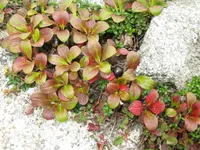
Its leaves emerge bright crimson in spring, hold a rich red through most of summer in suitable light, and deepen to darker burgundy tones in fall, making its color performance more stable than many other red Japanese maple cultivars.

Distinctly crinkled leaves

The small leaves are deeply divided and often slightly crinkled or tufted at the tips of shoots, giving the plant a textured, almost cloud-like surface rather than a flat, lacy appearance.

Botan icon

Did you know?

Acer palmatum 'Shaina' originated as a witches' broom (a naturally occurring, compact, genetically distinct mutation) found on the cultivar Acer palmatum 'Bloodgood', which is why it stays so dense and dwarf compared with its parent.

FAQs about Japanese Maple

Brown, crispy leaf edges usually come from leaf scorch caused by hot sun, dry wind, or inconsistent moisture. Salt buildup, fertilizer burn, or compacted roots can worsen damage. Improve shelter, watering consistency, and mulch to stabilize conditions.

Grow Healthy Plants with Botan Care

Keep your plants happy and healthy with plant identification, disease detection, and easy care guidance.

Botan plant care app — identify plants on mobile

Explore More Plants