Establish deep rooting
During the first 2–3 years, water less frequently but for longer durations to encourage a deep root system that improves drought tolerance and long-term stability when growing valley oak.

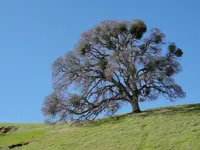
Valley oak, Quercus lobata, is a large, long-lived deciduous tree native to lowland valleys and foothills of California. It is one of the dominant oaks in interior woodlands and floodplains.
The tree develops a massive trunk, wide-spreading limbs, and deeply lobed gray-green leaves that drop in winter. Its acorns are an important food source for wildlife.
This species prefers full sun, deep soils, and seasonal moisture but tolerates summer drought once established. Growth is fast when young, then slows as the tree matures.
In gardens, space, long-term planning, and climate suitability are the main factors in how to care for valley oak, since it eventually becomes very large and long-rooted.

Care Difficulty
Moderate Care

Light Preference
Full Sun

Water Requirements
Moderate Water

Temperature Preference
Cold Hardy

Hardiness Zone
7–9

Soil Texture
Sandy, Loamy, Clay

Soil pH
Slightly acidic (6.5–7.0), Slightly alkaline (7.0–7.5)

Soil Drainage
Well-drained

Fertilization
Minimal (feed rarely)
Scan your plant to receive care tips personalized for your specific plant
Available on iOS and Android
Quercus lobata thrives in open, bright conditions with long daily sun exposure.
Quercus lobata prefers deep, infrequent watering that encourages a strong taproot.
This oak is adapted to warm, dry summers and mild, wet winters.
Humidity is rarely a limiting factor for valley oak, which is adapted to dry, low-humidity conditions.
Quercus lobata prefers deep, well-aerated, moderately fertile mineral soils that drain freely yet retain some moisture.
This species is only suitable for temporary container growing, mainly for young trees or short-term establishment.
Mature Quercus lobata in the ground usually need little fertilization if soil is reasonably fertile.
Pruning Quercus lobata focuses on structure, safety, and removal of problem wood rather than constant shaping.
Valley oak is usually field-grown; focus on careful transplanting of young container or nursery trees.
Quercus lobata is usually propagated from seed rather than cuttings or grafting in home settings.
Mature Quercus lobata is cold hardy in its native range and usually requires minimal winter care.

Plant Health Check
Not sure what's wrong with your plant? Check your plant's health inside the app.
Valley oak is native only to California, where it forms some of the largest broadleaf trees in the state’s interior valleys and foothills, often exceeding the size of neighboring oak species in the same habitat.
Its root system can tap deep groundwater in alluvial soils, allowing mature trees to stay green through dry Mediterranean summers while many shallow‑rooted plants become dormant.
Valley oak woodlands provide critical habitat for many California-endemic animals, including acorn woodpeckers that depend heavily on its acorns and large limbs for their communal granary trees.

Some individual valley oaks are estimated, based on growth rings in fallen limbs and historical records, to have lifespans approaching 400–500 years, making them long-lived witnesses to pre-colonial and modern landscape change in California’s Central Valley and foothills.
Growth is moderate when young, often 30–60 cm per year under good conditions, then slowing with age. Deep, infrequent watering, full sun, and ample rooting space support growing valley oak in gardens or restoration plantings.
Keep your plants happy and healthy with plant identification, disease detection, and easy care guidance.