Wind exposure planning
Site young plants where they receive some protection from strong prevailing winds during the first 2–3 years, such as near a fence or larger shrub, to reduce root rock and trunk bending while the root system anchors.

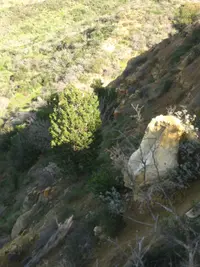
Hesperocyparis forbesii, commonly called Tecate cypress, is an evergreen conifer native to dry foothills of southern California and northern Baja California. It typically forms a narrow, upright tree with dense, fine-textured foliage and small round cones. In nature it often grows in poor, rocky soils and withstands intense sun, wind, and seasonal drought. This background makes it relatively tolerant and low-maintenance once established, but slow to recover from overwatering or heavy root disturbance. Gardeners who learn how to care for Tecate cypress usually focus on giving it strong light, fast-draining soil, and protection from prolonged, soggy conditions.

Care Difficulty
Moderate Care

Light Preference
Full Sun

Water Requirements
Low Water

Temperature Preference
Warm Climate

Hardiness Zone
8–10

Soil Texture
Sandy, Loamy, Rocky

Soil pH
Slightly acidic (6.5–7.0), Neutral (7.0)

Soil Drainage
Well-drained

Fertilization
Minimal (feed rarely)
Scan your plant to receive care tips personalized for your specific plant
Available on iOS and Android
This species is a sun-loving conifer that performs best in open, bright sites.
This drought-adapted conifer prefers infrequent, deep watering in fast-draining soil.
This species is adapted to warm, dry climates with mild winters and hot summers.
This species is highly drought-adapted and humidity is rarely a concern in cultivation.
This conifer prefers dry, mineral, sharply drained substrates that mimic its native rocky slopes.
This species can be grown in containers for several years, mainly as a young or patio specimen.
This drought-adapted conifer needs only light feeding in most garden soils.
Hesperocyparis forbesii needs minimal pruning, mainly to maintain structure and remove problem growth.
This species is usually grown in the ground, with transplanting more common than long-term container culture.
Propagation of this cypress is possible but more specialized, so it is often left to nurseries.
This species is relatively cold hardy in its suitable climate range and usually needs little special winter care.

Plant Health Check
Not sure what's wrong with your plant? Check your plant's health inside the app.
This cypress is naturally restricted to a small region of southern California and northern Baja California, growing on dry, rocky slopes in the Peninsular Ranges, often in highly localized groves.
Its seed cones are serotinous, meaning they stay closed on the tree for years and open mainly after exposure to the heat of wildfire, releasing seeds onto freshly cleared, nutrient-rich ash soil.
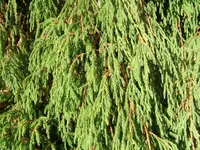
The foliage forms dense, flat sprays of scale-like leaves with a bright yellow-green tone, which helps distinguish it from the darker, more bluish foliage of closely related cypress species.

This species was long confused with other North American cypresses and was only more clearly defined and reassigned to the genus Hesperocyparis after detailed molecular and morphological studies clarified its distinct evolutionary lineage.
Growth is slow to moderate, usually about 15–30 cm per year once established. Seedlings and young plants may grow more slowly. Poor drainage, heavy irrigation, or deep shade further reduce growth rate in home landscapes.
Keep your plants happy and healthy with plant identification, disease detection, and easy care guidance.