Japanese Plum-yew Care (Cephalotaxus harringtonia)

Also known as: cowtail pine
Japanese Plum-yew

About Japanese Plum-yew

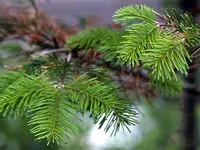
Japanese plum-yew, Cephalotaxus harringtonia, is an evergreen conifer often grown as a shrub or small, slow-growing tree. It has dark green, yew-like needles arranged in flat sprays that give a dense, refined texture.

This species is native to East Asia, especially Japan and nearby regions, where it grows in woodland understories. It is valued in landscapes for its tolerance of shade, compact growth, and ability to handle pruning.

Gardeners usually find it moderately easy to grow when soil is well-drained, moisture is even, and exposure is partial shade. Understanding how to care for Japanese Plum-yew helps it become a long-lived structural plant in temperate gardens.

Main Plant Requirements

Care Difficulty

Easy Care

Light Preference

Partial Shade

Water Requirements

Moderate Water

Temperature Preference

Cold Hardy

Hardiness Zone

6–9

Soil Texture

Sandy, Loamy, Clay

Soil pH

Acidic (5.5–6.5), Slightly acidic (6.5–7.0)

Soil Drainage

Moist but well-drained

Fertilization

Minimal (feed rarely)

Get Personalized Care Plan

Scan your plant to receive care tips personalized for your specific plant

Available on iOS and Android

How to Care for the Japanese Plum-yew

This shade-tolerant conifer prefers gentle, indirect light rather than intense sun.

  • Provide 2–4 hours of morning sun with light to full shade in the afternoon; bright dappled shade suits Japanese Plum-yew best.
  • In hot climates, protect from strong midday and afternoon sun to prevent needle scorch and moisture stress, especially on young plants.
  • In cooler regions, accept more direct sun, but monitor foliage; sparse, elongated growth indicates insufficient light, while bronzing or crisping tips suggest too much sun.

This species prefers evenly moist, well-drained soil and dislikes prolonged extremes of wet or dry.

  • Water when the top 3–5 cm of soil feels dry, allowing moisture to soak to the root zone, then drain fully to avoid standing water.
  • In the first 1–2 growing seasons, monitor closely during hot, dry periods; mature Cephalotaxus harringtonia tolerates brief drought once established.
  • Watch for yellowing, soft needles as a sign of overwatering or poor drainage, and browning, dropping needles as an indicator of underwatering.

This conifer is cold-hardy yet appreciates moderate temperatures for strongest growth.

  • Optimal growth occurs around 50–80°F (10–27°C), with steady cool to mild conditions encouraging dense, healthy foliage.
  • Most forms tolerate winter lows near 0°F (−18°C) once established, but young plants benefit from mulch to buffer rapid freeze–thaw cycles.
  • Heat tolerance is good up to about 90°F (32°C) if soil stays slightly moist; prolonged extreme heat with dry soil can cause needle scorch and stress.

This species handles typical home and outdoor humidity well, so humidity is rarely a limiting factor.

  • Performs reliably in 30–60% humidity, similar to most living spaces and temperate outdoor conditions.
  • Tolerates relatively dry air; leaf tips may brown slightly only under prolonged indoor heating or strong drying winds.
  • If foliage tips crisp, group plants, shelter from wind, or place a tray of water and pebbles nearby to slightly raise humidity.

Cephalotaxus harringtonia prefers loose, moist, well-drained soil with air spaces around the roots.

  • Use a loamy or sandy-loam soil structure enriched with organic matter such as compost or leaf mold to support steady moisture without waterlogging.
  • Aim for slightly acidic to neutral pH around 5.5–7.0, avoiding strongly alkaline soils that can limit nutrient uptake.
  • Improve drainage and aeration by incorporating 20–40% coarse materials like pine bark fines, perlite, or sharp sand into the planting area.
  • Avoid heavy, compacted clay or sites where water stands for more than a few hours, as chronically saturated soil promotes root rot.

This species is suitable for long-term container growing when provided with a stable, well-drained setup.

  • Choose a deep, heavy container that resists tipping and allows the slow-growing but substantial root system to anchor securely.
  • Select thick-walled clay or concrete pots outdoors to moderate temperature swings and reduce rapid moisture loss from the root zone.
  • Raise the pot on feet or bricks so drainage holes stay clear and excess water escapes quickly after heavy rain or irrigation.

This conifer grows slowly and needs only light, periodic feeding to stay healthy in most garden soils.

  • Apply a balanced slow-release fertilizer (around 10-10-10) once in early spring as new growth of Japanese Plum-yew begins.
  • Use a modest dose, at about half the label rate, to avoid forcing soft, weak growth.
  • In rich or well-composted soil, skip granular products and top-dress with a thin layer of compost instead.
  • Do not feed in late fall or winter, as Cephalotaxus harringtonia is semi-dormant and excess nutrients remain unused.

Cephalotaxus harringtonia needs only light, strategic pruning to maintain a dense, attractive form.

  • Schedule structural pruning for late winter to early spring, before new growth starts.
  • Remove dead, diseased, or storm-damaged branches first using clean, sharp bypass pruners or loppers.
  • Thin congested interior shoots by cutting back to a branch junction to improve light and airflow.
  • Shorten overly long tips slightly to refine shape, avoiding cuts back into bare, old wood that may not reshoot.

This species is usually grown in the ground and dislikes frequent disturbance, so transplant only when necessary.

  • Look for signs like slowed growth, roots circling the pot, or a plant drying out very quickly before deciding to move it.
  • Plan transplanting or moving container-grown plants in early spring or early fall, when temperatures are mild.
  • Expect container plants to need a larger pot only every 3–5 years, using a well-drained, slightly acidic mix.
  • Reduce root stress by watering deeply beforehand, keeping the root ball intact, replanting at the same depth, and shading for 1–2 weeks.

Cephalotaxus harringtonia is most often propagated by semi-hardwood cuttings or stratified seed, both of which require patience.

  • Take semi-hardwood cuttings in late summer, 8–12 cm long, and remove lower needles.
  • Dip cut bases in a rooting hormone and insert into a sharply drained, moist mix under high humidity and bright shade.
  • Expect slow rooting over several months at 65–75°F with bottom heat if possible.
  • Collect ripe seeds, then cold-stratify them in moist medium at 35–40°F for several months before spring sowing.

Mature Cephalotaxus harringtonia is generally cold hardy and needs minimal winter care in most temperate gardens.

  • In regions colder than its rated zone, apply a 5–8 cm mulch layer over the root zone, keeping it off the stems.
  • Water well before the ground freezes so roots enter winter hydrated but not waterlogged.
  • For container plants, move pots into a sheltered, unheated area to avoid repeated freeze-thaw stress.

Care Tips

Staggered Wind Protection

Plant in a spot with partial shielding from prevailing winter winds, such as behind a fence or taller shrubs, to reduce foliage desiccation and branch damage on exposed sites.

Shaded Snow Management

In regions with heavy, wet snow, gently brush accumulated snow off the flexible branches using a soft broom to prevent splaying or breakage, especially on multi-stemmed specimens.

Understory Companion Choice

Pair with shallow-rooted, shade-tolerant groundcovers rather than vigorous shrubs so that feeder roots are not outcompeted and the soil structure around the base stays open and friable.

Low-Lift Hedge Training

When using as a hedge, begin shaping early by lightly tipping back the new growth in late spring for 2–3 years so the plants branch densely from the base and form a full, low screen without bare legs.

Targeted Sex Selection

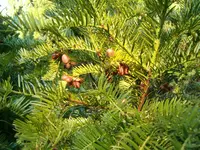
When purchasing plants for fruit display, select clearly labeled female clones and interplant at least one male within 3–5 m for pollination, while using males only if the goal is a tidy, fruit-free planting when growing Japanese Plum-yew.

Common Pests and Diseases

Soft scale

This pest appears as small, dome-shaped bumps on stems and needles, often producing sticky honeydew that can attract sooty mold. Symptoms include reduced vigor, yellowing needles, and slowed growth.

Solution

Prune and dispose of heavily infested shoots, then wash remaining foliage and stems with a strong but gentle water spray. For persistent populations, apply a light horticultural oil or insecticidal soap, ensuring thorough coverage of stems and needle bases while treating again after 7–10 days if needed.

Spider mites

These insects are tiny sap-feeders that cause fine stippling, bronzing, and eventual browning of needles, especially during hot, dry weather. Symptoms include fine webbing between needles and a dull, dusty appearance on foliage.

Solution

Increase humidity around the plant and hose down foliage thoroughly, focusing on the undersides of needles to dislodge mites. If damage continues, use a labeled miticidal soap or horticultural oil, applied in the early morning or late afternoon and repeated following label directions.

Needle blight

This disease causes browning and premature drop of older needles, often starting in the inner canopy where air movement is poor. Symptoms include tan to brown needles and, in some cases, small dark lesions along the needle surface.

Solution

Improve air circulation by thinning dense interior growth and avoiding overhead watering, especially late in the day. Remove and discard fallen needles and severely affected shoots, and if the problem persists, apply a fungicide labeled for conifer needle blight in early spring and repeat as directed.

Interesting Facts

Shade-tolerant conifer

This species is one of the few needle-leaved conifers that naturally thrives in deep to medium shade, making it an understory shrub in its native East Asian forests rather than a canopy tree.

Dioecious with fleshy seeds

Individual plants are either male or female, and the female plants produce olive-like, fleshy seed structures that resemble fruits but are botanically modified seed coats rather than true fruits.

Slow-growing and long-lived

It grows slowly, often adding only short increments of length each year, yet individual plants can persist for many decades in the same site with minimal decline once established.

Botan icon

Did you know?

Molecular and fossil evidence indicates that Japanese plum-yew belongs to an ancient conifer lineage distinct from true yews (Taxus), and the family Cephalotaxaceae is considered a relict group that has survived with relatively little morphological change since the Mesozoic era.

FAQs about Japanese Plum-yew

Growth is generally slow to moderate. In garden conditions, expect about 7–15 cm of new growth per year, sometimes up to 20 cm on young, vigorous plants. Cooler climates and deep shade usually slow extension growth further.

Grow Healthy Plants with Botan Care

Keep your plants happy and healthy with plant identification, disease detection, and easy care guidance.

Botan plant care app — identify plants on mobile

Explore More Plants