Windfirm training
In the first 3–5 years, selectively shorten or remove competing leaders during late winter so the tree develops one strong central leader that is more resistant to wind damage.

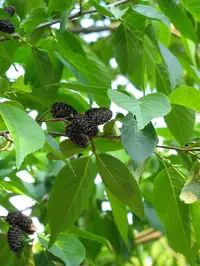
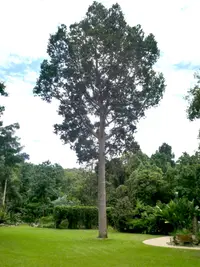
Alnus × spaethii is a fast-growing deciduous tree, used mainly as a street and landscape tree in cooler climates. It is a hybrid alder, usually with a strong central trunk and a broad, upright crown.
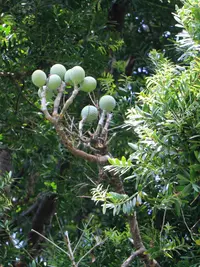
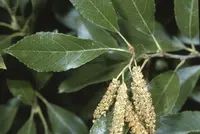
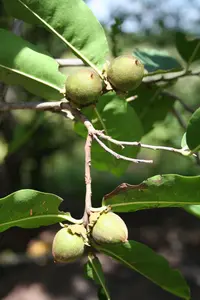
The foliage is glossy, dark green, and often holds late into autumn, giving good seasonal cover and shade. Small catkins and woody cone-like fruits add winter structure but are not usually the main ornamental feature.
This hybrid is valued for its tolerance of urban conditions, wind, and poor or compacted soils, which makes it relatively easy to establish. To care for Alnus × spaethii, provide full light, consistent moisture, and reasonably well-drained soil.

Care Difficulty
Easy Care

Light Preference
Full Sun

Water Requirements
Regular Water

Temperature Preference
Cold Hardy

Hardiness Zone
5–7

Soil Texture
Loamy, Clay, Silty

Soil pH
Acidic (5.5–6.5), Slightly acidic (6.5–7.0)

Soil Drainage
Moist but well-drained

Fertilization
Minimal (feed rarely)
Scan your plant to receive care tips personalized for your specific plant
Available on iOS and Android
This vigorous alder thrives in open, bright positions with ample direct sun.
This fast-growing tree prefers consistently moist, not waterlogged, soil.
This hardy alder tolerates a wide temperature range typical of temperate climates.
Humidity is not a significant factor for Alnus × spaethii in typical outdoor conditions across most temperate regions.
Alnus × spaethii prefers moist, relatively fertile, well-structured ground that never stays waterlogged for long periods.
This species is generally unsuitable for long-term container growing due to its vigorous size and root system.
This fast-growing alder usually needs minimal feeding in open ground due to its nitrogen-fixing root nodules.
Pruning helps maintain structure and safety while supporting healthy growth on Alnus × spaethii.
This hybrid alder is usually grown in the ground, so focus on careful transplanting of young trees rather than long-term container culture.
Propagation of Alnus × spaethii is usually carried out by nurseries, as hybrid seed may not come true to type.
This alder is generally hardy in temperate climates and needs little active winter care once established.

Plant Health Check
Not sure what's wrong with your plant? Check your plant's health inside the app.
This tree is a deliberate horticultural hybrid between Alnus japonica and Alnus subcordata, combining the rapid growth and tolerance of wet soils from both parent species with an improved, more ornamental crown form.
Male catkins form in late summer and remain visible through winter, then elongate and shed pollen very early in spring, often before many other urban trees have started to leaf out.
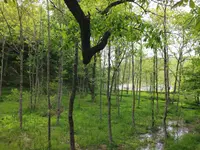
This hybrid alder is widely planted along streets in parts of Europe because it tolerates air pollution, compacted soils, and reflected heat better than many other fast-growing shade trees.

Unlike many broadleaf trees, this hybrid alder can continue producing new nitrogen-fixing root nodules in relatively poor urban soils, which helps it maintain vigorous growth and a dense crown without heavy fertilization when sited correctly.
This hybrid alder is a vigorous, fast-growing tree, typically adding 40–60 cm of height per year in suitable conditions. Growth is quickest in deep, moist, fertile soil with consistent moisture and good light exposure.
Keep your plants happy and healthy with plant identification, disease detection, and easy care guidance.