Early leader selection
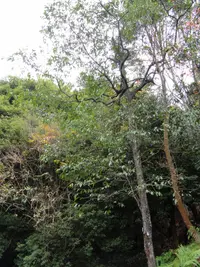
In the first 3–5 years, choose a single strong central leader and remove or shorten competing upright stems to reduce future weak crotches and storm breakage.

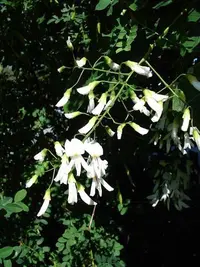
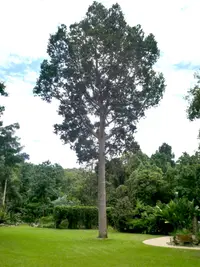
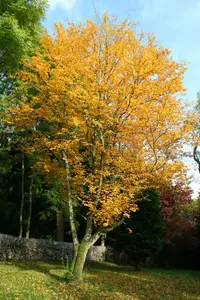
Kentucky yellowwood, Cladrastis kentukea, is a medium to large deciduous tree valued for its smooth gray bark and clean, rounded crown. It belongs to the pea family and develops compound leaves that turn clear yellow in autumn. In suitable conditions, it produces hanging clusters of fragrant white flowers, though flowering can be irregular from year to year. The species is native to scattered regions of the southeastern United States, typically on limestone cliffs and well-drained slopes. It is considered moderately easy to grow if given full sun, consistent moisture, and deep, well-drained soil, and learning how to care for Kentucky yellowwood helps it develop a strong structure and healthy foliage.

Care Difficulty
Moderate Care

Light Preference
Full Sun

Water Requirements
Moderate Water

Temperature Preference
Cold Hardy

Hardiness Zone
4–8

Soil Texture
Loamy, Clay, Organic-rich

Soil pH
Acidic (5.5–6.5), Slightly acidic (6.5–7.0)

Soil Drainage
Moist but well-drained

Fertilization
Minimal (feed rarely)
Scan your plant to receive care tips personalized for your specific plant
Available on iOS and Android
This deciduous tree prefers ample sun for dense growth and strong flowering.
This deep-rooted tree prefers evenly moist but not saturated soil, especially while establishing.
This hardy temperate tree is adapted to cold winters and warm summers.
This deciduous tree is tolerant of a broad humidity range and usually needs no special humidity management outdoors.
Cladrastis kentukea grows best in deep, moderately moist, well-drained mineral soils.
This species is generally unsuited to long-term container growing and is best planted in open ground.
Cladrastis kentukea typically needs minimal feeding in reasonably fertile ground, but fertilization can support establishment and flowering in poor soils.
Cladrastis kentukea benefits from light, well-timed pruning to maintain structure and clearance without stressing the tree.
This species is usually grown in the ground; focus on careful transplanting rather than frequent repotting.
Cladrastis kentukea is most often propagated by seed, which can be slow and requires specific conditions for good germination.
Kentucky yellowwood is generally cold hardy in its suitable climate range and requires minimal winter care once established.

Plant Health Check
Not sure what's wrong with your plant? Check your plant's health inside the app.
This tree is naturally restricted to scattered populations in the southeastern United States, mainly in the Appalachian and Ozark regions, and is considered uncommon to locally rare in the wild.
Its young branches often grow in a characteristic crooked or zigzag pattern, which helps distinguish it from other medium-sized flowering trees even in winter when leaves are absent.
In late spring, it produces hanging clusters of white, pea-shaped blossoms with a light sweet fragrance, reflecting its membership in the legume family Fabaceae.
Genetic and morphological studies indicate that Kentucky yellowwood is one of only a few species in its genus worldwide, making it a biogeographically interesting relict that offers clues about the historical breakup and movement of temperate forests across continents.
This tree often flowers heavily only every 2–3 years. Young specimens may not bloom for 8–10 years. Lack of bloom also relates to too much shade, drought stress, severe pruning, or late spring frosts damaging buds.
Keep your plants happy and healthy with plant identification, disease detection, and easy care guidance.