Bocconia arborea Care

Bocconia arborea

About Bocconia arborea

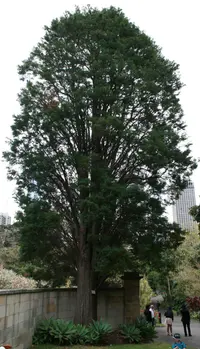
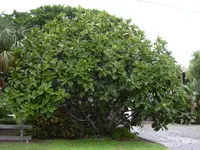
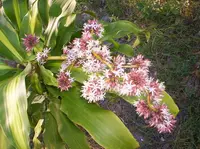
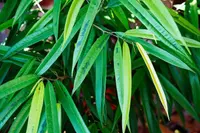
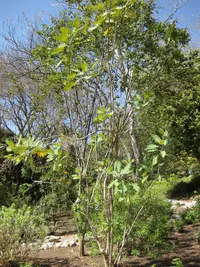
Bocconia arborea, often called plume poppy tree, is a fast-growing evergreen shrub or small tree from tropical regions of the Americas. It forms tall, open branches with large, lobed, bluish-green leaves and airy clusters of small, pale flowers that give a soft, plume-like effect. In mild climates it can become quite large and somewhat sprawling. It is generally tough and adaptable, but its size, suckering habit, and preference for warm, frost-free conditions can make it more suitable for experienced gardeners. Those who want to care for Bocconia arborea should provide sun, moderate moisture, and well-drained soil.

Main Plant Requirements

Care Difficulty

Moderate Care

Light Preference

Full Sun

Water Requirements

Moderate Water

Temperature Preference

Tropical / Frost Sensitive

Hardiness Zone

10–11

Soil Texture

Sandy, Loamy, Organic-rich

Soil pH

Acidic (5.5–6.5), Slightly acidic (6.5–7.0)

Soil Drainage

Moist but well-drained

Fertilization

Minimal (feed rarely)

Get Personalized Care Plan

Scan your plant to receive care tips personalized for your specific plant

Available on iOS and Android

How to Care for the Bocconia arborea

This fast-growing shrub from cloud forest edges prefers bright, gentle light to support dense foliage and flowering.

  • Provide 4–6 hours of morning sun with light afternoon shade; in hot regions, use dappled light or high, bright shade to prevent leaf scorch.
  • Tolerates light to medium partial shade, but very dense shade reduces flowering and causes lanky, stretched stems in Bocconia arborea.
  • In summer, protect from intense sun between 12–4 p.m.; in cooler months, allow more direct sun to compensate for shorter days and lower light angles.

This species prefers consistently moist, free-draining soil rather than alternating extremes of drought and saturation.

  • Water when the top 3–5 cm of soil feel dry, soaking the root zone deeply, then allow excess water to drain away fully.
  • In spring and summer, expect more frequent watering during active growth; in fall and winter, reduce frequency as growth and evaporation slow.
  • Yellowing, soft leaves and persistent wet soil indicate overwatering, while dull, drooping leaves and dry, hard soil suggest underwatering for Bocconia arborea.

This subtropical shrub thrives in mild, frost-free climates with warm summers and cool, not cold, winters.

  • Aim for 65–80°F (18–27°C) for strongest growth, with steady temperatures that avoid abrupt swings between day and night.
  • Tolerates brief drops to about 28–30°F (-2 to -1°C), but foliage may be damaged; repeated frosts can kill young shoots and small plants.
  • Handles summer heat up to 90–95°F (32–35°C) if soil moisture is maintained and roots are mulched; provide shelter from hot, drying winds and reflected heat.

This species prefers moderate humidity but usually adapts to typical outdoor conditions in mild climates.

  • Aim for 40–60% humidity, as very dry air can lead to marginal leaf browning and slower growth.
  • In prolonged dry or windy conditions, provide shelter from strong winds to reduce leaf desiccation.
  • If grown in a courtyard or patio, grouped plantings and nearby mulched beds help maintain slightly higher local humidity.

For sustained vigor, this species needs a deep, well-structured, freely draining yet moisture-retentive soil.

  • Use a loamy, organic-rich substrate that holds moisture but does not stay saturated, mimicking fertile forest edge soils for Bocconia arborea.
  • Ensure fast drainage by combining roughly 50% composted organic matter with 30–40% garden loam and 10–20% coarse sand or fine bark.
  • Target a slightly acidic to neutral pH around 6.0–7.0, avoiding strongly alkaline or salty soils that restrict nutrient uptake.
  • Improve aeration on heavy clay sites by raising the planting area and incorporating coarse sand, fine gravel, or bark to prevent waterlogging and root decline.

This large, fast-growing shrub is only moderately suitable for containers and is best kept in very large, stable pots for a limited period.

  • Choose a tall, heavy container to counter its top-heavy canopy and reduce the risk of tipping in strong winds.
  • Use a well-draining, chunky mix and elevate the pot slightly so drainage holes remain unobstructed on patios or balconies.
  • Position the container where lateral root spread is not constrained by walls or railings, allowing the root ball to develop a broad, stable base.

This fast-growing tree benefits from moderate feeding in cultivation, especially in containers.

  • Use a balanced slow-release fertilizer (around 10-10-10) or well-rotted compost in spring to support new growth.
  • Apply fertilizer every 6–8 weeks through the warm growing season, adjusting for soil richness and plant vigor.
  • Feed at half the label strength for container-grown Bocconia arborea to reduce salt buildup and root burn.
  • Stop feeding in late summer or early fall so growth hardens before winter and dormancy.

Pruning helps manage size and structure and keeps this large shrub or tree safe and healthy in gardens.

  • Carry out main pruning in late winter or very early spring before active growth starts.
  • Remove dead, diseased, crossing, or storm-damaged branches using clean, sharp bypass pruners or loppers.
  • Thin crowded interior shoots to improve light penetration and air flow, reducing fungal problems.
  • Shorten overly vigorous shoots to maintain desired height and shape while preserving the plant’s natural form in Bocconia arborea.

This species is usually grown in the ground, so focus on careful transplanting rather than frequent repotting.

  • Transplant young plants in late winter or early spring when soil is workable and temperatures are mild.
  • Look for roots circling the pot, water running straight through, or stalled growth as cues a container Bocconia arborea needs a larger space.
  • Move to a hole or container 1–2 sizes larger, loosening outer roots gently without breaking the root ball excessively.
  • Water deeply after transplanting and shade the plant for 1–2 weeks to limit transpiration and reduce transplant shock.

Propagation is usually done from seed, with cuttings used less often for this tree.

  • Collect ripe seed in late summer or fall and sow fresh, as viability drops with storage.
  • Sow seeds in a free-draining mix, keep at 70–77°F, and maintain even moisture without waterlogging.
  • Provide bright, indirect light and good air circulation; germination may be slow and uneven.
  • For semi-hardwood cuttings, take pieces in late spring to summer, use rooting hormone, and keep under high humidity until rooted.

This subtropical tree has low frost tolerance and needs protection in regions with cold winters.

  • In areas below about 25–28°F, grow Bocconia arborea in a container that can be moved into a frost-free space for winter.
  • Apply a 5–8 cm layer of organic mulch around the root zone, keeping it slightly away from the trunk base.
  • In marginal climates, wrap young trunks with breathable frost cloth and avoid pruning late in the season, which encourages tender growth.

Care Tips

Wind-firm training

Pinch or lightly head back young shoots in the first 2–3 years to encourage a shorter, bushier framework that resists wind damage as the plant matures.

Trunk and branch support

In exposed sites, stake the main stem and use soft ties on long, top-heavy branches to prevent splitting during storms, checking and loosening ties at least once a year.

Basal sucker management

Inspect the base a few times per year and remove unwanted basal shoots while they are still soft, which directs energy into the main framework and keeps the plant from becoming too thicket-forming.

Root-zone mulching

Maintain a 5–8 cm layer of coarse organic mulch over the root zone, keeping it a few cm away from the trunk, to buffer soil temperature, improve structure, and reduce water stress during hot, dry spells.

Cold event protection

In marginal climates, apply extra mulch over the root zone in late fall and wrap the lower trunk with breathable frost cloth before hard freezes to reduce cambium damage and support long-term success when growing Bocconia arborea.

Common Pests and Diseases

Leaf miners

This pest tunnels inside the leaf tissue, creating pale, winding trails and causing thin leaves to look blotchy or distorted.

Solution

Remove and dispose of leaves with visible mines to reduce the population, then monitor young foliage closely and use a neem oil or spinosad spray on new growth if fresh trails continue to appear.

Scale insects

These insects attach to stems and leaf veins as small, immobile bumps, sucking sap and leading to yellowing foliage, sticky honeydew, and sometimes sooty mold growth.

Solution

Prune and discard heavily infested twigs, wipe accessible stems with a cloth dipped in dilute soapy water or alcohol, and use a horticultural oil spray to smother remaining scale during mild, dry weather.

Caterpillar defoliation

This pest group chews large, irregular holes in the leaves and can strip branches of foliage when populations are high.

Solution

Hand-pick visible caterpillars where practical, encourage birds and beneficial insects, and if damage is severe, apply a Bacillus thuringiensis (Bt) product targeted at caterpillars to young foliage in the evening.

Leaf spot

This disease causes brown or tan spots on leaves that may have darker borders, sometimes leading to premature leaf drop in warm, humid conditions.

Solution

Remove and discard affected leaves, avoid overhead watering, improve air circulation around the shrub, and if spotting spreads, apply a copper-based fungicide labeled for ornamental shrubs during extended wet periods.

Powdery mildew

This disease appears as a white to gray powdery coating on leaf surfaces, especially in shaded or crowded plantings, and can cause leaf distortion and reduced vigor.

Solution

Increase sun exposure and airflow where possible, remove heavily affected leaves, avoid excess nitrogen fertilization, and use sulfur or potassium bicarbonate sprays at the first sign of disease if conditions remain favorable for powdery mildew.

Interesting Facts

Distinctive plume flowers

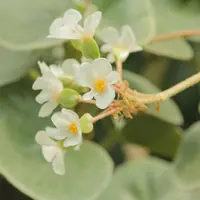
This species produces tall, airy panicles of small, petal-less flowers that look like smoky plumes, a characteristic feature of the poppy family adapted for wind pollination rather than showy insect attraction.

Hollow, pithy stems

Mature stems are thick yet hollow with a soft central pith, an internal structure that helps the shrub reach tree-like height while remaining relatively lightweight in tropical montane habitats.

Cloud forest native

Bocconia arborea is native to moist montane forests from Mexico through Central America, where it often grows along forest edges and clearings, benefiting from filtered light and persistent atmospheric humidity.

Botan icon

Did you know?

The fruit of this species is a small capsule that splits open to reveal seeds with a fleshy, brightly colored aril, which attracts birds that disperse the seeds and helps the plant colonize disturbed forest gaps.

FAQs about Bocconia arborea

Growth is relatively fast in warm climates. Young plants may add 45–90 cm per year, eventually forming a large shrub or small tree around 3–6 m tall and 2–4 m wide in suitable conditions.

Grow Healthy Plants with Botan Care

Keep your plants happy and healthy with plant identification, disease detection, and easy care guidance.


Botan plant care app — identify plants on mobile

Explore More Plants