


Leaf-cleaning routine
Wipe the broad leaves every 2–4 weeks with a soft, barely damp cloth to remove dust so the plant photosynthesizes efficiently and early spider mite activity is easier to spot.

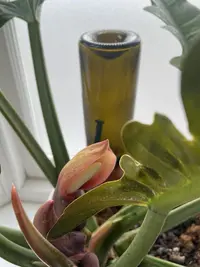
Philodendron 'Black Cardinal' is a compact, self-heading aroid grown mainly for its dark, glossy foliage. New leaves emerge bronze to burgundy, then mature to deep green-black tones.
This plant was bred from tropical philodendrons native to Central and South America, but it is now mainly grown as a decorative indoor plant. Its slow, tidy growth habit suits shelves, desks, and small spaces.
It is considered relatively easy to grow, as long as it receives bright, indirect light, evenly moist but not waterlogged soil, and moderate indoor temperatures. Understanding how to care for Blushing Philodendron helps keep its foliage dense and richly colored.

Care Difficulty
Easy Care

Light Preference
Bright Indirect Light

Water Requirements
Moderate Water

Temperature Preference
Tropical / Frost Sensitive

Hardiness Zone
10–11

Soil Texture
Loamy, Peaty, Organic-rich

Soil pH
Acidic (5.5–6.5), Slightly acidic (6.5–7.0)

Soil Drainage
Moist but well-drained

Fertilization
Light (every 4–6 weeks)
Scan your plant to receive care tips personalized for your specific plant
Available on iOS and Android
Philodendron 'Black Cardinal' prefers bright, indirect light that mimics dappled tropical shade.
Philodendron 'Black Cardinal' prefers evenly moist but not saturated soil.
This philodendron thrives in stable, warm conditions without temperature extremes.
This philodendron prefers moderately high humidity but adapts to typical indoor levels.
Philodendron 'Black Cardinal' grows best in loose, airy, organic-rich soil that drains quickly.
This compact philodendron is very suitable for container growing.
Philodendron 'Black Cardinal' responds well to light, consistent feeding during active growth, unlike many wild plants that cope without extra nutrients.
Philodendron 'Black Cardinal' benefits from light, targeted pruning to keep the plant compact and healthy.
Container-grown plants appreciate periodic repotting to refresh soil and give roots more space.
This plant is most commonly propagated from stem cuttings taken during active growth.
This tropical plant lacks frost tolerance and needs indoor conditions in cold climates.

Plant Health Check
Not sure what's wrong with your plant? Check your plant's health inside the app.
New leaves emerge bright burgundy to deep red, then slowly darken to near-black as chlorophyll accumulates, giving the plant a layered, multi-tone canopy at any given time.
Unlike climbing philodendrons, this cultivar forms a tight, upright rosette without needing a moss pole, due to its very short internodes and naturally self-supporting stems.
This plant is a selected cultivar derived from hybrid philodendron breeding, chosen specifically for its unusually dark foliage and sturdy, symmetrical growth form.
Brown, crispy edges usually result from low humidity, underwatering, or salt buildup from fertilizer. Check soil moisture, flush the pot occasionally, and increase humidity. Direct hot air from vents or heaters can worsen browning and should be avoided.
Keep your plants happy and healthy with plant identification, disease detection, and easy care guidance.

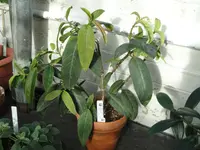
Drymonia conchocalyx
Drymonia conchocalyx
 POPULAR
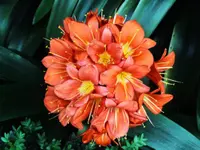
Bush Lily
Clivia miniata
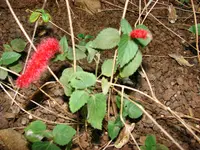
Bastard Copperleaf
Acalypha chamaedrifolia
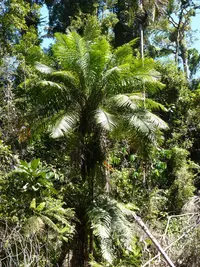
Dypsis fibrosa
Dypsis fibrosa
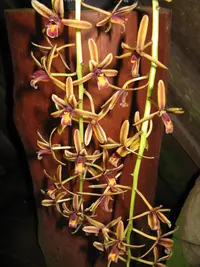
Finlayson's Cymbidium
Cymbidium finlaysonianum
 POPULAR
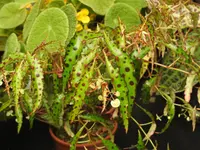
Begonia amphioxus
Begonia amphioxus
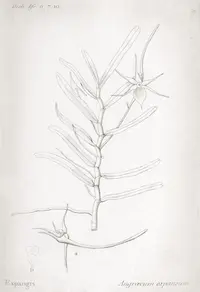
Angraecum expansum
Angraecum expansum
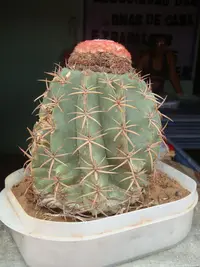
Melocactus zehntneri
Melocactus zehntneri