Use shallow pots
Choose a wide, shallow pot with multiple drainage holes to accommodate the plant’s fibrous, surface‑oriented roots and reduce the risk of waterlogging in the lower soil layer.

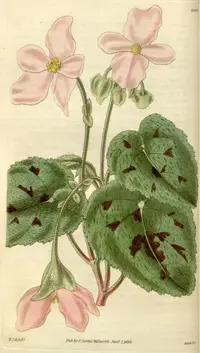
Painted leaf begonia (Begonia picta) is a compact rhizomatous begonia grown mainly for its patterned foliage rather than its flowers. Leaves are often green to deep olive with silver, pink, or reddish markings, giving a speckled or brushed look.
This species comes from the Himalayan region, where it grows in shaded, humid forest understories on rocky, well-drained slopes. It usually stays small and forms low clumps, which makes it suitable for containers and indoor displays.
It can be moderately demanding, as it dislikes cold drafts, waterlogging, and very dry air, so stable indoor conditions help. Those learning how to care for painted leaf begonia should focus on bright shade, evenly moist but airy soil, and gentle humidity.

Care Difficulty
Moderate Care

Light Preference
Bright Indirect Light

Water Requirements
Keep Soil Moist

Temperature Preference
Tropical / Frost Sensitive

Hardiness Zone
10–11

Soil Texture
Loamy, Peaty, Organic-rich

Soil pH
Acidic (5.5–6.5)

Soil Drainage
Moist but well-drained

Fertilization
Light (every 4–6 weeks)
Scan your plant to receive care tips personalized for your specific plant
Available on iOS and Android
This species prefers bright, gentle light that mimics a forest understory.
Begonia picta prefers evenly moist but never waterlogged soil.
This species thrives in stable, mild temperatures similar to a warm, shaded understory.
This species prefers moderately high humidity and reacts quickly to dry indoor air.
Begonia picta grows best in a loose, airy substrate that drains quickly yet holds consistent, light moisture.
This species is well suited to container culture due to its compact root system and moderate growth habit.
This species benefits from light, consistent feeding during active growth but reacts poorly to excess salts.
Pruning Begonia picta is mainly about hygiene and maintaining a compact, balanced shape.
This species prefers slightly snug containers and resents frequent disturbance of its fine roots.
Begonia picta is commonly propagated from stem or leaf cuttings under warm, humid conditions.
This species is frost-sensitive and is best treated as a warm indoor or greenhouse plant in cold climates.

Plant Health Check
Not sure what's wrong with your plant? Check your plant's health inside the app.
This species is native to the eastern Himalayas, especially India, Nepal, and Bhutan, where it grows on cool, moist, shaded rock faces and forest banks at mid to high elevations.
Its leaves often have a distinctly rough, pebbled texture with silvery or pale blotches caused by differences in leaf cell layers and air pockets that scatter light across the surface.
In parts of its native range, this plant can partially die back or slow almost to dormancy during colder or drier periods, then resprout from its rhizomatous base when conditions improve.
Brown, crispy edges usually result from low humidity, underwatering, or excess fertilizer salts. Check soil moisture, flush the pot occasionally with clean water, and increase ambient humidity with a pebble tray or nearby humidifier.
Keep your plants happy and healthy with plant identification, disease detection, and easy care guidance.