Tillandsia circinnatioides Care

Tillandsia circinnatioides

About Tillandsia circinnatioides

Tillandsia circinnatioides is a small epiphytic air plant from Mexico, belonging to the bromeliad family. It usually grows on trees or rocks rather than in soil.

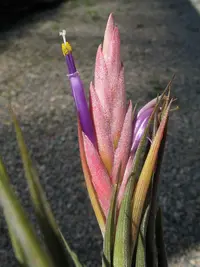
The plant forms tight, curling rosettes of narrow, silver‑green leaves covered in fine scales that help it absorb water and nutrients from the air. In bloom, it produces colorful bracts and tubular flowers that attract pollinators.

It is generally considered a manageable species for indoor growers, as long as it receives bright light, good air movement, and regular misting or soaking. Understanding how to care for Tillandsia circinnatioides mainly involves balancing moisture with quick drying between waterings.

Main Plant Requirements

Care Difficulty

Moderate Care

Light Preference

Bright Indirect Light

Water Requirements

Moderate Water

Temperature Preference

Tropical / Frost Sensitive

Hardiness Zone

10–12

Soil Texture

Sandy, Rocky, Organic-rich

Soil pH

Acidic (5.5–6.5)

Soil Drainage

Well-drained

Fertilization

Light (every 4–6 weeks)

Get Personalized Care Plan

Scan your plant to receive care tips personalized for your specific plant

Available on iOS and Android

How to Care for the Tillandsia circinnatioides

This species prefers bright conditions that mimic open, highland habitats with strong but not scorching sun.

  • Provide 4–6 hours of bright, indirect light daily, such as dappled light under 30–40% shade cloth or on an east-facing exposure with gentle morning sun.
  • Protect Tillandsia circinnatioides from harsh midday and late-afternoon sun, which can bleach leaves to silver-white, cause brown tips, and permanently scar tissue.
  • In summer, increase distance from intense glass or reflective surfaces; in winter, move closer to the brightest window or use 6–8 hours of full-spectrum grow light.

Watering focuses on wetting the foliage thoroughly, then allowing it to dry fast to prevent rot.

  • Soak or drench the plant until fully wet, then let it dry within 2–3 hours; in warm, dry conditions this is often needed 2–3 times per week, less in cool, humid weather.
  • Check leaf feel and color rather than the calendar; leaves curling inward or staying dull and stiff indicate underwatering, while limp, browning bases suggest excess moisture.
  • Use very fast-draining mounts or substrates so no water pools around the base, and reduce soaking frequency in winter when evaporation slows.

Stable, mild temperatures support steady growth and reduce stress on this air plant.

  • Ideal growth occurs around 65–80°F (18–27°C), with slightly cooler nights improving vigor and reducing heat stress.
  • Protect from cold below 45°F (7°C); brief dips to 40°F (4°C) may be tolerated if dry, but freezing conditions quickly damage tissues and can kill the plant.
  • In hot spells above 90°F (32°C), increase air movement and humidity while providing shade, and avoid leaving the plant wet overnight in cool conditions.

This species prefers moderate humidity but copes with many home conditions when misted correctly.

  • Aim for 50–70% humidity, with bright air movement to keep leaves dry between wettings.
  • Tolerates short dry spells, but frequent crisp, curling, or dull leaves indicate humidity stress or under-watering.
  • Increase humidity by grouping air plants, placing near (not on) a humidifier, or using brief morning misting that dries within 1–2 hours.

Tillandsia circinnatioides is an epiphytic air plant and must not be planted in conventional potting soil.

  • Keep the plant on open mounts such as cork, hardwood, or rigid wire, so air can circulate completely around the leaves and base.
  • If placing in a container, use only very loose, inorganic materials like large bark, lava rock, or coarse aquarium gravel, never peat-based mixes.
  • Ensure water drains away instantly after soaking; do not allow the base to sit in damp media or pooled water.
  • Avoid compact, fine, or moisture-holding substrates, which restrict airflow and quickly cause rot at the leaf bases.

This air plant is suitable for container display if kept above the substrate with excellent air circulation.

  • Use shallow, wide containers filled with decorative gravel or large bark, resting the plant on top rather than burying any part.
  • Choose heavier ceramic or stone containers to prevent tipping if the rosette becomes large or top-heavy.
  • Position the plant so excess water can run freely out of the container after soaking, using tilted stands or raised supports if needed.

This epiphytic air plant has low nutrient needs, but light feeding supports healthy growth of Tillandsia circinnatioides.

  • Use a balanced, low-nitrogen air-plant or 20-20-20 NPK fertilizer formulated for epiphytes, without urea.
  • Dilute to 1⁄4–1⁄2 strength and apply as a foliar spray after watering, not on completely dry plants.
  • Feed every 3–4 weeks in spring–summer; skip or feed once in autumn if growth remains active.
  • In winter, reduce feeding sharply or stop entirely, since cooler, lower-light conditions slow metabolic activity.

Pruning needs are minimal and focus on hygiene and maintaining a tidy rosette on Tillandsia circinnatioides.

  • Best timing is late winter to early spring, before strong new growth begins.
  • Gently remove dry or brown leaves by pulling downward, or trim with small, clean scissors close to the base.
  • Cut spent flower spikes at the base once completely dry to direct energy into offsets.
  • Avoid cutting healthy green tissue, as this reduces photosynthetic surface and can slow growth.

This air plant is usually mounted rather than potted, so focus on remounting or repositioning instead of traditional repotting.

  • Transplant when the clump outgrows its mount, dries too quickly, or becomes shaded by other plants.
  • Best time is spring to early summer, when temperatures are stable and light is increasing.
  • Gently detach the plant, preserving any roots, and secure it to new cork, bark, or mesh using soft wire or non-soluble ties.
  • Mist thoroughly after remounting, then provide bright, filtered light and good airflow to limit stress and rot.

Propagation of Tillandsia circinnatioides is most practical through offsets rather than seed.

  • Allow offsets (pups) to grow to at least 1⁄3–1⁄2 the size of the parent before removal.
  • Best season is spring–summer, when warmth and light promote fast establishment.
  • Gently twist or cut pups away at the base using sterile scissors if they do not separate cleanly.
  • Mount pups individually with good air circulation, then mist lightly several times per week until well anchored.

This species is sensitive to hard frost and benefits from thoughtful winter care in cooler climates.

  • Keep temperatures above 40–45°F; prolonged exposure below this range can damage tissues.
  • Move mounted or container-grown plants indoors to a bright, cool room before the first frost.
  • Ensure excellent air movement indoors and avoid placing plants near heating vents or very dry radiators.
  • Water less often in low light, allowing the plant to dry rapidly after each misting to prevent rot.

Care Tips

Rotate Mount Regularly

Rotate the plant’s mount or display by 90° every 2–3 weeks so light reaches all sides evenly and the spiraled leaves grow symmetrically instead of leaning in one direction.

Use Inert Mounts

Attach plants to inert, long-lasting materials like cork bark, hardwood, or plastic-coated wire grids instead of fresh wood that can rot and harbor fungi near the base.

Improve Air Movement

Place the plant where there is gentle, constant air movement from a ceiling or oscillating fan to help leaves dry quickly after misting and reduce the risk of rot in the tight curls.

Rinse After Handling

If the plant has been handled frequently or displayed in a dusty spot, give it a brief rinse with room-temperature water to clear dust and oils that can block trichomes, the tiny structures that absorb water and nutrients.

Seasonal Rest Adjustment

In cooler, lower-light months slightly reduce soaking frequency and avoid late-evening wetting, which supports a mild rest period that often improves flowering when growing Tillandsia circinnatioides.

Common Pests and Diseases

Mealybugs

This pest feeds on leaf bases and protected crevices, sucking plant sap and leaving white, cotton-like masses on the plant. Symptoms include slowed growth, leaf tip dieback, and sticky honeydew that can promote sooty mold.

Solution

Isolate the plant, then use a strong but gentle stream of water to rinse off visible insects, especially around the leaf bases and within the curls. Follow with spot treatment using a cotton swab dipped in 70% isopropyl alcohol on remaining clusters, and increase airflow and light to reduce reinfestation risk as part of consistent Tillandsia circinnatioides care instructions.

Scale insects

These insects attach tightly to the leaf surface and sheaths, appearing as small, brown or tan bumps that do not brush off easily. Symptoms include yellowing patches, weak growth, and localized leaf scarring.

Solution

Remove affected plants from any cluster or mounting and gently scrape or wipe off scale with a soft brush or cloth dipped in 70% isopropyl alcohol, focusing on the undersides and leaf bases. Rinse thoroughly with water, allow to dry in bright, airy conditions, and inspect weekly to remove any new juveniles before they mature.

Fungal leaf spot

This disease causes small, dark, sunken spots on leaves that may expand and coalesce under persistently wet, stagnant conditions. Symptoms include discolored patches and premature browning of leaf tips or sections.

Solution

Improve air movement and allow the plant to dry fully between misting or soaking, avoiding water that sits trapped in the tight curls for long periods. Trim and discard heavily spotted leaves with clean scissors, then reduce humidity crowding and, if needed, apply a mild copper-based fungicide sparingly, allowing the plant to dry well afterward.

Bacterial soft rot

This disease develops in plants kept too wet with poor air circulation, leading to soft, water-soaked, foul-smelling tissue at the leaf bases. Symptoms include rapid collapse of affected sections and a slimy texture at the core of the rosette or around tightly coiled leaves.

Solution

Immediately remove and discard any mushy or foul-smelling tissue with sterile tools and discard severely affected plants to protect nearby air plants. Adjust watering to shorter soak times, shake excess water from the plant, dry it upside down if possible, and keep it in bright, airy conditions so all leaf bases dry within a few hours after watering.

Interesting Facts

Naturally curling foliage

This species is notable for its narrow leaves that naturally curl and twist into spirals as they grow, a trait that is much more pronounced than in many related air plants. The curling increases surface area exposure to air, which can improve water and nutrient capture from the atmosphere.

High-elevation origin

Tillandsia circinnatioides is native to higher-elevation regions of Mexico, where it grows epiphytically on trees and sometimes on rocks in bright, airy habitats. Its compact rosette and dense trichomes (tiny leaf scales) are adaptations to strong light and rapid drying after rain or fog.

Silvery trichome coating

The leaves often appear silvery or grayish due to a dense covering of trichomes that reflect sunlight and reduce water loss. These trichomes also help absorb water and dissolved nutrients directly from rain, mist, and humid air, which is key to successful Tillandsia circinnatioides care instructions.

FAQs about Tillandsia circinnatioides

Lack of bloom usually relates to insufficient light intensity, inadequate air movement, or irregular fertilizing. This species also needs to be fully mature. A brief, gentle shift to slightly cooler, drier conditions can sometimes trigger flowering.

Grow Healthy Plants with Botan Care

Keep your plants happy and healthy with plant identification, disease detection, and easy care guidance.

Botan plant care app — identify plants on mobile

Explore More Plants