Wind-hardening young trees
Stake young trees only loosely and remove stakes after 1–2 years so the trunk can flex in coastal winds and develop strong taper and root anchorage.


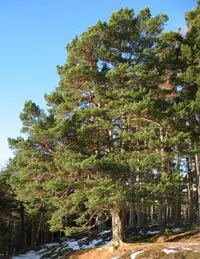
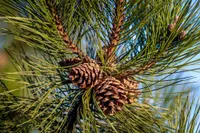
Sitka spruce, Picea sitchensis, is a large evergreen conifer best known from cool, wet coastal forests of the Pacific Northwest. In nature it forms tall, straight trunks with dense, sharp needles and a narrow, pyramidal crown when young.
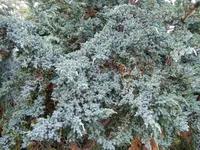
Its blue-green needles and rough, scaly bark give it a distinct, rugged appearance, and it grows quickly in suitable climates. Trees prefer cool summers, high humidity, and consistently moist, acidic, well-drained soil, so they are not ideal for hot, dry regions.
Gardeners who want to care for Sitka Spruce should plan for its eventual size, wind exposure, and need for reliable moisture and space for roots and canopy.

Care Difficulty
Moderate Care

Light Preference
Full Sun

Water Requirements
Regular Water

Temperature Preference
Cold Hardy

Hardiness Zone
6–8

Soil Texture
Sandy, Loamy, Silty

Soil pH
Strongly acidic (4.5–5.5), Acidic (5.5–6.5)

Soil Drainage
Moist but well-drained

Fertilization
Minimal (feed rarely)
Scan your plant to receive care tips personalized for your specific plant
Available on iOS and Android
This coastal conifer prefers cool, bright conditions with protection from harsh inland sun.
This species prefers consistently moist, cool soil but not waterlogged conditions.
This tree thrives in cool, maritime climates with mild summers and cold-tolerant growth.
This coastal conifer prefers cool, moderately moist air and does not like very dry indoor conditions.
Picea sitchensis thrives in cool, moist, well-drained, slightly acidic substrates.
This species can be grown in containers when young, but long-term culture is challenging due to its eventual size and root needs.
This species grows well in most average garden soils and usually needs only modest feeding.
Picea sitchensis needs minimal pruning and responds best to light, careful work.
This conifer is usually grown in the ground, so focus on careful transplanting rather than frequent repotting.
Picea sitchensis is usually propagated in nurseries by seed or semi-ripe cuttings and is moderately challenging for home growers.
This species is naturally cold hardy in most temperate climates and usually needs little winter care once established.

Plant Health Check
Not sure what's wrong with your plant? Check your plant's health inside the app.
Sitka spruce wood combines strength with low density and exceptional stiffness, which makes it one of the classic materials for aircraft frames and high-quality soundboards in pianos, guitars, and violins.
In its native coastal range, this species efficiently captures moisture from fog on its needles, allowing it to thrive in cool, maritime climates with frequent mist and drizzle rather than relying only on rainfall.
Along exposed shorelines, the same species that can form towering forests often grows as stunted, flag-shaped trees, sculpted over decades by persistent salt-laden winds and abrasion from windblown particles.

Sitka spruce holds the record as one of the tallest conifers in temperate rainforests, with some wild individuals documented over 90 m tall, making it among the tallest tree species on Earth outside of the redwoods.
This species is generally fast-growing, often adding 30–60 cm in height per year in cool, moist climates with deep, fertile soil. Growth slows in poor, compacted, or dry sites, and in containers with restricted root space.
Keep your plants happy and healthy with plant identification, disease detection, and easy care guidance.