Flaky Juniper Care (Juniperus squamata)

Also known as: Himalayan Juniper, Nepalese Juniper
Flaky Juniper

About Flaky Juniper

Flaky juniper, Juniperus squamata, is a small evergreen conifer valued for its dense, spreading habit and fine, needle-like foliage. It often forms low mounds or broad, ground-hugging shrubs.

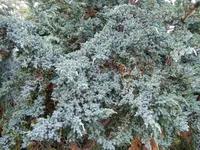
The foliage ranges from silvery blue to blue-green, giving strong year-round color in beds, borders, and rock gardens. Bark and older stems are characteristically flaky, which gives the plant its common name.

This species is native to the Himalayan region and nearby mountain ranges, where it grows in rocky, well-drained sites. Its toughness, drought tolerance, and modest nutrient needs make it relatively easy to care for Flaky Juniper in many temperate gardens, provided the site offers full sun and good drainage.

Main Plant Requirements

Care Difficulty

Easy Care

Light Preference

Full Sun

Water Requirements

Low Water

Temperature Preference

Cold Hardy

Hardiness Zone

4–8

Soil Texture

Sandy, Loamy, Rocky

Soil pH

Acidic (5.5–6.5), Slightly acidic (6.5–7.0)

Soil Drainage

Well-drained

Fertilization

Minimal (feed rarely)

Get Personalized Care Plan

Scan your plant to receive care tips personalized for your specific plant

Available on iOS and Android

How to Care for the Flaky Juniper

Juniperus squamata thrives in full sun but accepts light afternoon shade in hotter regions.

  • Provide 6–8 hours of direct sun daily; morning sun with light afternoon shade helps reduce stress in very hot summers.
  • Flaky Juniper tolerates partial shade (4–5 hours sun), but foliage becomes looser and color less intense with less light.
  • In winter, sun is usually weaker so full exposure is helpful; in hot climates, strong reflected midday sun can scorch foliage, especially on young plants.

Juniperus squamata prefers dry to slightly moist soil and is drought-tolerant once established.

  • Allow the top 3–5 cm of soil to dry before watering; in the ground this often means deep but infrequent watering guided by soil feel, not a fixed schedule.
  • During the first 1–2 growing seasons, water when new growth softens or tips bend easily, then gradually reduce as roots deepen.
  • Yellowing, soft foliage and persistent wet soil indicate overwatering, while browning tips and very light, pulling soil suggest underwatering; always ensure sharply draining soil.

This shrub is cold-hardy and handles a wide temperature range when planted outdoors in suitable climates.

  • Active growth is strongest around 60–75°F (16–24°C), though plants remain healthy somewhat above and below this range.
  • Mature plants typically tolerate down to about -10°F (-23°C) or lower depending on cultivar, but young plants benefit from winter mulch to protect roots.
  • In summer, Juniperus squamata copes with 85–95°F (29–35°C) if soil is not waterlogged and roots are mulched; prolonged heat above this can cause tip scorch, especially in drying winds.

Juniperus squamata prefers dry air and usually does not need humidity adjustment indoors or outdoors.

  • Aim for 30–50% relative humidity, similar to typical indoor air in heated homes.
  • This shrub tolerates dry air well; avoid frequent misting, which can encourage fungal issues on dense foliage.
  • If air is extremely dry and browning tips appear on inner foliage, increase air circulation rather than adding moisture around Flaky Juniper.

Juniperus squamata grows best in mineral, fast-draining soil that never stays waterlogged.

  • Use a sandy or gravelly loam with coarse texture to keep pore spaces open for roots and prevent compaction.
  • Aim for slightly acidic to neutral pH around 6.0–7.0, avoiding strongly alkaline soils that can cause nutrient lockout and chlorosis (yellowing leaves).
  • Blend roughly 50–70% coarse sand or grit with 20–40% loam and up to 10–20% well-decomposed compost for moderate fertility.
  • Improve drainage and aeration in heavy native soil by raising the planting area or mixing in crushed gravel and pine bark, and avoid low spots where water collects.

This species is suitable for long-term container growing when root space and drainage are carefully managed.

  • Choose a wide, heavy container to counterbalance the spreading crown and reduce the risk of tipping in strong winds.
  • Select a pot depth that allows a broad, shallow root system to spread, rather than a very tall, narrow container that keeps roots cramped near the base.
  • Use a gritty mix and slightly elevate the pot on feet or bricks so drainage holes stay clear and water cannot pool under the container.

Juniperus squamata grows well in lean soil but benefits from light, controlled feeding in containers or poor ground.

  • Apply a balanced slow-release fertilizer (around 10-10-10) at half strength once in early spring for caring for Flaky Juniper in pots or depleted beds.
  • Avoid high-nitrogen lawn fertilizers; excess nitrogen causes weak, lanky growth and reduces stress tolerance.
  • Supplement with a thin layer of compost over the root zone in spring, keeping it away from the trunk flare.
  • Stop feeding by late summer and do not fertilize in winter dormancy to avoid tender, frost-sensitive growth.

Pruning Juniperus squamata is mainly corrective, helping maintain structure and plant health.

  • Best time is late winter to early spring before new growth begins, avoiding extreme heat or active frost periods.
  • Use clean, sharp hand pruners to remove dead, diseased, or storm-damaged branches back to healthy wood.
  • Thin crowded interior shoots lightly to improve light penetration and airflow without cutting back into bare, old wood that may not reshoot.
  • Shape only by tip-trimming green growth, following the plant’s natural outline rather than creating hard geometric forms.

Flaky juniper is usually grown in the ground, so focus on careful transplanting or occasional container upgrades.

  • Transplant or shift to a larger pot in early spring or early fall, when temperatures are mild and stress is lower.
  • Look for roots circling the container, slow growth, or quick drying soil as signals that a size upgrade is needed.
  • Plan on repotting container plants every 3–5 years, moving only 1 pot size up with a free-draining, gritty mix.
  • Handle the root ball gently, tease only the outer roots, water thoroughly afterward, and shade from strong sun for 1–2 weeks.

New Juniperus squamata plants are most reliably produced from semi-hardwood cuttings rather than seed.

  • Take 7–10 cm semi-hardwood tip cuttings in late summer, using non-flowering shoots from healthy, pest-free plants.
  • Remove lower foliage, lightly wound the base, and dip in rooting hormone to encourage root initiation.
  • Insert cuttings into a sharply draining mix of sand and peat or perlite, then keep at 65–75°F with high humidity and bright, indirect light.
  • Expect slow rooting over several months; pot on only once roots are firm and well developed to avoid setback.

This juniper is generally cold hardy, so Juniperus squamata needs only modest winter care in most temperate climates.

  • In colder regions, apply a 5–8 cm mulch layer around the root zone, keeping it a few cm away from the trunk.
  • For young or newly transplanted plants, use burlap screens to reduce drying winter winds and scorch.
  • Move containers to a sheltered, unheated but frost-free or minimally freezing spot, preventing waterlogged soil while allowing some light.

Care Tips

Wind exposure training

Site plants in an open, breezy position from a young age so shoots develop short, sturdy growth that resists snow and wind damage rather than becoming soft and elongated in sheltered, stagnant air.

Crown snow management

In snowy regions gently brush accumulated snow off branches with a broom in an upward motion after heavy falls to prevent spreading, cracking, or permanent splaying of the layered branch structure.

Targeted branch staking

If main branches start to splay outward, tie them loosely with soft horticultural ties to a low stake or neighboring branch for 1–2 seasons, checking and adjusting ties so they do not cut into the bark.

Weed and turf exclusion

Maintain a vegetation-free mulch ring 30–60 cm around the base so lawn competition and mechanical damage from string trimmers do not weaken roots or strip bark.

Disease and mite monitoring

Inspect foliage several times per season for browning tips, tiny webbing, or orange fungal galls and, when found, prune out affected material and adjust irrigation and spacing, as this proactive check is central to caring for Flaky Juniper in most landscapes.

Common Pests and Diseases

Juniper blight

This disease causes shoot tips to turn dull green, then reddish-brown, with dead twig sections spreading inward from the tips. Symptoms include small cankers on stems and dieback that is most noticeable on young growth.

Solution

Prune out all discolored or dead shoots back into healthy green wood, disinfecting tools between cuts, and dispose of infected material in the trash. Improve spacing and airflow, avoid overhead watering, and if blight recurs, apply a labeled copper or strobilurin-based fungicide in early spring when new growth begins, repeating as directed.

Phomopsis tip blight

This disease primarily affects young, soft shoots that fade from light green to tan and then brown, often bending into a characteristic shepherd’s crook. Symptoms include small gray lesions at the base of infected shoots and scattered tip dieback across the plant.

Solution

Cut off affected tips several inches below visible damage and destroy them, then reduce plant stress by providing full sun, good drainage, and avoiding heavy nitrogen fertilization. In sites with a history of disease, start fungicide sprays labeled for Phomopsis on juniper in spring as new growth emerges and repeat during wet periods according to label directions.

Juniper scale

This pest appears as tiny white or gray, oyster-shaped bumps on needles and stems, leading to yellowing, thinning foliage and overall decline. These insects feed by sucking sap, which weakens the plant over time.

Solution

Prune out heavily infested branches and discard them, then wash remaining foliage with a strong stream of water to dislodge some scales. During crawler emergence in late spring, use a horticultural oil or insecticidal soap thoroughly on the foliage, repeating at intervals noted on the product label to break the life cycle.

Spider mites

This pest causes fine stippling and a dull, grayish cast on needles, often with delicate webbing in branch crotches, especially during hot, dry weather. These insects feed on cell contents, leading to needle bronzing and premature drop if populations build up.

Solution

Rinse foliage thoroughly with water, including the inner branches, 2–3 times per week for several weeks to reduce mite numbers and dust buildup. If infestation persists, use a horticultural oil or insecticidal soap labeled for mites, applied in the early morning or late afternoon, coating all needle surfaces, and maintain adequate but not excessive irrigation.

Cedar-apple rust

This disease produces orange-brown galls on twigs that, in wet spring weather, develop bright orange, gelatinous spore horns. Symptoms include localized swelling on stems and can contribute to gradual twig dieback near the galls.

Solution

Prune and remove galls during dry weather in late winter before they swell and sporulate, and discard them away from the garden. If nearby apples or crabapples are heavily affected and disease pressure is high, consider using a labeled systemic fungicide on junipers in early spring and selecting resistant Malus cultivars to reduce the rust cycle over time.

Interesting Facts

High Himalayan native

This species is naturally distributed in high-altitude regions of the Himalayas and western China, where it grows on rocky, exposed slopes and tolerates cold, windy conditions that many shrubs cannot withstand.

Distinct flaky bark

The common name flaky juniper comes from its characteristic peeling, brownish bark that sheds in thin plates, which helps the plant adapt to temperature changes by reducing stress on the outer tissues.

Strong blue foliage

Many forms of this species have needle-like leaves covered in a waxy coating that scatters light and produces an intense bluish or blue-gray color, which also reduces water loss under high sun and wind exposure.

Botan icon

Did you know?

Juniperus squamata has contributed several widely grown ornamental cultivars, such as 'Blue Star' and 'Blue Carpet', which were selected from naturally occurring forms or sports and have become standard choices in landscape design for compact, ground-hugging, blue-foliaged conifers.

FAQs about Flaky Juniper

Browning foliage usually comes from chronic underwatering, salt buildup from fertilizer, compacted or waterlogged soil, or winter windburn. Check root health, improve drainage, flush excess salts, prune dead tips, and protect from harsh drying winds.

Grow Healthy Plants with Botan Care

Keep your plants happy and healthy with plant identification, disease detection, and easy care guidance.

Botan plant care app — identify plants on mobile

Explore More Plants