Windbreak training
On exposed sites, gradually prune and shorten windward branches over 2–3 seasons to create a dense, tapered hedge that deflects wind instead of snapping in storms.

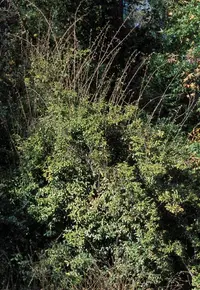
Thorny olive, Elaeagnus pungens, is an evergreen shrub grown mainly for its dense, spiny branches and silvery, speckled foliage. It often forms a broad, arching mound or can be trained as a hedge or screen.
The plant is native to East Asia but is widely used in landscapes in many temperate regions, especially for windbreaks and privacy planting. Small, creamy, highly fragrant flowers appear in fall, followed by reddish, speckled berries.
It is valued for toughness, tolerating poor soils, salt spray, and urban conditions, which makes it relatively easy to establish. Understanding how to care for thorny olive focuses mainly on managing its vigorous growth and strong thorns.
In general, it prefers full sun to light shade, well-drained soil, and moderate moisture, though it is quite drought-tolerant once established.

Care Difficulty
Easy Care

Light Preference
Full Sun

Water Requirements
Low Water

Temperature Preference
Cold Hardy

Hardiness Zone
6–9

Soil Texture
Sandy, Loamy, Clay

Soil pH
Slightly acidic (6.5–7.0), Slightly alkaline (7.0–7.5)

Soil Drainage
Well-drained

Fertilization
Minimal (feed rarely)
Scan your plant to receive care tips personalized for your specific plant
Available on iOS and Android
Elaeagnus pungens grows best with ample sun but tolerates some shade in most temperate gardens.
Elaeagnus pungens prefers well-drained soil and becomes drought-tolerant once established.
This shrub handles a wide temperature range but grows most actively in mild conditions.
Elaeagnus pungens tolerates a wide humidity range and rarely needs special humidity management.
Elaeagnus pungens accepts varied soils but performs best in well-drained, slightly lean substrates.
This species can be grown in containers when managed for its vigorous, spreading habit.
This shrub grows well in average soil but benefits from light feeding during active growth.
Pruning helps keep Elaeagnus pungens dense, controlled, and healthy.
This species is usually grown in the ground, so focus on careful transplanting rather than frequent repotting.
Elaeagnus pungens is commonly propagated by semi-hardwood cuttings and simple layering.
This evergreen shrub is generally cold hardy in much of the US and needs little winter intervention.

Plant Health Check
Not sure what's wrong with your plant? Check your plant's health inside the app.
This shrub forms symbioses with actinorhizal bacteria in root nodules, allowing it to fix atmospheric nitrogen and enrich poor or disturbed soils.
Its small, tubular, cream-colored flowers open in autumn and release a strong, sweet fragrance in the evening, attracting moths and other nocturnal pollinators.
Leaves and young stems have distinctive silver or brownish scales, called lepidote trichomes, which reflect light and help reduce water loss in sunny, exposed sites.

In several parts of the southeastern United States, this species has become a serious invasive shrub, forming dense thickets that shade out native vegetation and alter habitat structure in forests, roadsides, and coastal dunes.
This shrub tends to spread vigorously by both seeds and suckering shoots. Birds disperse the fruits, creating new plants nearby. In many regions it is considered invasive and needs strict pruning or physical barriers to remain contained.
Keep your plants happy and healthy with plant identification, disease detection, and easy care guidance.