Spanish Juniper Care (Juniperus thurifera)

Also known as: Incense Juniper, Thuriferous juniper
Spanish Juniper

About Spanish Juniper

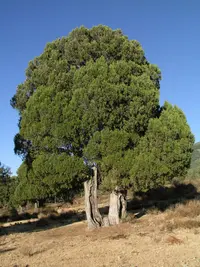
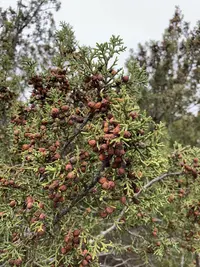
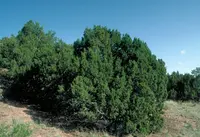
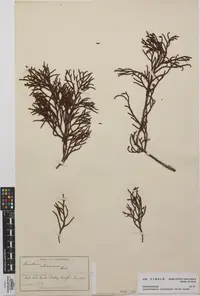
Spanish juniper, Juniperus thurifera, is a long-lived coniferous tree or large shrub with dense, often irregular branching and scale-like, gray-green foliage. Mature plants develop thick, fibrous bark and rounded, berry-like cones that provide strong visual interest.

This species is native to dry, rocky areas of Spain, France, and parts of North Africa, where it tolerates poor soils and harsh climates. Its natural toughness makes it relatively undemanding, but slow growth and need for good drainage mean it suits patient growers best. In general, it prefers full sun, low to moderate moisture, and well-drained, slightly alkaline soils, so understanding how to care for Spanish Juniper starts with mimicking these conditions.


Main Plant Requirements

Care Difficulty

Easy Care

Light Preference

Full Sun

Water Requirements

Low Water

Temperature Preference

Cold Hardy

Hardiness Zone

6–8

Soil Texture

Sandy, Loamy, Rocky

Soil pH

Slightly acidic (6.5–7.0), Slightly alkaline (7.0–7.5)

Soil Drainage

Well-drained

Fertilization

Minimal (feed rarely)

Get Personalized Care Plan

Scan your plant to receive care tips personalized for your specific plant

Available on iOS and Android

How to Care for the Spanish Juniper

This species thrives in bright, open sites with long daily sun exposure.

  • Provide 6–8 hours of direct sun daily; full sun promotes dense foliage and compact growth in Spanish Juniper.
  • Tolerates light partial shade, especially with morning sun and light afternoon shade, but too much shade causes sparse, elongated shoots.
  • In hot inland climates, protect young plants from intense late-afternoon sun to reduce scorch, and avoid planting where buildings or trees cast heavy winter shade.

This conifer prefers dry to slightly moist soil and is highly drought tolerant once established.

  • Allow soil to dry so the top 5–8 cm feels dry and loose before deep watering, then soak the root zone rather than sprinkling lightly.
  • During the first 1–2 growing seasons, monitor Juniperus thurifera after hot, windy spells; bluish, dull foliage and limp tips indicate it needs a thorough soak.
  • Yellowing, soft foliage and a sour smell in the soil suggest overwatering or poor drainage; improve drainage with coarse mineral material and reduce frequency.

This hardy species is adapted to cold winters and warm, dry summers.

  • Optimal growth occurs around 50–75°F (10–24°C), typical of temperate outdoor climates with seasonal variation.
  • Mature plants tolerate drops near 0°F (-18°C) when planted in the ground; young plants benefit from mulch around the root zone in very cold snaps.
  • Handles summer heat up to about 95°F (35°C) if soil is well drained and not waterlogged; hot, humid conditions increase disease risk, so ensure good air flow.

This species tolerates dry air well and usually does not need humidity adjustment in typical homes or outdoor settings.

  • Aim for 30–50% humidity, which matches most indoor and outdoor conditions in temperate regions.
  • Plants remain healthy in heated or air-conditioned rooms if light and watering are correct.
  • Leaf tips browning on otherwise well-watered plants is more likely from root or salt stress than low humidity.

Juniperus thurifera prefers mineral, well-drained soils that never stay waterlogged.

  • Use a sandy or gravelly loam with low to moderate organic matter to mimic rocky, native sites.
  • Aim for slightly alkaline to neutral pH around 7.0–8.0; avoid very acidic mixes unless gradually adjusted with lime.
  • For containers, combine roughly 50% coarse sand or grit, 30–40% pine bark fines, and 10–20% compost for structure and nutrients.
  • Improve drainage and aeration by raising planting areas, avoiding heavy clay, and never filling planting holes with dense, peat-heavy mixes.

This species can be grown in containers, mainly for young plants or smaller forms in sunny outdoor locations.

  • Choose a heavy, wide-based pot or add stones to the base layer to prevent wind tipping as the plant becomes woody and top-heavy.
  • Use a deep container that allows a strong, anchoring root system, leaving several cm between root ball and pot wall for lateral root spread.
  • Select unglazed clay or other porous materials outdoors to reduce prolonged moisture retention after heavy rain while still buffering rapid drying in hot sun.

This drought-tolerant conifer usually needs minimal feeding, especially when planted in poor, rocky soil as in its native habitat.

  • For young or container-grown Spanish Juniper, use a balanced slow-release fertilizer (around 10-10-10) in early spring.
  • Apply once per year during the growing season; skip or halve the dose in late summer to avoid soft, frost-prone growth.
  • Use at 50–75% of the label rate to prevent excess salt buildup and overly lush, weak foliage.
  • Compost can be used sparingly as a light top-dressing, keeping it away from direct trunk contact.

Pruning Juniperus thurifera is usually light and focused on maintaining a stable, natural structure.

  • Carry out pruning in late winter or very early spring before new growth starts.
  • Remove dead, diseased, crossing, or storm-damaged branches using clean, sharp bypass pruners or a pruning saw.
  • Thin overly crowded interior branches slightly to improve air movement without cutting back into old, bare wood.
  • Limit shaping cuts to small tips; heavy cuts into older wood rarely resprout and can leave permanent gaps.

This species is usually grown in the ground, so focus on careful site planting and occasional transplanting of younger trees.

  • Transplant in late winter or early spring while the tree is dormant to reduce shock.
  • Look for slow growth, poor vigor, or roots circling a nursery container as signals the plant should be shifted to open ground.
  • Move container plants only every 3–4 years, stepping up 1 pot size and using a very free-draining, gritty mix.
  • Hydrate the root ball before planting, handle roots gently, plant at the same depth, then water deeply and mulch lightly, keeping mulch off the trunk.

Propagation of Juniperus thurifera is possible but slow and better suited to patient or experienced growers.

  • Semi-ripe heel cuttings taken in late summer root under high humidity, bottom heat (65–75°F), and in a sharp sand–perlite mix.
  • Apply rooting hormone to the cut base, insert cuttings firmly, and keep the medium just slightly moist, not wet.
  • Seeds need cold stratification, usually 2–3 months at 34–41°F, before being sown in a very free-draining medium.
  • Provide bright, indirect light and protect young plants from strong sun and drought until root systems are well developed.

Mature plants are hardy and usually overwinter outdoors without special measures in most temperate climates.

  • Established trees tolerate substantial frost once well rooted in the landscape.
  • Apply a 5–8 cm mulch layer around the root zone in late fall, keeping it a few cm away from the trunk to limit rot.
  • For container specimens in colder regions, move pots to a sheltered, unheated area where the soil does not freeze solid.

Care Tips

Wind-hardening young plants

In the first 2–3 years, gradually expose young plants to stronger wind by avoiding solid fences or walls directly in front of them, which encourages sturdier trunks and root systems and reduces the risk of windthrow later.

Single-leader training

Select and lightly stake one dominant central stem while removing or shortening competing upright shoots during winter, so the tree develops a strong, stable leader and a balanced crown structure over time.

Low-branch management

Instead of removing lower branches early, allow them to persist to shade the root zone and protect the trunk, then phase out only the lowest, most crowded branches once the tree is well established and above desired height.

Salt and de-icer vigilance

Avoid planting close to roads, driveways, or paths where salt or de-icing products accumulate, and if exposure is unavoidable, flush the soil with deep watering in early spring to leach salts away from the root zone.

Targeted cone control

If heavy cone set bends branches or affects form, thin out some cone clusters by hand in late summer on stressed or heavily loaded branches, which reduces mechanical strain and helps redirect energy to vegetative growth when growing Spanish Juniper.

Common Pests and Diseases

Cypress aphids

These insects feed on young shoots and foliage, causing yellowing, sparse growth, and sticky honeydew that can attract sooty mold. Symptoms include weakened tips and reduced vigor, especially on stressed trees.

Solution

Prune and destroy heavily infested shoot tips and improve growing conditions to reduce stress. For active infestations, wash affected branches with a strong water spray and, if needed, apply a targeted insecticidal soap or horticultural oil to the undersides and bases of shoots, repeating as label-directed until new growth appears clean.

Juniper scale

This pest appears as small, white or gray armored bumps on needles and stems, leading to dull, yellowing foliage and gradual dieback. This pest is more problematic on plants grown in warm, dry, and sheltered sites.

Solution

Clip out and discard heavily infested branches to reduce population pressure. During crawler (juvenile) activity in spring, treat with horticultural oil or insecticidal soap, ensuring thorough coverage of twigs and inner foliage, and maintain tree vigor through correct watering and avoiding excessive nitrogen fertilizer.

Juniper tip blight

This disease causes browning and death of shoot tips, often starting on lower branches and progressing inward, with tiny black fruiting bodies visible on dead tissue. Symptoms include a clear line between dead brown tissue and healthy green wood on affected shoots.

Solution

Prune and discard infected tips back into healthy green tissue during dry weather, cleaning tools between cuts with alcohol or a 10% bleach solution. Improve air circulation by thinning crowded branches, avoid overhead watering, and, in high-risk or repeatedly affected plantings, use a labeled fungicide in early spring when new growth begins, following regional Juniperus thurifera care instructions.

Phomopsis twig blight

This disease affects young, tender growth, causing scattered patches of tan or reddish-brown needles and dieback of small twigs. Symptoms include bending or curling of young shoots followed by drying and breakage.

Solution

Remove and destroy diseased twigs promptly, cutting back into older healthy wood, and keep fallen debris away from the base of the plant. Reduce humidity in the canopy by spacing plants properly, avoid wetting foliage late in the day, and apply a suitable protectant fungicide to new growth in spring if the problem recurs regularly.

Bagworms

These caterpillars live in small, cone-like bags made of needles and debris, feeding on foliage and sometimes stripping branches bare. Symptoms include thinning foliage and visible hanging bags on twigs, often matching the color of the host needles.

Solution

Handpick and destroy bags during fall, winter, or very early spring before caterpillars emerge, focusing on lower and mid-canopy where they are easiest to reach. For heavy infestations when larvae are actively feeding, use a biological insecticide containing Bacillus thuringiensis (Bt) on young larvae, ensuring thorough coverage of outer foliage and repeating as directed.

Interesting Facts

Iberian mountain specialist

This species is naturally concentrated in high, dry plateaus and mountains of the Iberian Peninsula and parts of North Africa, forming sparse, open woodlands on limestone and other calcareous soils where many other trees cannot persist.

Remarkably drought tolerant

Its small, scale-like leaves and thick, corky bark reduce water loss and protect living tissues, allowing mature trees to survive on rocky, shallow soils under strong sun and irregular rainfall.

Sex-separated trees

It is usually dioecious, meaning individual trees are either male or female, so only female trees produce the characteristic fleshy, bluish seed cones that birds disperse.

Botan icon

Did you know?

Some of the oldest known individuals of this species in Spain are estimated, using growth-ring analysis, to be many centuries old, making these slow-growing trees long-lived components of Mediterranean highland ecosystems.

FAQs about Spanish Juniper

This species grows slowly, typically 10–20 cm per year under good conditions. Growth is faster in youth, then gradually slows with age. Poor soil, drought during establishment, or heavy shade can reduce extension growth further.

Grow Healthy Plants with Botan Care

Keep your plants happy and healthy with plant identification, disease detection, and easy care guidance.

Botan plant care app — identify plants on mobile

Explore More Plants