Gold medallion tree Care (Cassia leptophylla)

Also known as: Golden medallion
Gold medallion tree

About Gold medallion tree

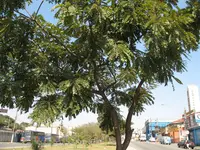
The Gold medallion tree, Cassia leptophylla, is a semi-evergreen ornamental tree valued for its showy golden-yellow flower clusters. It develops a rounded canopy with fine, narrow leaflets that give it a light, feathery look. Native to Brazil, it is typically grown in warm climates as a landscape tree or large specimen. It thrives best in full sun, with well-drained soil and moderate moisture. Once established, this tree is relatively tough but still benefits from regular care for Gold medallion tree in challenging urban or coastal conditions.

Main Plant Requirements

Care Difficulty

Moderate Care

Light Preference

Full Sun

Water Requirements

Moderate Water

Temperature Preference

Tropical / Frost Sensitive

Hardiness Zone

10–11

Soil Texture

Sandy, Loamy, Organic-rich

Soil pH

Acidic (5.5–6.5), Slightly acidic (6.5–7.0)

Soil Drainage

Well-drained

Fertilization

Minimal (feed rarely)

Get Personalized Care Plan

Scan your plant to receive care tips personalized for your specific plant

Available on iOS and Android

How to Care for the Gold medallion tree

This sun-loving tree needs strong light to flower well and keep a balanced canopy.

  • Provide 6–8 hours of direct sun daily; morning to early afternoon sun is ideal for Cassia leptophylla in most mild to warm climates.
  • Tolerates light afternoon shade in hotter areas; in dense shade the canopy thins, growth becomes leggy, and flowering drops sharply.
  • Newly planted Gold medallion tree benefits from filtered light during the first summer to reduce leaf scorch while roots establish.

This species prefers consistent moisture during establishment but dislikes waterlogged soil.

  • Outdoors in the ground, water deeply when the top 5–8 cm of soil feels dry, aiming to moisten soil 20–30 cm deep around the root zone.
  • Reduce frequency in cool or rainy seasons, but avoid letting soil stay bone dry for long, which leads to leaf drop and twig dieback.
  • Ensure sharply draining soil; signs of overwatering include yellowing leaves and soft twigs, while crisp leaf edges and rapid leaf shed signal underwatering in Cassia leptophylla.

This warm-climate tree thrives in mild to hot conditions and reacts poorly to frost.

  • Optimal growth occurs around 70–90°F (21–32°C), with best flowering in stable warm weather and full sun exposure.
  • Tolerates short heat waves up to about 100°F (38°C) if soil moisture is maintained and roots are mulched to limit evaporation.
  • Damaged below about 30°F (-1°C) and can be killed by hard freezes; in borderline climates, protect young trees from cold wind and winter radiational frost.

This species tolerates a wide humidity range but benefits from moderate air moisture when grown as a Gold medallion tree indoors.

  • Aim for 40–60% humidity, with consistent levels more important than exact numbers.
  • Leaves curling, browning edges, or increased leaf drop can indicate air that is too dry.
  • Increase humidity by grouping plants, placing trays with water and pebbles nearby, or running a room humidifier.

Cassia leptophylla prefers freely draining, moderately fertile soil that does not stay waterlogged.

  • Use a loamy or sandy mix with 30–40% coarse material such as perlite, pumice, or grit to keep pores open.
  • Aim for slightly acidic to neutral pH, roughly 6.0–7.0, to support nutrient availability and root activity.
  • Incorporate well-rotted compost for organic matter but avoid heavy clay or peat-dense mixes that hold water too long.
  • If existing soil drains slowly, raise the planting area or use mounded beds to prevent chronic wet conditions around the root zone.

This species can be grown in containers when provided with ample root space and stable support.

  • Choose a deep, heavy pot to balance the top growth and reduce tipping in windy or exposed spots.
  • Select a container material that slows drying slightly, such as thick-walled clay, to buffer rapid moisture swings around the roots.
  • Combine multiple large drainage holes with a coarse bottom layer of bark or grit to prevent mix compaction near the base.

Cassia leptophylla benefits from moderate feeding during its active growing season.

  • Apply a balanced slow-release fertilizer (around 10-10-10) in spring at label rates for flowering trees.
  • Supplement with a light topdressing of compost once in spring to support soil life and long-term nutrition.
  • During late spring–summer, optional liquid feed at 1/2 strength every 4–6 weeks can support container-grown Gold medallion tree specimens.
  • Stop feeding in fall–winter to allow growth to slow and wood to harden properly.

Pruning helps Cassia leptophylla maintain a strong framework and good flowering.

  • Carry out main pruning in late winter or very early spring before vigorous new growth begins.
  • Remove dead, diseased, or crossing branches first, then thin crowded inner growth to improve light and airflow.
  • Shorten or remove poorly placed shoots to guide a single trunk or balanced multi-stem form.
  • Use clean, sharp bypass pruners or loppers, making smooth cuts just outside the branch collar.

Cassia leptophylla is usually grown in the ground, so focus on careful transplanting of young trees.

  • Transplant in late winter–early spring when growth is slower and temperatures are mild.
  • Look for roots circling the container, dense root mass, or stalled top growth as signs a nursery plant is ready to move.
  • Choose a sunny, well-drained site, plant at the same depth, and water thoroughly to settle soil around the root ball.
  • Mulch 5–8 cm, keep soil evenly moist (not waterlogged) for the first growing season, and avoid heavy pruning at planting to reduce stress.

Cassia leptophylla is most often propagated from seed, with some success from semi-hardwood cuttings.

  • Collect ripe pods in late summer–fall, remove seeds, and scarify lightly by nicking or brief hot-water soaking.
  • Sow seeds in a free-draining mix, keep at 70–80°F, and maintain lightly moist conditions until germination.
  • Take semi-hardwood cuttings in late spring–summer, use rooting hormone, and place in warm, humid, bright but indirect light.
  • Provide bottom heat if possible and avoid waterlogging to limit rot during rooting or germination.

Cassia leptophylla is frost sensitive and needs protection in regions with freezing winters.

  • In-ground trees in marginal zones benefit from a 5–8 cm mulch layer over the root zone, kept away from the trunk.
  • Wrap young trunks with breathable tree wrap or burlap in areas with light frosts.
  • Move container plants indoors or into a bright, frost-free space when temperatures drop near 32°F.
  • Reduce watering in cool conditions, keeping soil barely moist to prevent root damage.

Care Tips

Stake Young Leaders

Install a sturdy stake and loosely tie the central leader when the tree is young to help it develop a straight trunk and withstand wind before the wood fully hardens.

Manage Surface Roots

Direct irrigation slightly away from the trunk and apply a 5–8 cm organic mulch ring to encourage deeper rooting and reduce the risk of surface roots lifting paving or competing turf.

Control Pod Load

In late spring or early summer, selectively thin heavy clusters of seed pods so branches are not overloaded, which helps prevent limb breakage and maintains a balanced canopy.

Plan Cold Protection

In marginal climates, wrap the lower trunk with breathable frost cloth during cold snaps and keep the root zone mulched to protect cambium tissue and fine roots from brief temperature dips.

Monitor Limb Angles

Inspect for narrow V-shaped crotches on main branches and remove or reduce them when small, as wider branch angles form stronger unions and improve long-term structure when growing Gold medallion tree.

Common Pests and Diseases

Leaf miners

This pest lives inside the leaf tissue and creates winding, pale tunnels that distort the fine leaflets. Symptoms include reduced photosynthesis and premature leaf drop on heavily infested branches.

Solution

Prune and discard leaves with fresh mines to remove larvae, then encourage new growth with steady watering and nutrition. For ongoing issues on young trees, use a systemic insecticide labeled for leaf miners or horticultural oil timed to target newly hatched larvae before they enter the leaves.

Scale insects

These insects attach along stems and leaf midribs as small bumps, often sticky with honeydew that can lead to sooty mold. Infested trees show reduced vigor and yellowing or thinning foliage.

Solution

Gently scrape or wipe off accessible scales and prune heavily infested twigs, disposing of them in the trash. For larger trees, apply horticultural oil during mild weather to coat stems and branches, and consider a systemic insecticide for severe, recurring infestations as part of broader Cassia leptophylla care.

Caterpillar defoliation

These pests chew through the narrow leaflets, sometimes stripping whole sections of the canopy in a short time. Symptoms include ragged leaves, abundant frass pellets, and visible caterpillars on branches.

Solution

Handpick caterpillars from reachable branches and dispose of them in soapy water, especially on small or young trees. In heavier outbreaks, use a biological control such as Bacillus thuringiensis (Bt) applied in the evening, targeting actively feeding larvae while preserving beneficial insects.

Powdery mildew

This disease appears as a white or gray powdery coating on leaf surfaces, leading to distortion, dull foliage, and reduced growth in young trees. Symptoms include affected leaves curling, yellowing, and dropping early under humid but not overly wet conditions.

Solution

Improve air circulation around the canopy by selective pruning and avoid overhead watering that keeps foliage humid for long periods. Remove and discard badly affected leaves, and if needed use a sulfur or potassium bicarbonate fungicide labeled for ornamental trees, applied according to local guidelines.

Anthracnose

This disease causes irregular brown or black spots on leaflets, often along veins, and can lead to blighted leaf tips and early defoliation during warm, wet periods. Symptoms include patchy canopy thinning and a buildup of spotted, fallen leaves under the tree.

Solution

Rake and dispose of fallen leaves to reduce fungal spores and avoid splashing water onto foliage. If the problem recurs each wet season, apply a copper-based fungicide at the start of new growth and repeat as directed, combined with pruning to open the canopy and allow faster drying after rain.

Interesting Facts

Unusually narrow leaflets

This species has very slender, willow-like leaflets arranged in pairs along a central axis, which gives the canopy a fine, feathery texture distinct from many other cassias with broader leaflets.

Nighttime leaf folding

Its leaflets close or droop at night and on very dull days, a movement controlled by specialized hinge cells at the leaflet bases that helps reduce water loss and potential damage.

Long-lasting yellow blooms

The tree produces bright yellow, fragrant flower clusters mainly in warm seasons, and in favorable climates these blooms can appear over an extended period rather than in a short, single flush.

Botan icon

Did you know?

In frost-free, warm climates, this species can flower and set pods while still relatively young and small, so it is often used in urban landscaping to provide ornamental value much earlier than many slower-developing shade trees.

FAQs about Gold medallion tree

Growth is moderate. In warm climates and good conditions, this plant typically adds about 30–60 cm of height per year, sometimes more when young, then gradually slows as it approaches its mature size.

Grow Healthy Plants with Botan Care

Keep your plants happy and healthy with plant identification, disease detection, and easy care guidance.

Botan plant care app — identify plants on mobile

Explore More Plants